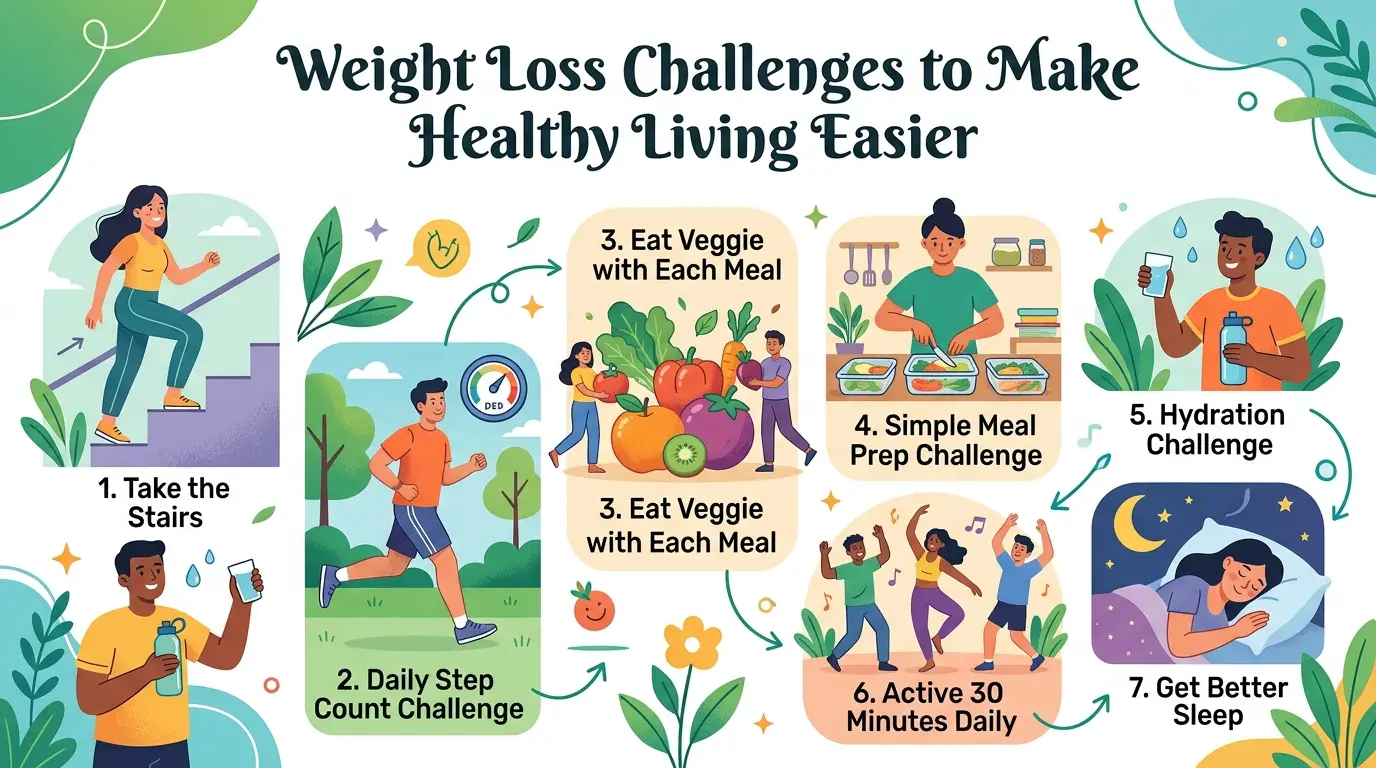
Weight Loss Challenges to Make Healthy Living Easier
Losing weight doesn’t have to mean following an extreme diet or spending hours at the gym. The most sustainable weight loss usually comes from small, repeatable habits that gradually improve the way you eat, move, sleep, and manage everyday choices. These 129 weight loss challenges are designed to make healthy living more interesting, practical, and achievable.
A good challenge should feel motivating rather than punishing. Instead of trying to change everything overnight, choose one challenge that fits your lifestyle and build from there. As the weeks pass, those small actions can become natural parts of your routine.
Weight Loss Challenges for Better Eating Habits
“Eat Slowly at Every Meal”
Make your next meal a mindful eating challenge. Put your fork down between bites, chew thoroughly, and give yourself time to notice when you’re comfortably satisfied.
“Add Vegetables to Your Lunch”
Make vegetables the star of your lunch challenge. Add leafy greens, carrots, cucumbers, tomatoes, peppers, broccoli, or another favorite vegetable to make your meal more filling and nutritious.
“Choose Whole Foods Today”
Spend one day focusing primarily on minimally processed foods. Choose fruits, vegetables, whole grains, beans, lean proteins, nuts, and other nourishing foods.
“Replace One Sugary Drink”
Swap one soda, sweetened coffee, energy drink, or sugary beverage for water or an unsweetened option. This simple weight loss challenge can reduce unnecessary liquid calories.
“Make a Balanced Breakfast”
Start the morning with a breakfast containing protein, fiber, and nutritious carbohydrates. A balanced breakfast can help you feel satisfied and energized throughout the morning.
“Try a New Healthy Recipe”
Challenge yourself to prepare something nutritious you’ve never cooked before. Experimenting with healthy recipes can make weight loss feel less repetitive.
“Practice Portion Awareness”
Instead of automatically filling your plate, pause and consider how much food you actually need. Portion awareness can help you become more attentive to hunger and fullness.
“Eat Without Your Phone”
Put your phone away during one meal. Removing distractions can make it easier to notice your food, eating speed, and satisfaction.
“Add Protein to Each Meal”
Include a source of protein such as eggs, fish, poultry, beans, lentils, yogurt, tofu, or another suitable choice. Protein can contribute to fullness and help support muscle.
“Choose Fruit for Dessert”
When you want something sweet, try fresh or frozen fruit. This challenge isn’t about banning desserts; it’s about discovering satisfying alternatives.
“Cook at Home”
Prepare at least one meal at home instead of ordering takeout. Home cooking gives you greater control over ingredients, portions, and preparation methods.
“Make Your Plate Colorful”
Aim for several naturally colorful foods on your plate. Different vegetables and fruits can add variety, flavor, and important nutrients.
“Plan Tomorrow’s Meals”
Spend a few minutes deciding what you’ll eat tomorrow. Meal planning can reduce last-minute choices that may not support your weight loss goals.
“Try a High-Fiber Meal”
Build one meal around fiber-rich foods such as vegetables, beans, lentils, oats, or whole grains. Fiber can help make meals more satisfying.
“Read One Nutrition Label”
Choose one packaged food and examine its nutrition label. Pay attention to serving size, protein, fiber, added sugar, and calories.
Weight Loss Challenges for Drinking More Water
“Start With Water”
Have a glass of water when you wake up. It can become an easy reminder to begin your day with hydration.
“Carry a Water Bottle”
Keep water nearby throughout the day. Having a bottle within reach makes drinking water more convenient.
“Drink Water Before Meals”
Try drinking water before a meal and then eat normally. This can encourage a mindful pause before eating.
“Flavor Your Water”
Add lemon, lime, berries, cucumber, or mint to water if plain water feels boring. A little flavor can make hydration more enjoyable.
“Skip One Sugary Beverage”
Replace one sweetened beverage with water or an unsweetened drink. Small substitutions can become powerful habits when repeated consistently.
“Create a Hydration Reminder”
Set a simple reminder to check whether you’ve had enough fluids. Don’t force excessive water intake; focus on regular hydration.
“Choose Unsweetened Coffee”
If you regularly add large amounts of sugar or flavored syrups to coffee, experiment with a less-sweet version.
“Make Water Your Default”
When you’re thirsty, make water your first choice. This weight loss challenge is about changing your default rather than eliminating every other drink.
Weight Loss Challenges for Walking and Daily Movement
“Take a Morning Walk”
Begin your day with a short walk. Even a modest amount of movement can help you establish an active morning routine.
“Walk After Lunch”
Take a gentle walk after lunch when your schedule allows. Turning post-meal movement into a habit can make physical activity easier to maintain.
“Take the Stairs”
Choose stairs instead of an elevator when it is practical and safe. These small bursts of movement can add up over time.
“Park Farther Away”
When you’re going somewhere by car, consider parking slightly farther away. The extra walking can turn ordinary errands into movement opportunities.
“Have a Walking Break”
Instead of sitting continuously, take a short walking break during the day. Movement doesn’t have to happen only during formal workouts.
“Reach a Personal Step Goal”
Set a realistic step goal based on your current activity level. Increase gradually rather than forcing a dramatic jump.
“Walk While Listening”
Listen to music, an audiobook, or a podcast while walking. Entertainment can make longer walks feel more enjoyable.
“Explore a New Route”
Take a different safe walking route. Variety can make walking feel like an adventure rather than a chore.
“Have a Weekend Walk”
Choose one weekend day for a longer, relaxed walk. Invite a friend or family member if social support keeps you motivated.
“Move During Commercial Breaks”
If you’re watching television, stand up and move during breaks. A few minutes here and there can interrupt long periods of sitting.
Weight Loss Challenges for Exercise
“Try a Beginner Workout”
Complete a beginner-friendly workout that matches your current fitness level. The goal is consistency, not exhaustion.
“Do Bodyweight Exercises”
Try simple movements such as squats, wall push-ups, lunges, or glute bridges if they are appropriate for you.
“Stretch for Ten Minutes”
Spend ten minutes stretching gently. Flexibility and mobility work can complement your broader exercise routine.
“Dance for Twenty Minutes”
Put on music and dance at home. Exercise can be fun, informal, and enjoyable without looking like a traditional workout.
“Try Strength Training”
Add beginner strength exercises to your week if you’re able. Resistance training can support muscle while you’re working toward weight loss.
“Take an Active Hobby Break”
Choose an enjoyable activity such as gardening, cycling, swimming, hiking, or recreational sports.
“Exercise With a Friend”
Invite someone to join you for a workout. Accountability can make exercise more enjoyable and easier to maintain.
“Focus on Consistency”
Instead of chasing the hardest workout, aim to exercise consistently. Sustainable progress usually beats occasional extremes.
Weight Loss Challenges for Mindful Eating
“Check Your Hunger”
Before eating, pause and ask yourself whether you’re physically hungry, emotionally hungry, bored, or simply responding to a routine.
“Remove Distractions”
Eat at a table rather than automatically eating while working, scrolling, or watching television.
“Notice Your Fullness”
During meals, pause occasionally and assess how satisfied you feel. You don’t need to finish food simply because it remains on your plate.
“Eat One Meal Mindfully”
Give one meal your complete attention today. Notice the smell, texture, temperature, and flavor of each bite.
“Avoid Eating From the Package”
Put snacks into a bowl or onto a plate rather than eating directly from the package. This can make portions easier to recognize.
“Pause Before Seconds”
Wait a few minutes before getting another serving. Ask yourself whether you’re still hungry or simply enjoying the taste.
“Identify Your Triggers”
Notice when you tend to overeat. Stress, boredom, social situations, and tiredness can all influence eating behavior.
“Create a Calm Eating Space”
Make your eating environment peaceful. A calmer atmosphere can encourage slower and more intentional eating.
Weight Loss Challenges for Better Sleep
“Create a Consistent Bedtime”
Try going to bed at approximately the same time each night. A regular sleep schedule can support overall health and healthy routines.
“Reduce Late-Night Snacking”
If you frequently snack simply because you’re staying awake late, create a relaxing evening routine that doesn’t revolve around food.
“Turn Off Screens Earlier”
Give yourself some screen-free time before bed. A calming nighttime routine may make it easier to prepare for sleep.
“Prepare for Tomorrow”
Pack your lunch, organize your clothes, or plan your breakfast before bedtime. Preparation can reduce morning stress.
“Make Your Bedroom Comfortable”
Keep your sleeping environment quiet, comfortable, and conducive to rest.
“Prioritize Rest”
Treat sleep as part of your health routine rather than something you sacrifice whenever you’re busy.
Weight Loss Challenges for Meal Planning
“Plan Three Meals”
Write down three meals you could prepare tomorrow. Planning reduces uncertainty and makes healthy choices easier.
“Prepare Healthy Snacks”
Keep convenient nutritious snacks available, such as fruit, yogurt, vegetables, nuts, or other foods that fit your eating plan.
“Make a Grocery List”
Shop with a written list. A grocery list can reduce impulse purchases and make healthy meal preparation simpler.
“Prep Vegetables”
Wash and prepare vegetables in advance. Having ready-to-use ingredients can make cooking faster.
“Cook Extra Portions”
Prepare enough food for another meal when practical. Leftovers can save time and make busy days easier.
“Plan for Busy Days”
Think ahead about what you’ll eat when you’re rushed. A realistic plan is better than relying on willpower at the last minute.
“Build a Balanced Plate”
Combine protein, vegetables or fruit, and a suitable carbohydrate source. A balanced plate can be both satisfying and nutritious.
Weight Loss Challenges for Reducing Unplanned Eating
“Create a Snack Pause”
Before grabbing a snack, pause for a moment. Decide whether you truly want it and whether you’re physically hungry.
“Keep Tempting Foods Less Convenient”
If certain foods lead to mindless eating, keep them less visible or less immediately accessible.
“Don’t Shop Hungry”
Eat a normal meal or snack before grocery shopping if possible. Hunger can make impulse choices harder to resist.
“Use Smaller Serving Dishes”
Try using a smaller bowl or plate when appropriate. This can encourage greater awareness of serving sizes.
“Put Snacks Away”
After serving yourself, put the package back in the cupboard rather than leaving it beside you.
“Avoid the All-or-Nothing Mindset”
Eating one indulgent food doesn’t ruin your progress. Return to your normal routine at the next opportunity.
“Practice One Treat Mindfully”
Enjoy a favorite treat slowly and without guilt. Sustainable weight loss allows room for foods you genuinely enjoy.
Weight Loss Challenges for Motivation
“Write Down Your Reason”
Write one honest reason you want to improve your health. Keep it somewhere visible when motivation drops.
“Set a Non-Scale Goal”
Choose a goal unrelated to body weight, such as walking farther, feeling more energetic, cooking more often, or improving strength.
“Track Your Habits”
Record habits such as workouts, meals, water intake, or sleep. Tracking can reveal patterns that aren’t obvious day to day.
“Celebrate Small Wins”
Give yourself credit for completing healthy actions. Progress isn’t only measured by the number on a scale.
“Take Progress Notes”
Write down how you feel during your journey. Improved energy, confidence, fitness, and daily routines can all represent meaningful progress.
“Avoid Comparing Yourself”
Your weight loss journey doesn’t need to look like anyone else’s. Compare yourself with your previous habits rather than another person’s results.
“Create a Seven-Day Challenge”
Choose one realistic habit and practice it for seven days. The goal is to build consistency before adding another challenge.
“Forgive a Difficult Day”
If you have an unhealthy day, don’t turn it into an unhealthy week. Start fresh with your next meal or next activity.
“Focus on What You Can Control”
You can’t control every result immediately, but you can influence your food choices, movement, sleep, preparation, and consistency.
Weight Loss Challenges for a Healthier Lifestyle
“Take a Grocery Store Challenge”
Walk around the grocery store and find several nutritious foods you’ve never tried. Discovering new ingredients can make healthy eating exciting.
“Try a Meatless Meal”
Prepare a satisfying meal centered on beans, lentils, vegetables, tofu, or another plant-based protein.
“Cook Without Deep Frying”
Experiment with baking, grilling, steaming, roasting, or air-frying instead of deep-frying.
“Reduce Added Sugar”
Choose one food or drink with added sugar and find a less-sweet alternative you enjoy.
“Choose Whole Grains”
Try oats, brown rice, whole-grain bread, or another whole-grain option when it fits your meals.
“Add More Beans”
Include beans or lentils in a meal. They’re versatile foods that provide protein and fiber.
“Eat More Slowly”
Give yourself enough time to enjoy your meal. Slowing down can make eating more satisfying.
“Make Healthy Food Convenient”
Keep nutritious foods visible and ready to eat. Convenience matters when you’re tired or busy.
“Create a Healthy Breakfast Routine”
Develop one breakfast you enjoy and can prepare easily. A simple routine can reduce rushed morning decisions.
“Try a New Vegetable”
Pick a vegetable you’ve rarely eaten and prepare it in a new way. You may discover a new favorite food.
Weight Loss Challenges for Building Long-Term Habits
“Start With One Change”
Don’t overhaul your entire lifestyle overnight. Pick one habit and make it manageable.
“Repeat a Healthy Habit”
Repeat the same positive behavior until it begins to feel automatic.
“Make Exercise Enjoyable”
Choose physical activities you actually like. Enjoyment can make long-term consistency much easier.
“Build a Morning Routine”
Create a simple routine involving hydration, breakfast, movement, planning, or another healthy behavior.
“Build an Evening Routine”
End the day with calming habits that support sleep, preparation, and mindful eating.
“Prepare for Social Events”
Think ahead about how you’ll approach parties, restaurants, and gatherings without feeling like you have to avoid everything.
“Practice Flexible Eating”
Allow room for occasional treats while maintaining your overall healthy habits. Flexibility can make a weight loss lifestyle more sustainable.
“Focus on Progress”
Look for improvements in habits rather than expecting immediate dramatic results.
“Make Your Goal Realistic”
Set goals that fit your current lifestyle, schedule, fitness level, and circumstances.
“Create a Habit Streak”
Track consecutive days of completing a chosen habit. A streak can provide a simple visual reminder of consistency.
Weight Loss Challenges for Busy People
“Prepare a Quick Lunch”
Create a healthy lunch that takes little time to assemble. Convenience is essential when your schedule is packed.
“Take Movement Breaks”
Stand, stretch, walk, or move for a few minutes throughout your workday.
“Keep Emergency Snacks”
Have nutritious, convenient food available for unexpectedly busy days.
“Schedule Your Workouts”
Treat exercise appointments like important meetings. Put them on your calendar.
“Use Short Workouts”
When you don’t have time for a long workout, do a shorter session instead of abandoning movement completely.
“Batch Cook”
Prepare several servings of a healthy meal at once to simplify future meals.
“Plan Restaurant Choices”
If you’re eating out, look at the menu ahead of time and choose something that fits your goals.
“Avoid Skipping Meals to Compensate”
Don’t rely on extreme restriction after eating more than planned. Return to regular balanced meals.
“Keep Healthy Food Visible”
Place fruit and other nutritious foods where you can easily see them.
“Make Your Kitchen Supportive”
Organize your kitchen so healthy ingredients are easy to access and prepare.
Weight Loss Challenges for Mindset
“Stop Chasing Perfection”
Aim for consistency rather than perfection. One imperfect meal doesn’t erase your progress.
“Use Positive Self-Talk”
Replace harsh criticism with constructive language. Treat yourself like someone you’re trying to encourage.
“Focus on Health”
Remember that weight is only one part of overall health. Fitness, nutrition, sleep, energy, and mental well-being matter too.
“Be Patient With Progress”
Healthy weight loss can take time. Avoid comparing your timeline with dramatic stories you see online.
“Learn From Setbacks”
When something doesn’t work, examine why and adjust your strategy instead of giving up.
“Build Your Own Rules”
Create practical habits that fit your life rather than copying someone else’s routine exactly.
“Practice Consistency Over Intensity”
A moderate routine you can maintain is often more useful than an extreme routine you quickly abandon.
“Choose Sustainable Changes”
Ask yourself whether you could realistically continue a habit months from now. If not, make it easier.
“Focus on Daily Actions”
Your long-term results are influenced by repeated daily behaviors. Focus on what you can do today.
“Remember Your Why”
When motivation fades, return to the reason you started. Your deeper purpose can be more powerful than temporary excitement.
Weight Loss Challenges for a Fresh Start
“Declutter Your Snack Shelf”
Organize your kitchen and make nutritious choices easier to see and reach.
“Create a Healthy Shopping Routine”
Develop a regular grocery routine that includes foods you genuinely enjoy and can prepare consistently.
“Try a New Fitness Class”
Experiment with yoga, cycling, swimming, dance, strength training, or another activity appropriate for your ability.
“Walk Somewhere Nearby”
For short errands where practical and safe, consider walking instead of driving.
“Spend Time Outdoors”
Take your movement routine outside. Fresh surroundings can make physical activity more enjoyable.
“Plan a Healthy Weekend”
Decide in advance when you’ll exercise, shop, cook, relax, and enjoy social activities.
“Make One Meal From Scratch”
Prepare a meal using basic ingredients rather than relying entirely on packaged convenience foods.
“Create a Personal Reward”
Reward healthy milestones with something unrelated to food, such as a book, movie, hobby, outing, or relaxing experience.
“Review Your Progress”
At the end of the week, consider what worked, what didn’t, and what you want to change.
“Start Again Tomorrow”
If today didn’t go according to plan, tomorrow is another opportunity. Sustainable weight loss is built through repeated fresh starts.
Final Thoughts on Weight Loss Challenges
These weight loss challenges aren’t meant to become a race toward extreme results. They’re small opportunities to create healthier routines one decision at a time. You don’t need to complete every challenge at once. Pick a few that feel realistic, practice them consistently, and gradually build your lifestyle around habits you can maintain.
The most valuable weight loss challenge may be the one that changes your relationship with healthy living. Instead of thinking, “I have to be perfect,” try thinking, “I can make one better choice today.” That mindset makes the journey more flexible, realistic, and sustainable.
If you have a medical condition, take medications that affect weight or appetite, are pregnant, have a history of disordered eating, or are unsure what approach is appropriate for you, consider speaking with a qualified healthcare professional before making major changes to your diet or exercise routine.
The goal isn’t simply to lose weight quickly. The goal is to build habits that support your health for the long term. As the saying goes, “Small steps can create big changes.” Start with one challenge today, make it manageable, and let consistency do the heavy lifting.