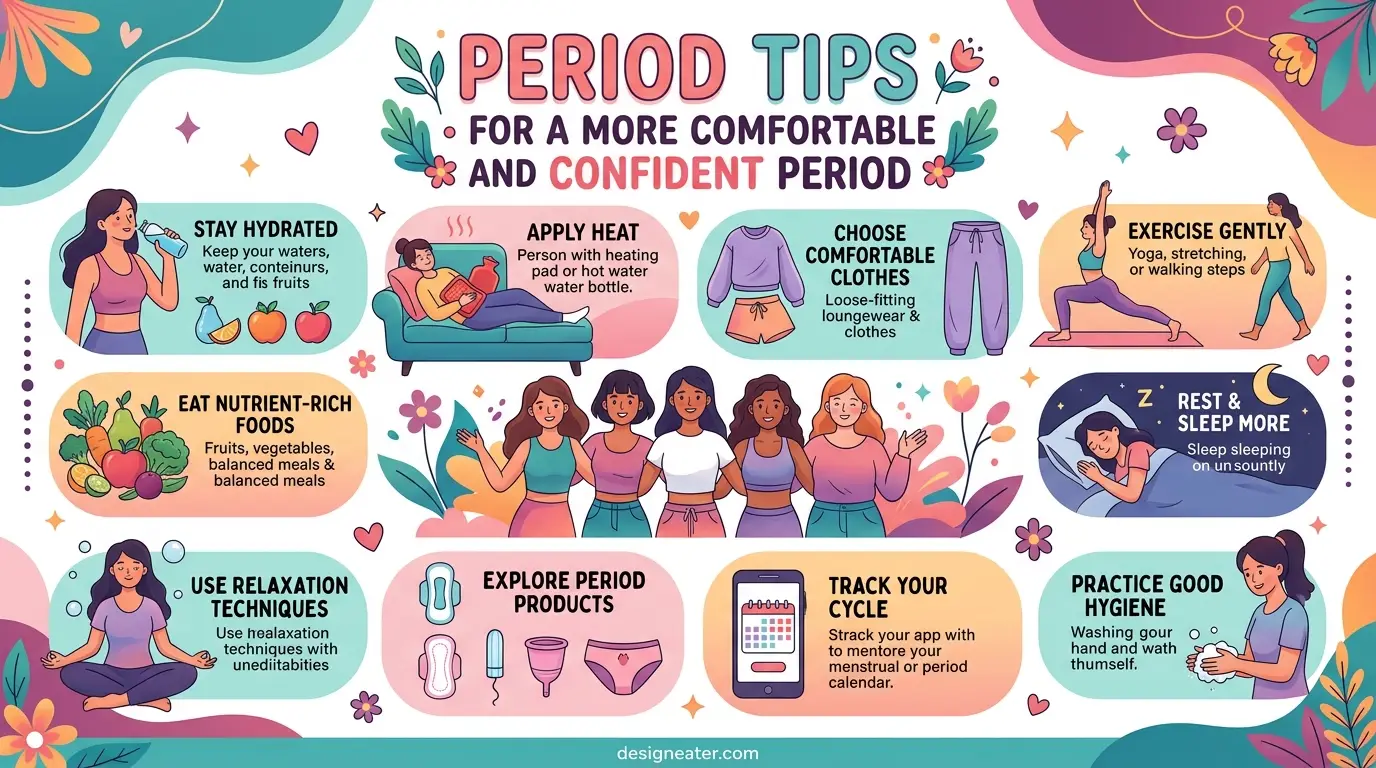
Period Tips for a More Comfortable and Confident Period
Your period can bring cramps, bloating, tiredness, headaches, mood changes, cravings, and plenty of other uncomfortable symptoms. The good news is that a few simple habits can make those days easier to manage. These “159 period tips” cover practical ideas for comfort, hygiene, nutrition, exercise, sleep, emotional well-being, and everyday routines. Whether you are looking for your first period tips or simply want better ways to handle your monthly cycle, small changes can make a noticeable difference.
“Period Tips” for Everyday Comfort
“Listen to your body instead of forcing yourself to follow your normal routine.” Your energy may change during your period, so giving yourself permission to slow down can be helpful. Rest when you need it, stay hydrated, wear comfortable clothing, and keep the things you use most within easy reach.
“Keep a small period-care kit nearby.” It can include pads or tampons, period underwear, spare underwear, tissues, wipes, pain-relief products you normally use safely, and a small heat pack. Having everything together can make unexpected bleeding much less stressful.
“Wear breathable underwear.” Cotton or other breathable fabrics can help you feel fresher and more comfortable, especially on heavier-flow days. Change your underwear whenever it becomes damp or uncomfortable.
“Choose comfortable clothes during your period.” Loose pants, soft shorts, oversized shirts, and stretchy fabrics can be more comfortable when you are experiencing bloating or cramps.
“Keep track of your cycle.” A calendar or period-tracking app can help you recognize patterns in your cycle, symptoms, flow, and mood. Tracking can also make it easier to prepare for your next period.
“Period Tips” for Managing Cramps
“Use gentle heat when cramps appear.” A heating pad, warm water bottle, or warm bath may help relax muscles and reduce the feeling of menstrual discomfort.
“Try gentle movement.” Walking, stretching, yoga, or another comfortable activity can sometimes ease cramps and help you feel less stiff.
“Try a comfortable resting position.” Some people feel better lying on their side with their knees slightly bent. Others prefer lying on their back with a pillow under their knees.
“Give yourself time to rest.” Menstrual cramps can be exhausting, especially when they interfere with sleep or daily activities. Rest is not laziness; it is part of taking care of yourself.
“If you use over-the-counter pain medicine, follow the label directions.” Medicines such as ibuprofen or naproxen can help some people with menstrual cramps, but they are not suitable for everyone. Check with a healthcare professional or pharmacist if you are unsure whether a medicine is appropriate for you.
“Do not ignore unusually severe pain.” Period discomfort is common, but pain that is severe, suddenly different, consistently disabling, or accompanied by other concerning symptoms deserves medical attention.
“Period Tips” for Better Period Hygiene
“Change menstrual products regularly.” Follow the product instructions and avoid wearing a product longer than recommended.
“Wash your hands before and after changing menstrual products.” Good hand hygiene helps reduce the spread of germs.
“Clean the outside of your genital area gently.” You generally do not need scented products or harsh soaps. The vagina cleans itself, while the external vulva can be gently cleaned with water and, if desired, a mild unscented cleanser.
“Avoid douching.” Douching can disturb the natural balance of the vagina and may increase the risk of irritation or infection.
“Skip heavily scented intimate products if they irritate you.” Fragrances can cause discomfort for some people, especially sensitive skin.
“Dispose of menstrual products properly.” Wrap used disposable products and place them in a suitable trash bin rather than flushing them down the toilet.
“Period Tips” for Pads
“Choose a pad that matches your flow.” A heavier-flow day may require a different absorbency than a lighter day.
“Change your pad regularly.” Do not wait until it becomes completely saturated before changing it.
“Try overnight pads when sleeping.” Longer and more absorbent pads may provide additional protection while you move during sleep.
“Carry spare pads when leaving home.” Even if you think your period is almost finished, keeping an extra product in your bag can prevent an uncomfortable surprise.
“If a pad causes irritation, try another type.” Different materials, fragrances, adhesives, and designs can affect comfort.
“Period Tips” for Tampons
“Choose the lowest absorbency that adequately handles your flow.” Tampons should be changed according to package directions and should not be worn longer than recommended.
“Never use a tampon longer than the manufacturer’s recommended time.” Extended use can increase the risk of toxic shock syndrome, a rare but serious illness.
“Use pads or period underwear when sleeping if that makes it easier to stay within recommended tampon-use times.”
“If inserting a tampon is consistently painful, do not force it.” Consider speaking with a healthcare professional about persistent pain or difficulty.
“Period Tips” for Period Underwear and Reusable Products
“Wash reusable menstrual products according to their instructions.” Proper cleaning helps maintain hygiene and product performance.
“Carry a spare pair when you are away from home.” A sealed waterproof pouch can make transporting used reusable products easier.
“Learn the correct way to insert and remove a menstrual cup if you use one.” Following the manufacturer’s instructions can help prevent discomfort and leakage.
“Find the product that suits your lifestyle.” There is no single best menstrual product for everyone. Comfort, flow, budget, activity level, and personal preference all matter.
“Period Tips” for Food and Nutrition
“Drink enough water throughout the day.” Staying hydrated can support overall well-being and may help you feel less uncomfortable when bloating occurs.
“Include iron-rich foods in your diet.” Foods such as beans, lentils, leafy greens, fortified cereals, eggs, meat, and seafood can contribute iron to your diet.
“Pair plant-based sources of iron with vitamin C.” Foods such as citrus fruits, strawberries, tomatoes, and bell peppers can help your body absorb non-heme iron.
“Eat regular meals when possible.” Skipping meals can leave you feeling more tired and may make it harder to manage hunger and cravings.
“Choose balanced snacks.” Yogurt, fruit, nuts, seeds, whole-grain crackers, or a simple sandwich can provide useful nutrients and energy.
“Enjoy your favorite foods without guilt.” Cravings are common around menstruation, and there is no need to treat food as something you must earn.
“Period Tips” for Bloating
“Reduce foods that you personally notice make bloating worse.” Everyone responds differently, so pay attention to your own patterns rather than following unnecessary restrictions.
“Drink water regularly.” Hydration is important even when you feel bloated.
“Take a gentle walk.” Light movement may help you feel less sluggish.
“Choose comfortable clothing.” Tight waistbands can feel particularly unpleasant when your abdomen is bloated.
“Eat slowly.” Taking your time with meals can make eating more comfortable and may reduce swallowed air.
“Period Tips” for Exercise
“Do not feel pressured to exercise intensely during your period.” Your activity level can change depending on your symptoms and energy.
“Try walking.” A relaxed walk can provide movement without placing excessive demands on your body.
“Stretch gently.” Simple stretches for your hips, lower back, and legs may feel soothing.
“Try yoga if you enjoy it.” Gentle yoga can combine movement with breathing and relaxation.
“Rest when exercise makes you feel worse.” Exercise should support your well-being, not become another source of stress.
“Period Tips” for Sleep
“Create a comfortable nighttime routine.” A warm shower, clean sleepwear, and a relaxing environment can make bedtime easier.
“Keep period supplies beside your bed.” This is especially useful if you experience heavier bleeding.
“Use a towel or washable protective layer if you worry about leaks.” This can reduce stress about staining your sheets.
“Try sleeping in a position that feels comfortable.” There is no single sleeping position that everyone needs to use during menstruation.
“Keep your bedroom cool and comfortable.” Overheating can make an already uncomfortable night feel worse.
“Period Tips” for Mood Changes
“Give yourself permission to have lower-energy days.” Hormonal changes around menstruation can affect mood and energy for some people.
“Talk to someone you trust.” A supportive conversation can make difficult days feel less isolating.
“Take short breaks from stressful tasks.” Even a few quiet minutes can help you reset.
“Do something comforting.” Reading, watching a favorite show, listening to music, journaling, or taking a warm shower can provide a mental break.
“Do not blame every emotional change on your period.” Your feelings are real, and other life circumstances can affect your mood too.
“Period Tips” for Work and School
“Keep emergency period supplies in your backpack, desk, or locker.” Preparation can make unexpected bleeding easier to handle.
“Pack an extra pair of underwear.” It takes little space and can provide peace of mind.
“Wear clothing that helps you feel comfortable and confident.” Choosing practical clothing can reduce distractions.
“Take short movement breaks when possible.” Sitting for long periods may make cramps or stiffness feel worse.
“If symptoms regularly prevent you from attending school or work, talk with a healthcare professional.” Severe menstrual symptoms deserve proper evaluation rather than simply being accepted as something you must endure.
“Period Tips” for Preventing Leaks
“Choose menstrual products based on your actual flow.” Using a product that is too small for your flow can increase the chance of leaks.
“Change products before they become completely full.” Regular changes can improve comfort and protection.
“Consider overnight protection when sleeping.” Movement during sleep can cause unexpected leaks.
“Carry backup protection.” Having another menstrual product available is one of the easiest ways to reduce stress.
“Track your heavier-flow days.” Knowing when your flow is usually strongest can help you prepare.
“Period Tips” for Travel
“Pack more menstrual products than you think you will need.” Travel can disrupt your normal routine, and your period may not arrive exactly when expected.
“Keep supplies in your carry-on or personal bag.” Do not put every period product in checked luggage when traveling by air.
“Bring comfortable underwear.” Extra underwear can be particularly useful on longer trips.
“Carry pain-relief options you normally use safely.” Keep medicines in their original packaging and follow applicable travel rules.
“Bring a small disposal bag.” A sealable bag can help you manage used products when a suitable trash bin is not immediately available.
“Period Tips” for Managing Periods at Night
“Prepare before going to bed.” Changing into fresh sleepwear and using appropriate nighttime protection can make sleep less stressful.
“Keep water nearby.” You may appreciate having something to drink during the night.
“Use bedding that is easy to wash.” This can make accidental stains less frustrating.
“Do not panic over a period stain.” Cold water and appropriate laundry treatment can often help with fresh blood stains. Avoid using hot water first because heat can set blood stains into fabric.
“Period Tips” for Teenagers
“Remember that periods can take time to become predictable.” Menstrual cycles may be irregular during the early years after periods begin.
“Learn how different menstrual products work.” Understanding your choices can help you decide what feels comfortable.
“Ask a trusted adult or healthcare professional questions.” There is no embarrassing question when it comes to your health.
“Keep emergency supplies with you.” A small pouch in your school bag can provide confidence.
“Do not compare your period with someone else’s.” Cycle length, flow, cramps, and symptoms can vary considerably.
“Period Tips” for Period Tracking
“Record the first day of your period.” This gives you a useful starting point for understanding your cycle.
“Track how long your bleeding lasts.” Over time, this can help you recognize your personal pattern.
“Record symptoms such as cramps, headaches, bloating, and mood changes.” A symptom record can be especially useful when discussing concerns with a healthcare professional.
“Note unusually heavy bleeding.” If your bleeding pattern changes significantly, recording what happened can help during a medical appointment.
“Use tracking as information rather than a source of anxiety.” Cycles can naturally vary, so one unusual month does not necessarily mean something is wrong.
“Period Tips” for Self-Care
“Make your period-care routine simple.” You do not need an expensive collection of products to take care of yourself.
“Take a warm shower.” Warm water can feel relaxing when you are dealing with cramps or general discomfort.
“Spend time doing something you enjoy.” A favorite hobby can help take your attention away from unpleasant symptoms.
“Practice slow breathing.” Calm breathing can be a simple way to relax your body during stressful moments.
“Give yourself a little extra kindness.” Your period is a normal biological process, not something you need to feel embarrassed about.
“Period Tips” for Handling Period Emergencies
“Keep a backup menstrual product in your everyday bag.” This small habit can save you from unnecessary stress.
“If you stain your clothes, deal with the stain as soon as practical.” Rinse the area with cold water and follow the garment’s care instructions.
“If you unexpectedly start your period, ask someone you trust for help.” Many people have experienced the same situation and will understand.
“Do not feel ashamed about asking for a pad or tampon.” Menstrual products are basic personal-care items.
“If you experience extremely heavy bleeding, dizziness, fainting, severe weakness, or other concerning symptoms, seek medical care promptly.” Significant bleeding can sometimes require medical evaluation.
“Period Tips” for Building a Better Routine
“Prepare your period supplies before your period begins.” Waiting until bleeding starts can make the process more stressful.
“Create a small period-care station at home.” Keep your preferred products, comfortable clothes, heating pad, and other essentials together.
“Learn your personal symptoms.” Knowing what usually happens before and during your period can make it easier to distinguish your normal pattern from a significant change.
“Build flexibility into your schedule when possible.” If you know certain days are usually more uncomfortable, avoid unnecessarily packing your schedule.
“Remember that self-care does not need to be complicated.” Consistent basics such as sleep, hydration, nutritious food, movement, hygiene, and rest can go a long way.
When to Talk to a Healthcare Professional
“Do not assume severe period pain is something you simply have to tolerate.” Menstrual pain can sometimes be associated with conditions such as endometriosis, adenomyosis, fibroids, or other medical issues.
“Talk with a healthcare professional if your periods regularly interfere with school, work, sleep, exercise, relationships, or everyday life.” Persistent disruption deserves attention.
“Seek medical advice if your bleeding becomes unusually heavy or changes significantly from your normal pattern.” Keeping track of your symptoms can make this conversation easier.
“Get medical help for symptoms that feel severe, sudden, or unusual for you.” Your personal baseline matters.