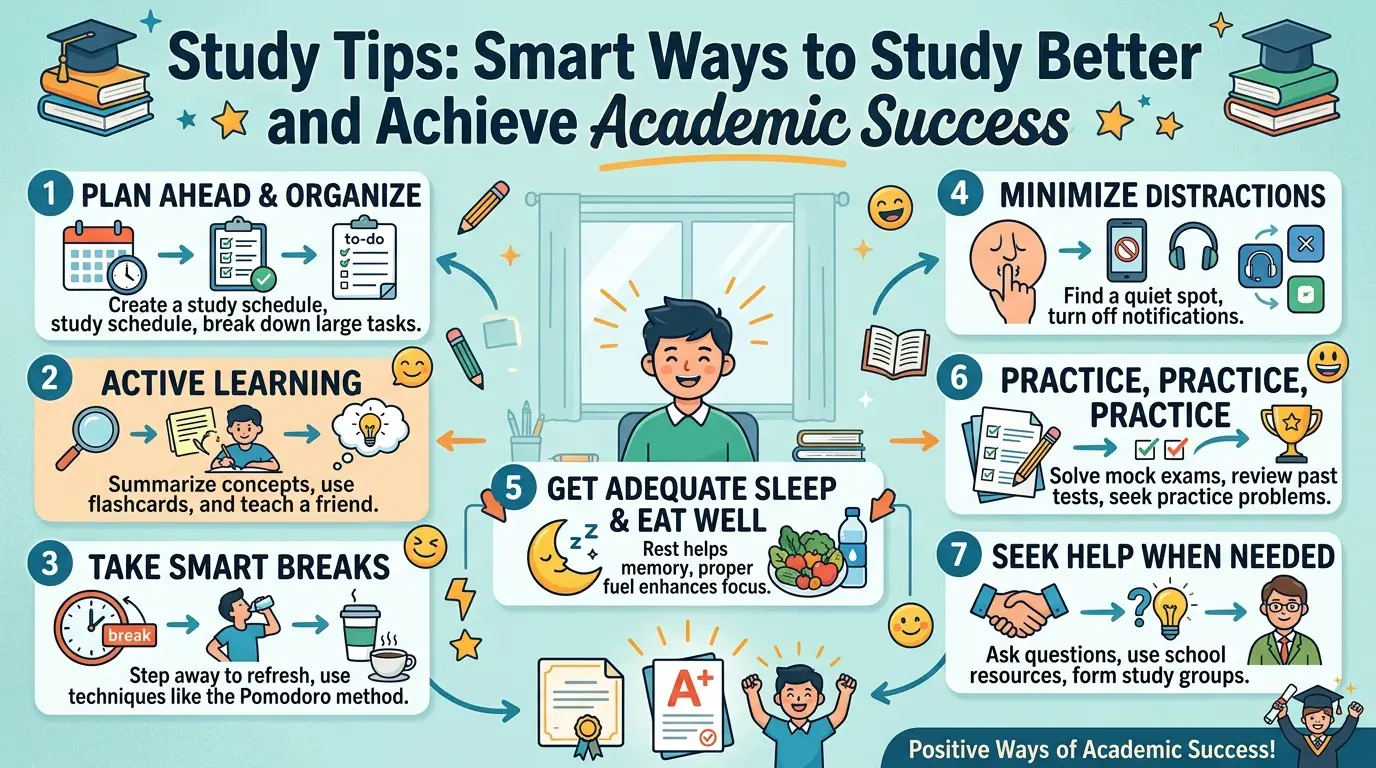
Study Tips: Smart Ways to Study Better and Achieve Academic Success
Studying effectively is one of the most important skills students can develop. Whether you’re preparing for an exam, completing assignments, or learning a new subject, the right study tips can make your learning journey easier and more enjoyable. Many students spend hours reading books but still struggle to remember information. The secret isn’t always studying harder—it’s studying smarter.
These 199 study tips can help improve concentration, boost memory, reduce stress, and increase productivity. By developing good study habits, you can turn learning into a rewarding experience and achieve your academic goals.
Why Study Tips Matter
Effective study habits help students stay organized, manage time wisely, and retain information longer. Good study techniques also build confidence and reduce the anxiety that often comes with exams and deadlines.
The best study tips focus on creating a productive environment, using proven learning methods, and maintaining a healthy balance between studying and personal life.
Study Tips for Better Concentration
“Create a dedicated study space that is quiet and comfortable.”
“Remove distractions such as social media notifications while studying.”
“Set a specific goal before each study session.”
“Use noise-canceling headphones if your environment is noisy.”
“Study during the time of day when you feel most energetic.”
“Keep only necessary materials on your desk.”
“Take short breaks to refresh your mind.”
“Avoid multitasking and focus on one subject at a time.”
“Use a timer to stay committed to your study period.”
“Practice mindfulness before beginning your work.”
Study Tips for Better Time Management
Time management is one of the most important aspects of successful learning. Students who manage their schedules well often perform better because they avoid last-minute cramming.
“Create a weekly study schedule.”
“Break large tasks into smaller assignments.”
“Prioritize difficult subjects first.”
“Set realistic daily goals.”
“Use a planner to track assignments and deadlines.”
“Study a little every day instead of cramming.”
“Complete high-priority tasks during peak energy hours.”
“Start assignments as soon as they are given.”
“Set deadlines for yourself.”
“Review your progress every evening.”
Study Tips for Improving Memory
Remembering information is easier when you use the right techniques. These study tips can help strengthen memory and improve recall.
“Use flashcards to memorize important facts.”
“Teach the material to someone else.”
“Create colorful notes and diagrams.”
“Use mnemonic devices.”
“Repeat information regularly.”
“Connect new ideas to things you already know.”
“Use mind maps to organize information.”
“Read information aloud.”
“Write summaries in your own words.”
“Practice active recall instead of passive reading.”
Study Tips for Taking Notes
Good notes make studying easier and help you review information quickly before tests.
“Write down key ideas instead of every word.”
“Highlight important concepts.”
“Use different colors for different subjects.”
“Create headings and subheadings.”
“Leave space for additional information.”
“Review notes within twenty-four hours.”
“Use bullet points to stay organized.”
“Draw diagrams when possible.”
“Keep notes neat and easy to read.”
“Rewrite confusing notes after class.”
Study Tips for Exam Preparation
Preparing for exams doesn’t have to be stressful when you use effective strategies.
“Begin studying weeks before the exam.”
“Review old tests and quizzes.”
“Practice with sample questions.”
“Create a revision timetable.”
“Study in short sessions.”
“Focus on understanding concepts.”
“Avoid learning entirely new topics the night before.”
“Prepare all exam materials in advance.”
“Get enough sleep before test day.”
“Stay positive and confident.”
Study Tips for Staying Motivated
Motivation is essential for consistent learning and academic growth.
“Reward yourself after completing study goals.”
“Visualize your academic success.”
“Remember why you started.”
“Track your achievements.”
“Study with positive people.”
“Set both short-term and long-term goals.”
“Celebrate small victories.”
“Read inspirational quotes.”
“Take breaks when feeling overwhelmed.”
“Focus on progress instead of perfection.”
Study Tips for Reading and Understanding
Reading effectively can improve comprehension and help students absorb information faster.
“Preview the chapter before reading.”
“Read with a purpose.”
“Underline important information.”
“Ask questions while reading.”
“Summarize each section.”
“Look up unfamiliar words.”
“Take notes while reading.”
“Review key concepts immediately.”
“Read slowly when studying difficult topics.”
“Connect ideas across chapters.”
Study Tips for Group Study Sessions
Studying with others can be highly beneficial when done correctly.
“Choose serious and focused study partners.”
“Set clear objectives for each session.”
“Avoid turning study sessions into social gatherings.”
“Assign topics to each group member.”
“Teach one another.”
“Quiz each other regularly.”
“Share useful resources.”
“Respect everyone’s study style.”
“Take short breaks together.”
“Encourage each other.”
Study Tips for Online Learning
Online learning has become increasingly popular and requires strong self-discipline.
“Create a distraction-free study area.”
“Attend every virtual class.”
“Keep your camera on when possible.”
“Take digital notes.”
“Download learning materials early.”
“Participate in online discussions.”
“Avoid checking social media during lessons.”
“Organize files in separate folders.”
“Review recorded lectures.”
“Stay connected with classmates.”
Study Tips for Reducing Stress
Stress can negatively affect concentration and memory.
“Practice deep breathing exercises.”
“Avoid comparing yourself to others.”
“Get enough sleep every night.”
“Exercise regularly.”
“Eat nutritious meals.”
“Take regular study breaks.”
“Spend time outdoors.”
“Stay hydrated.”
“Maintain a positive mindset.”
“Ask for help when needed.”
Study Tips for Building Better Habits
Successful students often rely on strong habits rather than temporary motivation.
“Study at the same time every day.”
“Prepare your materials the night before.”
“Review notes daily.”
“Stay organized.”
“Keep your study space clean.”
“Limit procrastination.”
“Develop a consistent routine.”
“Set achievable goals.”
“Stay committed to your schedule.”
“Keep learning even after exams.”
Study Tips for Productivity
Productivity helps students complete more work in less time.
“Use the Pomodoro Technique.”
“Turn off unnecessary notifications.”
“Complete one task before starting another.”
“Use checklists.”
“Avoid perfectionism.”
“Keep healthy snacks nearby.”
“Take stretching breaks.”
“Prepare a daily to-do list.”
“Focus on important tasks first.”
“Reflect on what worked well.”
Study Tips for Long-Term Success
Academic success doesn’t happen overnight. Consistent effort and smart strategies create long-lasting results.
“Believe in your ability to learn.”
“Develop patience with difficult subjects.”
“Ask questions whenever you’re confused.”
“Seek feedback from teachers.”
“Learn from your mistakes.”
“Stay curious.”
“Continue improving your study methods.”
“Be disciplined.”
“Practice self-care.”
“Never stop learning.”
More Study Tips to Complete Your Collection
“Review difficult subjects first when your mind is fresh.”
“Keep a water bottle nearby during study sessions.”
“Study in a well-lit room.”
“Create a distraction-free environment.”
“Use sticky notes for important reminders.”
“Set a timer for focused study sessions.”
“Take handwritten notes whenever possible.”
“Review your mistakes after every test.”
“Study one topic thoroughly before moving to another.”
“Create practice tests for yourself.”
“Listen carefully during class discussions.”
“Ask teachers for clarification when needed.”
“Read your notes before going to sleep.”
“Start preparing for exams early.”
“Break information into smaller sections.”
“Review class material on the same day.”
“Use charts and graphs to understand concepts.”
“Practice solving problems without looking at answers.”
“Study in short sessions instead of marathon sessions.”
“Use memory games to remember facts.”
“Record important lessons and listen to them later.”
“Avoid studying while lying in bed.”
“Keep your study materials organized.”
“Eliminate clutter from your desk.”
“Use online educational resources wisely.”
“Find a study partner who motivates you.”
“Challenge yourself with difficult questions.”
“Review your goals every week.”
“Stay away from negative thinking.”
“Create a reward system for completing tasks.”
“Use index cards for quick revision.”
“Learn from educational videos.”
“Take care of your physical health.”
“Avoid excessive caffeine while studying.”
“Practice writing essays under timed conditions.”
“Keep track of your progress.”
“Read instructions carefully before starting assignments.”
“Turn important information into songs or rhymes.”
“Focus on understanding rather than memorizing.”
“Use examples to understand complex topics.”
“Keep all study materials in one place.”
“Take responsibility for your learning.”
“Study a little even on busy days.”
“Stay curious about new subjects.”
“Review lessons before attending class.”
“Make studying a daily habit.”
“Avoid procrastinating on difficult assignments.”
“Set achievable academic goals.”
“Take notes during every lecture.”
“Participate actively in classroom activities.”
“Practice good posture while studying.”
“Use bookmarks to organize reading materials.”
“Highlight only the most important information.”
“Study in places that help you concentrate.”
“Keep a positive attitude toward learning.”
“Read additional resources beyond textbooks.”
“Use educational apps to reinforce learning.”
“Set reminders for assignments and tests.”
“Review flashcards regularly.”
“Discuss difficult concepts with classmates.”
“Use diagrams to simplify information.”
“Create a study playlist without lyrics.”
“Take deep breaths when feeling overwhelmed.”
“Keep your goals visible.”
“Ask yourself questions while reading.”
“Review one subject every day.”
“Keep your phone away during study sessions.”
“Get enough sleep before important exams.”
“Use practice papers from previous years.”
“Study in a comfortable chair.”
“Use folders to organize notes.”
“Write summaries after each chapter.”
“Study in the same location regularly.”
“Take breaks before feeling exhausted.”
“Avoid comparing your progress to others.”
“Keep learning from your mistakes.”
“Focus on improvement instead of perfection.”
“Review vocabulary regularly.”
“Practice mental math every day.”
“Challenge yourself with extra questions.”
“Use real-life examples to understand theories.”
“Reward yourself for consistency.”
“Take care of your mental health.”
“Read instructions twice before exams.”
“Set priorities for each study session.”
“Keep extra pens and supplies ready.”
“Use a calendar to plan your studies.”
“Review difficult concepts repeatedly.”
“Take responsibility for missed deadlines.”
“Stay organized throughout the school year.”
“Practice writing from memory.”
“Develop a growth mindset.”
“Stay patient with challenging subjects.”
“Learn from classmates’ questions.”
“Study with confidence and determination.”
“Believe that every study session brings progress.”
“Focus on one improvement at a time.”
“Keep your goals realistic.”
“Maintain consistency in your study routine.”
“Remember that small efforts create big results.”
“Never give up when a subject seems difficult.”
“Stay disciplined even when motivation fades.”
“Learn something new every day.”
“Enjoy the process of learning and personal growth.”
The Power of Effective Study Tips
The right study tips can transform the way you learn. Instead of spending endless hours feeling overwhelmed, you can use practical strategies to improve concentration, remember information, and prepare for exams with confidence.
Studying is not about being the smartest person in the room. It’s about building habits, staying consistent, and using methods that help you understand and retain knowledge. Every small improvement in your study routine can lead to significant academic success over time.
By applying these study tips regularly, you’ll become a more efficient learner, reduce stress, and enjoy the learning process much more. Remember that success in school is not determined by talent alone—it is often the result of effective study habits, persistence, and a willingness to keep growing every day.