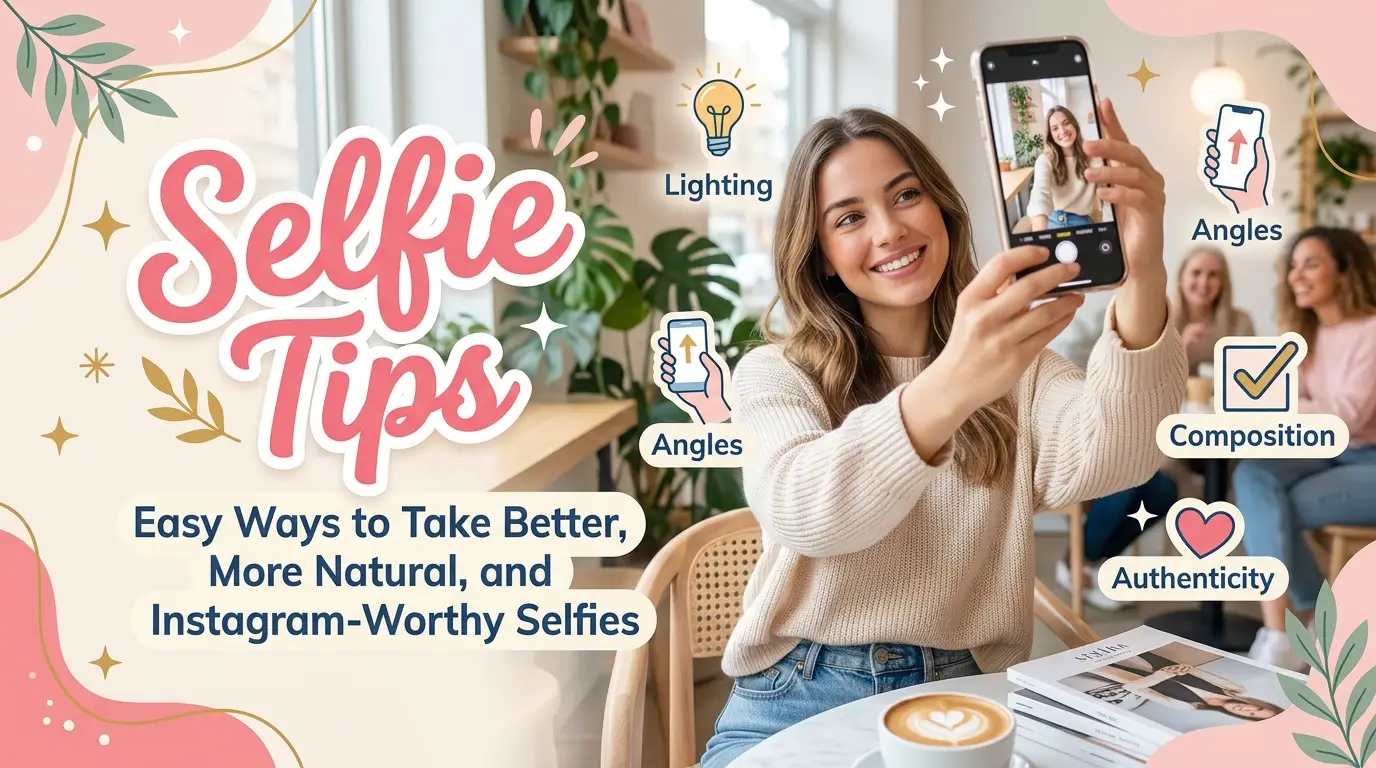
Selfie Tips: Easy Ways to Take Better, More Natural, and Instagram-Worthy Selfies
Taking a great selfie isn’t simply about pointing your phone at your face and tapping the shutter button. The best selfies come from a combination of lighting, angles, expressions, backgrounds, poses, camera settings, confidence, and a little creativity. Whether you’re taking selfies for Instagram, TikTok, Snapchat, Facebook, or simply keeping memories for yourself, the right selfie tips can make a huge difference.
In this guide, you’ll discover 199 selfie tips designed to help you take better selfies in almost any situation. From simple posing tricks to creative selfie ideas, these tips can help you look natural, confident, stylish, and camera-ready without making your photos feel overly edited.
Selfie Tips for Better Lighting
“Use natural daylight whenever possible because soft sunlight can make your face look brighter and more flattering.”
“Face a window when taking an indoor selfie to create soft, even illumination across your face.”
“Avoid standing directly under harsh overhead lights because they can create unflattering shadows.”
“Take outdoor selfies during golden hour for warm, soft, and beautiful lighting.”
“Keep the brightest light in front of you rather than directly behind you.”
“Use a sheer curtain to soften strong sunlight coming through a window.”
“Avoid using flash unless the environment is genuinely too dark.”
“Try side lighting when you want your selfie to have more depth and dimension.”
“Experiment with backlighting for a dreamy silhouette or glowing effect.”
“Move closer to a light source instead of increasing camera brightness too much.”
“Check for strange shadows on your face before taking the final selfie.”
“Use a small lamp positioned slightly above eye level for indoor portraits.”
“Cloudy weather can create excellent soft lighting for outdoor selfies.”
“Use a ring light when you want consistent lighting indoors.”
“Adjust your position instead of constantly changing your camera settings.”
“Make sure your face isn’t partly hidden in deep shadows.”
“Use warm lighting for cozy selfies and cooler lighting for a crisp modern look.”
“Turn off competing light sources when they create strange color differences.”
“Try photographing near a bright wall because it can naturally reflect light onto your face.”
“Clean your lighting area before taking a selfie if the background is distracting.”
Selfie Tips for Camera Angles
“Hold your phone slightly above eye level to create a flattering perspective.”
“Avoid holding the phone extremely close to your face because it can distort facial features.”
“Experiment with a slightly turned head instead of facing the camera completely straight.”
“Try looking slightly upward when you want a more open and confident expression.”
“Angle your face toward your better-known side if you have a preferred profile.”
“Keep the camera lens roughly aligned with your eyes for a natural-looking selfie.”
“Move the phone farther away and crop afterward when you want less facial distortion.”
“Try a three-quarter angle for a more dynamic portrait.”
“Use a lower angle sparingly because it can dramatically change facial proportions.”
“Keep your camera level when you want a clean and straightforward selfie.”
“Turn your shoulders slightly instead of keeping your entire body square to the camera.”
“Experiment with different distances until your face looks naturally proportioned.”
“Try tilting your chin slightly downward for a softer portrait.”
“Avoid extreme phone tilts unless you’re intentionally creating an artistic effect.”
“Use a mirror selfie to experiment with angles you wouldn’t normally try.”
“Take several angles before choosing your favorite composition.”
“Try photographing from slightly above and to the side for a classic selfie look.”
“Keep your phone steady so your preferred angle remains consistent.”
“Don’t assume one angle works for everyone; experiment with your own features.”
“Use your front-facing camera to test different angles before taking the final shot.”
Selfie Tips for Posing
“Relax your shoulders before taking the picture because tension can make your pose look stiff.”
“Turn your body slightly to create a more natural pose.”
“Place one hand near your hair for an effortless-looking pose.”
“Rest your hand gently near your chin without pressing your face.”
“Try looking away from the camera for a candid-style selfie.”
“Use a simple smile when you want your selfie to feel warm and approachable.”
“Experiment with a subtle closed-mouth smile for a relaxed expression.”
“Try a bigger smile when the mood of the photo is cheerful and energetic.”
“Keep your hands relaxed rather than forcing complicated poses.”
“Use your favorite accessory as a natural prop.”
“Hold a coffee cup, book, flower, or pair of sunglasses to create visual interest.”
“Lean gently against a wall for a casual selfie pose.”
“Sit near a window and photograph yourself from a comfortable angle.”
“Cross your arms loosely for a confident-looking portrait.”
“Place one hand on your waist for a stylish pose.”
“Run your fingers gently through your hair for a spontaneous-looking photo.”
“Try a side profile when you want something different from a traditional selfie.”
“Look over your shoulder for a playful and fashionable composition.”
“Experiment with seated selfies instead of always standing.”
“Move naturally between poses rather than freezing in one position.”
Selfie Tips for Facial Expressions
“Relax your face before taking the photo to avoid an unnatural expression.”
“Think about something funny if your smile feels forced.”
“Try a soft smile when you want an elegant and subtle selfie.”
“Use a confident expression for fashion-focused selfies.”
“Raise your eyebrows slightly for a playful expression.”
“Experiment with a serious expression when creating a dramatic portrait.”
“Look directly into the lens when you want stronger eye contact.”
“Look slightly away from the lens for a candid feeling.”
“Don’t force a smile if it doesn’t match the mood of the photograph.”
“Practice different expressions in front of a mirror.”
“Keep your eyes relaxed instead of opening them excessively.”
“Take several photos while changing expressions naturally.”
“Try laughing during the photo for a genuine-looking smile.”
“Use your eyes to communicate emotion rather than relying only on your mouth.”
“Match your expression to your outfit and surroundings.”
“Try a thoughtful expression for artistic selfies.”
“Use a surprised expression for fun social media content.”
“Keep your jaw relaxed to prevent tension from showing in your face.”
“Take a breath before pressing the shutter.”
“Choose the expression that feels most like you.”
Selfie Tips for Backgrounds
“Choose a clean background when you want attention to stay on your face.”
“Use colorful walls to make simple selfies more visually interesting.”
“Avoid clutter directly behind your head.”
“Check the entire frame before taking the picture.”
“Use nature as a background for fresh and relaxed selfies.”
“Try a beach background for bright and summery photos.”
“Use city streets to create an energetic urban selfie.”
“Photograph near interesting architecture for a stylish composition.”
“Use flowers, trees, or gardens to add natural color.”
“Blur a distracting background when your camera supports portrait mode.”
“Choose a background that complements your outfit.”
“Use a plain wall when you want a minimalist selfie.”
“Look for interesting reflections in windows and mirrors.”
“Avoid backgrounds with objects that appear to stick out of your head.”
“Keep distracting signs and random objects away from the main composition.”
“Use a bedroom background only when it looks tidy and intentional.”
“Try a colorful café setting for a lifestyle selfie.”
“Use seasonal backgrounds to make your photos feel timely.”
“Change your location instead of relying on the same background every time.”
“Remember that the background is part of your selfie story.”
Selfie Tips for Camera Quality
“Clean your phone’s camera lens before taking selfies.”
“Use the highest practical camera quality available on your phone.”
“Avoid excessive digital zoom because it can reduce image quality.”
“Keep your camera lens free from fingerprints and dust.”
“Tap your face on the screen to help the camera focus correctly.”
“Check exposure before taking your final photograph.”
“Use portrait mode when you want stronger separation between yourself and the background.”
“Try standard photo mode when you want more environmental detail.”
“Use a timer when holding the phone at arm’s length feels awkward.”
“Use a tripod for hands-free selfies.”
“Try a Bluetooth shutter when taking selfies from a distance.”
“Keep your phone steady when shooting in low light.”
“Use burst mode when available for fast-moving selfie moments.”
“Review sharpness by zooming into your eyes before posting.”
“Avoid heavy camera filters that destroy natural details.”
“Try your phone’s different camera lenses to discover new perspectives.”
“Use the rear camera when maximum image quality matters and you can frame yourself another way.”
“Check whether your phone flips selfies automatically.”
“Choose the camera mode that matches the style you’re creating.”
“Update your phone camera app when improvements are available.”
Selfie Tips for Instagram and Social Media
“Choose a selfie that reflects your personality instead of chasing every trend.”
“Crop your selfie carefully for the platform where you plan to post it.”
“Use consistent editing styles if you’re building a recognizable social media aesthetic.”
“Leave enough space around your face for flexible cropping.”
“Choose a strong first image when creating a carousel post.”
“Use captions that add context rather than simply describing the picture.”
“Match your selfie to the overall mood of your profile.”
“Try different selfie formats instead of posting the same pose repeatedly.”
“Use natural-looking edits when you want an authentic social media presence.”
“Create themed selfie sessions for different seasons.”
“Experiment with black-and-white selfies for a timeless appearance.”
“Use occasional candid selfies to make your feed feel more personal.”
“Don’t delete every imperfect selfie because authentic moments can be memorable.”
“Post selfies that make you feel confident rather than posting only for approval.”
“Use relevant hashtags sparingly when they genuinely fit your content.”
“Consider the thumbnail appearance before posting a selfie.”
“Try portrait-oriented images when they suit your social platform.”
“Use Stories for casual selfies that don’t need extensive editing.”
“Experiment with short selfie videos for more dynamic content.”
“Remember that confidence usually looks better than perfection.”
Selfie Tips for Editing
“Keep selfie editing subtle when you want your skin and features to look natural.”
“Adjust brightness before adding complicated filters.”
“Increase contrast carefully so facial details remain visible.”
“Use highlights and shadows to balance difficult lighting.”
“Crop unnecessary distractions from the edges of your selfie.”
“Straighten the image if the background lines look tilted.”
“Use a consistent filter if you’re developing a visual style.”
“Avoid excessive skin smoothing because it can make photos look artificial.”
“Keep skin texture visible for a more realistic appearance.”
“Adjust warmth when the lighting makes your skin look unusually cool or orange.”
“Reduce distracting background colors if your editing app allows selective adjustments.”
“Use black-and-white editing when color isn’t adding anything to the image.”
“Save your original photo before applying major edits.”
“Compare the edited version with the original before posting.”
“Don’t rely on filters to fix poor lighting.”
“Use sharpening lightly because too much can make skin look harsh.”
“Make small adjustments instead of changing everything at once.”
“Check your edited selfie on another screen before publishing.”
“Remember that editing should enhance the photograph rather than completely change it.”
“Stop editing when the picture already looks good.”
Creative Selfie Tips
“Try a reflection selfie using a clean mirror.”
“Photograph your reflection in a car window for an artistic effect.”
“Use sunglasses as a prop for a fashionable selfie.”
“Take a selfie while holding your favorite book.”
“Try a rainy-window selfie for a cinematic mood.”
“Use flowers in the foreground to create depth.”
“Photograph yourself through a doorway for natural framing.”
“Try a shadow selfie when the sunlight creates interesting shapes.”
“Use colorful lights for a creative nighttime portrait.”
“Experiment with silhouettes during sunset.”
“Take a selfie with your favorite pet when you want a warm and personal image.”
“Try a vacation selfie that includes recognizable scenery.”
“Use reflections in water for an unusual composition.”
“Take a cozy selfie while enjoying your favorite drink.”
“Experiment with hats, scarves, or other accessories.”
“Try a monochrome outfit and matching background for a coordinated look.”
“Use a staircase as an interesting background.”
“Photograph yourself through leaves for a natural frame.”
“Try a close-up of your eyes for a different kind of selfie.”
“Create a before-and-after selfie series to document a transformation or experience.”
Selfie Tips for Confidence
“Remember that a good selfie doesn’t require a perfect face.”
“Take photos when you’re feeling relaxed rather than pressured.”
“Practice until taking selfies feels comfortable and natural.”
“Focus on expressing yourself instead of hiding every perceived imperfection.”
“Don’t compare your unedited selfie with someone else’s professionally produced photo.”
“Experiment with styles until you discover what makes you feel confident.”
“Use poses that feel comfortable instead of copying poses you dislike.”
“Celebrate your individuality through your selfies.”
“Take photos for yourself as well as for social media.”
“Don’t let a single unflattering photo define how you see yourself.”
“Smile when you genuinely feel happy rather than forcing an expression.”
“Remember that cameras capture moments, not your entire personality.”
“Try taking selfies without immediately judging them.”
“Give yourself permission to experiment.”
“Confidence can make a simple selfie look much more compelling.”
“Choose clothing that makes you feel comfortable and confident.”
“Use backgrounds where you feel relaxed.”
“Take a few practice shots before the important photo.”
“Keep the selfie process fun rather than stressful.”
“The best selfie is often the one where you look and feel like yourself.”
Selfie Tips for Different Situations
“Use bright natural lighting for daytime selfies.”
“Use a ring light or soft lamp for nighttime indoor selfies.”
“Take travel selfies that show enough scenery to tell a story.”
“Use winter clothing and seasonal surroundings to create cozy winter selfies.”
“Try beach selfies with natural sunlight and relaxed poses.”
“Use fall leaves as colorful natural backgrounds.”
“Take spring selfies surrounded by flowers and greenery.”
“Use festive decorations to create holiday-themed selfies.”
“Try gym selfies when you want to document your fitness routine.”
“Keep gym selfies quick and respectful of other people around you.”
“Use café lighting and a coffee cup for a relaxed lifestyle selfie.”
“Try study selfies with books and a desk for academic content.”
“Take birthday selfies that capture the celebration rather than just your face.”
“Use concert lighting creatively while being mindful of harsh exposure.”
“Take road-trip selfies when you’re safely stopped.”
“Use hotel mirrors for polished travel selfies.”
“Try sunset selfies for warm, romantic-looking images.”
“Use rainy weather as a creative opportunity instead of avoiding photos completely.”
“Take casual home selfies when you want something authentic.”
“Let the environment help tell the story behind your selfie.”
Final Selfie Tips to Remember
“Take more photos than you think you need because the best expression may happen between poses.”
“Don’t be afraid to move your phone, body, or location.”
“Try the same selfie in different lighting to see how dramatically the mood changes.”
“Keep your favorite poses in mind for future photo sessions.”
“Create a small collection of go-to selfie angles.”
“Experiment with new ideas regularly so your selfies don’t become repetitive.”
“Use natural movement to make poses look less staged.”
“Keep your eyes focused on the camera lens when you want direct connection.”
“Check your hair and clothing before taking important selfies.”
“Pay attention to small details because they can change the entire photograph.”
“Use composition techniques such as symmetry and leading lines.”
“Keep the main subject clear and easy to recognize.”
“Don’t overcrowd a selfie with unnecessary props.”
“Use negative space when you want a more editorial-looking photo.”
“Try taking selfies from different distances.”
“Experiment with both close-up portraits and wider environmental selfies.”
“Use your phone timer when you want more freedom to pose.”
“Take advantage of reflections, shadows, colors, and textures around you.”
“Let your personality guide your selfie style instead of copying everyone else.”
“Remember that the most memorable selfies usually capture a feeling, moment, or story.”
Conclusion
Learning how to take better selfies is really about experimentation. Lighting, camera angles, facial expressions, poses, backgrounds, editing, and confidence all work together to create a strong photograph. You don’t need expensive equipment or professional photography skills to improve your selfies. A clean camera lens, good natural light, a flattering angle, and an authentic expression can already transform your results.
The next time you pick up your phone for a selfie, try something slightly different. Change your angle, move toward a window, relax your shoulders, smile naturally, or simply let yourself have fun. You might be surprised by how much better your selfies become with a few small changes.