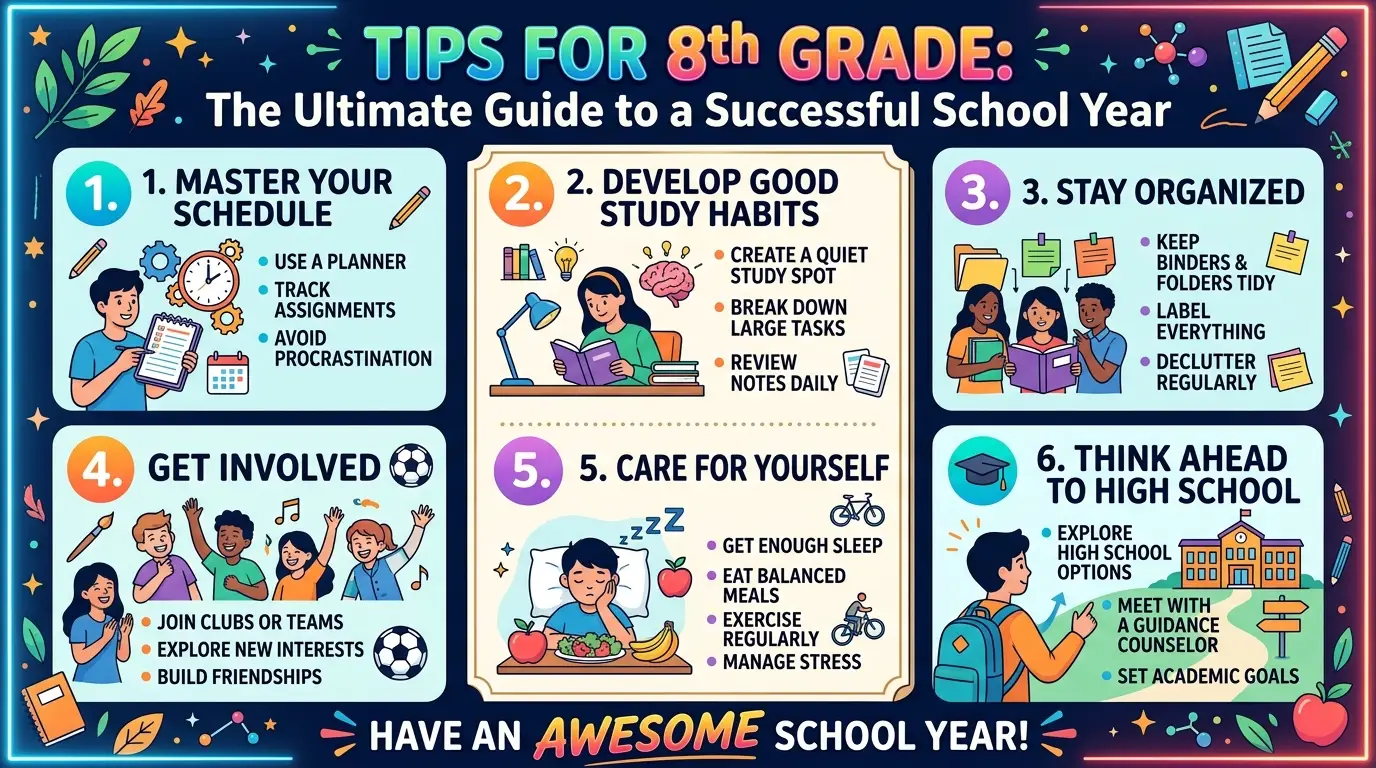
Tips for 8th Grade: The Ultimate Guide to a Successful School Year
Starting 8th grade can feel exciting, stressful, and a little overwhelming all at once. You may have harder classes, more homework, new expectations, changing friendships, and bigger decisions about your future. The good news? You don’t have to figure everything out on day one. These 99 tips for 8th grade will help you stay organized, improve your grades, manage your time, build confidence, and make the most of your final middle school year.
Whether you’re nervous about starting 8th grade or simply want to have your best school year yet, these practical 8th grade tips can make a huge difference. Some are about studying, some are about friendships, and others are simple habits that can make everyday school life easier.
Tips for 8th Grade Students
Start the Year With a Fresh Mindset
Don’t let your experiences from previous grades decide how your 8th grade year will go. Treat the new school year as a fresh start and give yourself permission to improve.
Get Organized Early
One of the best tips for 8th grade is to get organized before assignments start piling up. Organize your backpack, notebooks, folders, and digital files from the beginning.
Use a Planner
Write down homework, tests, projects, activities, and important deadlines. A planner can help you remember things that are easy to forget.
Keep Your Backpack Clean
Don’t let old papers and random objects take over your backpack. Clean it out regularly so you can quickly find what you need.
Learn Your Class Schedule
Know where your classrooms are and how much time you have between classes. This can make your school mornings much less stressful.
Listen Carefully in Class
Pay attention when your teacher explains something. You may discover that the information you need for a test was already explained during class.
Take Useful Notes
Don’t try to write down every word your teacher says. Focus on important ideas, definitions, examples, dates, formulas, and instructions.
Ask Questions
If you don’t understand something, ask. One question today can prevent hours of confusion later.
Don’t Be Afraid to Make Mistakes
Mistakes aren’t proof that you’re bad at a subject. They’re opportunities to discover what you need to practice.
Finish Homework on Time
Avoid waiting until the last possible moment. Completing assignments early gives you more time to check your work.
Break Large Assignments Into Pieces
A huge project can seem scary when you look at it as one task. Divide it into research, planning, writing, editing, and finishing.
Create a Homework Routine
Choose a regular time and place for homework. A consistent routine makes studying feel less difficult.
Put Your Phone Away
Your phone can turn a 30-minute assignment into a two-hour struggle. Keep distractions away when you need to concentrate.
Study Before Tests
Don’t depend entirely on last-minute studying. Reviewing material for several days usually feels easier than cramming everything into one night.
Review Your Notes Regularly
Spend a few minutes reviewing your notes after class. Small reviews can make later studying much easier.
Use Flashcards
Flashcards can be useful for vocabulary, formulas, dates, definitions, and important facts.
Explain Concepts Out Loud
Try teaching the topic to yourself, a friend, or an imaginary classroom. If you can explain it clearly, you probably understand it.
Practice Difficult Subjects More Often
If math or science is challenging, give those subjects extra practice instead of avoiding them.
Read Every Day
Reading improves vocabulary, comprehension, writing ability, and general knowledge. Even a few pages a day can help.
Improve Your Writing
Write often and learn from feedback. Strong writing becomes especially useful as assignments become more advanced in 8th grade.
Proofread Your Work
Before submitting an assignment, check spelling, grammar, punctuation, instructions, and formatting.
Read the Instructions Twice
Sometimes students lose points not because they don’t know the material, but because they misunderstand the assignment.
Keep Track of Your Grades
Knowing your grades helps you understand where you’re doing well and where you need improvement.
Don’t Ignore a Low Grade
One disappointing grade doesn’t define you. Look at what went wrong and decide what you can change next time.
Talk to Your Teachers
Teachers are there to help you learn. If you’re struggling, talk to them before the problem becomes bigger.
Build Good Relationships With Teachers
Be respectful, participate, listen, and show that you care about your work. A positive relationship can make school more comfortable.
Participate in Class
Raise your hand, answer questions, join discussions, and contribute when appropriate. Participation can also help you remember information.
Find a Study Partner
Studying with a responsible friend can make difficult subjects more interesting and give you someone to quiz you.
Choose Your Friends Wisely
Good friends encourage you, respect you, and want to see you succeed. You don’t need a huge group of friends to have a great school year.
Don’t Change Yourself to Fit In
Trying to become someone you’re not just to impress others can become exhausting. Be yourself while continuing to grow.
Be Kind to New Students
If someone seems nervous or alone, a simple hello can make their day much better.
Stay Away From Drama
Not every argument deserves your attention. Sometimes the smartest choice is to walk away.
Don’t Gossip
Gossip can damage friendships and create problems that could have been avoided.
Think Before You Post
Social media posts can spread quickly. Ask yourself whether you’d be comfortable with teachers, parents, classmates, or your future self seeing the post.
Protect Your Privacy Online
Avoid sharing private information with strangers online. Use strong passwords and think carefully about what you share.
Don’t Compare Yourself Constantly
Someone else’s grades, appearance, popularity, or achievements don’t determine your worth.
Celebrate Small Wins
Finished a difficult assignment? Improved a grade? Made a new friend? Give yourself credit.
Set Academic Goals
Instead of saying, “I want better grades,” create a specific goal such as improving your math grade or turning in every assignment on time.
Set Personal Goals
School isn’t only about grades. You can also set goals for confidence, friendships, creativity, fitness, reading, or hobbies.
Track Your Progress
Write down your goals and check them regularly. Seeing progress can motivate you to continue.
Don’t Expect Perfection
Trying to be perfect can create unnecessary stress. Focus on doing your best and learning from mistakes.
Learn From Feedback
When a teacher corrects your work, don’t take it personally. Feedback gives you information about how to improve.
Use Your Free Time Wisely
You don’t need to study every minute of the day. Use free time for hobbies, friends, exercise, relaxation, and things that make you happy.
Get Enough Sleep
Sleep is one of the most important tips for 8th grade students. Staying up late every night can make school much harder.
Create a Bedtime Routine
Try to go to bed and wake up around consistent times. A predictable routine can make mornings easier.
Prepare the Night Before
Pack your backpack, choose your clothes, check your schedule, and prepare anything you’ll need for the next day.
Don’t Skip Breakfast
Starting the day hungry can make it harder to concentrate. Have a balanced breakfast when possible.
Drink Enough Water
Keep yourself hydrated throughout the school day, especially when you’re active.
Move Your Body
Exercise can be a great way to reduce stress and improve your energy. Find an activity you actually enjoy.
Take Breaks While Studying
Long study sessions without breaks can become exhausting. Short breaks can help you return to your work with better focus.
Find a Quiet Study Space
A clean, comfortable study area can help your brain switch into homework mode.
Keep School Supplies Ready
Keep pencils, pens, paper, folders, calculators, and other required supplies available so you’re not searching for them every evening.
Charge Your Devices
If you need a tablet or laptop for school, charge it before going to bed.
Back Up Important Schoolwork
Save important documents somewhere secure. Losing a major project because of a technical problem can be incredibly frustrating.
Name Digital Files Clearly
Instead of saving everything as “document1,” use names that tell you exactly what the file contains.
Use Technology as a Tool
Technology can make studying easier, but it should support learning rather than replace your effort.
Avoid Multitasking
Trying to study while watching videos, texting, and scrolling can make concentration much harder.
Learn How You Study Best
Some students learn through reading, others through diagrams, practice questions, discussion, or demonstrations. Experiment and discover what works for you.
Use Practice Questions
Practice questions help you discover whether you actually understand the material rather than simply recognizing it.
Review Mistakes Before Tests
Your mistakes can show you exactly what deserves another look before an exam.
Start Projects Early
Projects almost always take longer than expected. Starting early gives you room for unexpected problems.
Don’t Copy Other Students’ Work
Doing your own work helps you learn and keeps you out of academic trouble.
Give Credit to Sources
When an assignment requires research, follow your teacher’s instructions for citing sources.
Learn Basic Research Skills
Know how to find reliable information, compare sources, and distinguish facts from opinions.
Don’t Believe Everything Online
Just because something appears on a website or social media doesn’t mean it’s true. Think critically.
Improve Your Vocabulary
When you encounter an unfamiliar word, look it up and try using it in a sentence.
Keep a List of Difficult Words
Writing down unfamiliar vocabulary can make it easier to remember new terms.
Practice Math Regularly
Math skills often build on previous concepts. Regular practice can prevent small gaps from becoming bigger problems.
Show Your Work
In many math problems, the process matters. Showing your work can help your teacher see where you need assistance.
Don’t Rush Through Tests
Read each question carefully. If you finish early, use the remaining time to check your answers.
Manage Test Anxiety
Take slow breaths, prepare ahead of time, and remind yourself that one test does not define your intelligence.
Get Help When You Need It
Asking for help is a strength, not a weakness. Reach out to teachers, parents, tutors, counselors, or trusted classmates.
Join an Activity
Clubs, sports, music, art, and other activities can help you discover new interests and meet people.
Try Something New
8th grade is a great time to step outside your comfort zone. Try something you’ve always been curious about.
Develop a Hobby
Having an activity you enjoy outside school can give you a healthy way to relax.
Make Time for Fun
School matters, but you’re not a machine. Spend time laughing, playing, creating, and enjoying life.
Be Respectful to Everyone
Treat classmates, teachers, staff, and other people with basic respect, even when you don’t agree with them.
Stand Up Against Bullying
If you experience or witness bullying, tell a trusted adult. You don’t have to handle serious situations alone.
Don’t Become the Bully
Jokes aren’t funny when they’re designed to hurt someone. Think about how your words might affect another person.
Choose Your Words Carefully
A few seconds of thought can prevent an argument, embarrassment, or hurt feelings.
Learn to Say No
You don’t have to participate in something simply because your friends are doing it.
Trust Your Instincts
If a situation feels unsafe or seriously uncomfortable, move away and seek help from a trusted adult.
Take Responsibility
When you make a mistake, own it. Taking responsibility shows maturity.
Stop Making Excuses
Instead of focusing on why something went wrong, focus on what you can do differently next time.
Learn From Older Students
Older students can sometimes offer useful advice about classes, teachers, activities, and preparing for high school.
Think About High School
8th grade is a good time to begin learning about the expectations you’ll face in high school without stressing about the future.
Build Strong Study Habits Now
Good study habits developed in 8th grade can make the transition to high school much smoother.
Keep Your Motivation Visible
Write your goals somewhere you’ll see them regularly. A simple reminder can help when motivation disappears.
Reward Your Effort
After completing a difficult task, give yourself a reasonable reward, such as listening to music, playing a game, or spending time with friends.
Don’t Procrastinate
Procrastination usually creates more stress later. Even completing five minutes of a task can help you get started.
Use the Five-Minute Rule
Tell yourself you’ll work on a difficult assignment for just five minutes. Once you begin, continuing often becomes easier.
Keep Your Room and Workspace Organized
A cluttered environment can make finding school materials harder. A quick daily cleanup can save time.
Learn to Manage Stress
Journaling, walking, talking to someone, listening to music, breathing exercises, and hobbies can all provide healthy ways to handle everyday stress.
Don’t Bottle Everything Up
If something is bothering you, talk to someone you trust. You don’t have to carry every problem by yourself.
Be Patient With Yourself
Growth takes time. You may not become more confident, organized, or academically successful overnight.
Remember That Everyone Struggles
Even students who look like they have everything figured out may be dealing with their own challenges.
Enjoy Your Final Middle School Year
Don’t become so focused on grades and future plans that you forget to enjoy the present.
Make Good Memories
Take part in school events, laugh with friends, try new things, and appreciate the moments you’ll eventually look back on.
Believe You Can Improve
Perhaps the most important of all these tips for 8th grade is to remember that your abilities aren’t fixed. You can learn, practice, improve, and become better than you were yesterday.
Best Tips for 8th Grade Success
The best tips for 8th grade aren’t necessarily complicated. In fact, many of them come down to a few simple habits: stay organized, listen in class, complete your assignments, ask for help, manage your time, get enough sleep, and surround yourself with positive people.
8th grade can be challenging because expectations often become higher. Teachers may expect more independence, assignments can become more demanding, and you may start thinking seriously about high school. Instead of seeing those changes as something to fear, see them as opportunities to become more responsible and confident.
Remember that success doesn’t mean getting perfect grades every time. Success can mean finally understanding a difficult math concept, speaking up in class when you’re nervous, finishing a project early, making a new friend, or recovering after a disappointing test.
8th Grade Tips for Better Grades
If improving your grades is one of your biggest goals, focus on consistency rather than last-minute effort. Keep track of assignments, study regularly, ask questions, and review your mistakes.
One useful habit is to spend a few minutes each afternoon checking what homework needs to be completed. Then look ahead at upcoming tests and projects. This simple routine can prevent the dreaded feeling of discovering a huge assignment the night before it’s due.
You should also remember that studying isn’t simply reading your textbook again and again. Try practice questions, flashcards, diagrams, summaries, or explaining the lesson aloud. Active learning can make your study time more productive.
8th Grade Tips for Making Friends
Friendships can make middle school much more enjoyable, but finding the right people matters more than being popular. Look for friends who respect your boundaries, celebrate your successes, listen when you’re having a difficult day, and don’t pressure you into doing things you’re uncomfortable with.
Be willing to introduce yourself, join activities, and start conversations. You don’t need to become best friends with everyone. A few genuine friendships can be much more valuable than a large group.
And if a friendship changes, don’t automatically assume something is wrong with you. People grow and change during middle school. Sometimes friendships naturally become different, and that’s okay.
8th Grade Tips for Staying Confident
Confidence doesn’t mean believing you’re better than everyone else. Real confidence means knowing that you can handle challenges, learn from mistakes, and keep going when things don’t work out.
Try not to compare your entire life with someone else’s highlight reel. Social media can make it seem as though everyone else is happier, more successful, more attractive, or more popular. Remember that you’re usually seeing only a tiny part of someone’s life.
Focus on your own progress.
A powerful reminder for any 8th grader is: “You don’t have to have everything figured out. You just need to keep learning, keep growing, and keep moving forward.”