Tips for School: The Ultimate Guide to Student Success
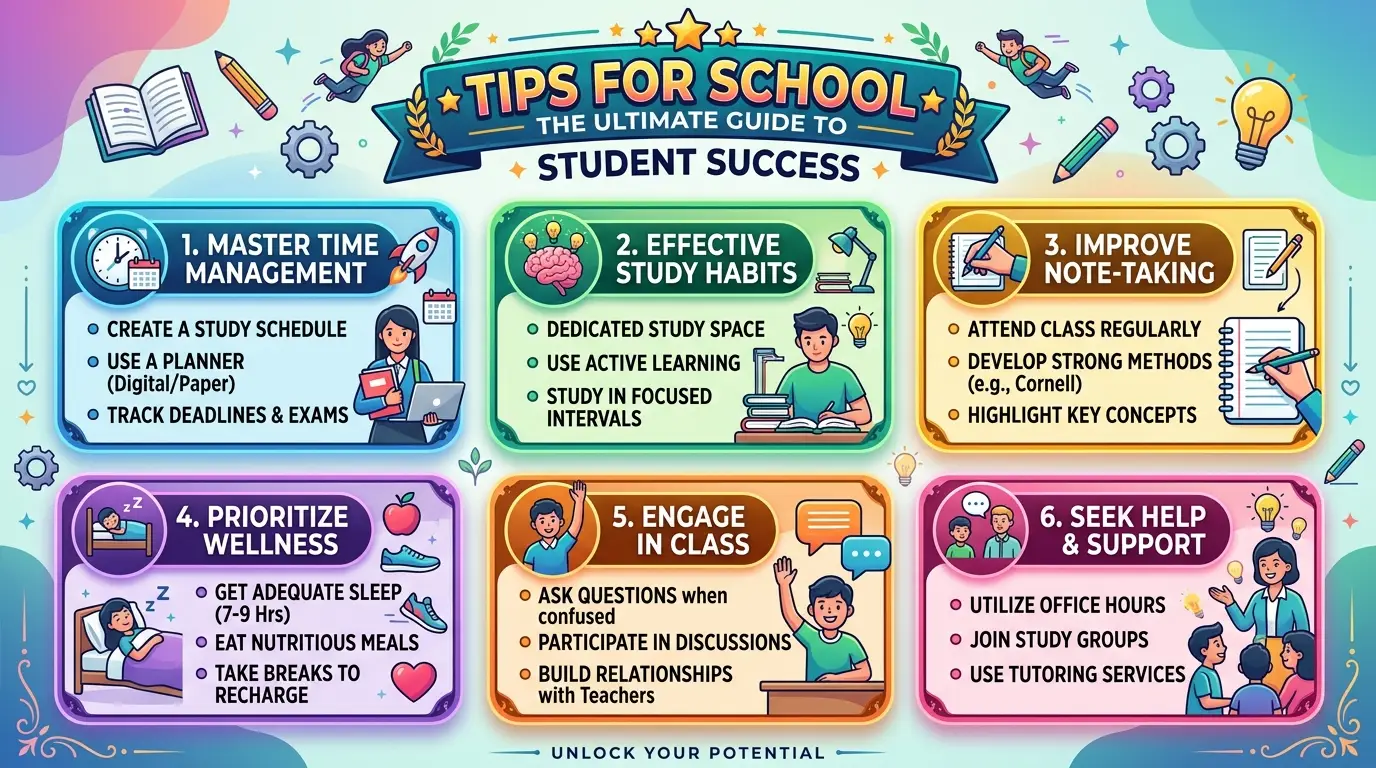
School is one of the most important parts of life because it helps you gain knowledge, build friendships, develop confidence, and prepare for the future. Whether you’re in elementary school, middle school, high school, or college, learning good habits can make every day more productive and enjoyable. These 99 tips for school are designed to help students stay organized, improve grades, reduce stress, and enjoy the learning journey.
From managing your time wisely to building better study habits, these tips for school will help you become a smarter, happier, and more confident student.
Why Following Tips for School Matters
Success in school isn’t only about intelligence. It also depends on consistency, preparation, discipline, and a positive attitude. Small daily habits can create big improvements over time. These tips for school focus on practical actions that any student can use to become more successful inside and outside the classroom.
“Start each school day with a positive attitude.”
A positive mindset helps you face challenges with confidence. Beginning the day believing you can learn and improve makes it easier to stay motivated even when lessons become difficult.
“Get enough sleep every night.”
Quality sleep improves concentration, memory, and energy. Students who rest well often perform better in class and feel more prepared to handle schoolwork.
“Eat a healthy breakfast before class.”
Breakfast gives your brain the fuel it needs to stay focused. A balanced meal can improve attention and help you stay energized throughout the morning.
“Arrive at school on time.”
Being punctual reduces stress and allows you to begin each lesson calmly. Arriving early also gives you time to prepare for the day’s activities.
“Pack your backpack the night before.”
Preparing ahead saves time and prevents forgetting important books, homework, or supplies. Good preparation makes mornings less rushed.
“Keep your school supplies organized.”
An organized backpack and desk make it easier to find what you need quickly. Staying organized also helps reduce unnecessary stress.
“Bring all required materials to class.”
Having your notebooks, textbooks, and writing tools ready allows you to fully participate in every lesson without interruptions.
“Write down homework assignments immediately.”
Recording assignments prevents forgetting important tasks. A planner or notebook can help you stay on top of deadlines.
“Review your class schedule daily.”
Knowing what classes you have each day helps you prepare the right materials and stay organized.
“Set personal academic goals.”
Goals give you direction and motivation. Whether it’s improving grades or reading more books, having clear objectives encourages consistent effort.
“Listen carefully during lessons.”
Active listening helps you understand concepts the first time they’re explained. Paying attention also reduces the amount of studying needed later.
“Take clear and organized notes.”
Good notes make reviewing easier before quizzes and exams. They also help you remember key ideas long after class ends.
“Ask questions whenever you’re confused.”
Teachers appreciate students who seek clarification. Asking questions helps you understand difficult topics before they become bigger problems.
“Participate in classroom discussions.”
Joining conversations improves confidence and strengthens your understanding of the lesson through active learning.
“Respect your teachers.”
Showing respect creates a positive classroom environment and builds stronger relationships with educators who want to help you succeed.
“Treat classmates with kindness.”
Kindness encourages teamwork and creates friendships that make school more enjoyable and supportive.
“Avoid distracting others during class.”
Staying focused helps both you and your classmates learn more effectively without unnecessary interruptions.
“Follow classroom rules.”
Rules exist to create a safe and productive learning environment where everyone has the opportunity to succeed.
“Complete homework on time.”
Finishing assignments before deadlines builds responsibility and reinforces what you learned during class.
“Study a little every day.”
Short daily study sessions are often more effective than last-minute cramming before exams.
“Read beyond your textbooks.”
Extra reading expands your knowledge, vocabulary, and understanding of different subjects.
“Practice difficult subjects regularly.”
Consistent practice improves skills in challenging subjects like math, science, and foreign languages.
“Break large assignments into smaller tasks.”
Completing smaller steps makes big projects feel more manageable and less overwhelming.
“Use a planner to stay organized.”
A planner helps track homework, tests, projects, and extracurricular activities in one place.
“Keep your study area clean.”
A tidy workspace reduces distractions and helps you concentrate more effectively.
“Turn off unnecessary notifications while studying.”
Limiting phone and social media interruptions improves focus and productivity.
“Take short study breaks.”
Brief breaks refresh your mind and help maintain concentration during longer study sessions.
“Review notes after every class.”
Looking over your notes soon after class strengthens memory and reinforces important concepts.
“Practice active learning.”
Instead of simply rereading information, summarize ideas, explain concepts aloud, and solve practice problems.
“Use flashcards for memorization.”
Flashcards make learning vocabulary, formulas, and definitions easier through repeated practice.
“Stay curious about new topics.”
Curiosity encourages lifelong learning and makes school more enjoyable.
“Read instructions carefully.”
Understanding directions before beginning assignments helps avoid unnecessary mistakes.
“Proofread your work.”
Checking assignments before submitting them helps catch spelling, grammar, and calculation errors.
“Manage your time wisely.”
Balancing schoolwork, hobbies, sports, and relaxation reduces stress and improves productivity.
“Avoid procrastination.”
Starting assignments early gives you more time to produce quality work and reduces last-minute pressure.
“Stay calm during exams.”
Remaining relaxed helps you think clearly and remember information more effectively.
“Read every exam question carefully.”
Taking time to understand each question reduces careless mistakes.
“Answer easy questions first.”
Completing simpler questions builds confidence and leaves more time for difficult ones.
“Double-check your answers.”
Reviewing your work before submitting an exam can improve your final score.
“Learn from your mistakes.”
Every mistake is an opportunity to improve. Reviewing incorrect answers strengthens future performance.
“Celebrate small achievements.”
Recognizing progress keeps motivation high throughout the school year.
Building Strong School Habits
Developing consistent routines is one of the best ways to achieve long-term academic success. Good habits become automatic over time, making school feel less stressful and more rewarding. Students who consistently apply helpful tips for school often notice improvements not only in grades but also in confidence, friendships, and personal growth.
“Stay physically active.”
Regular exercise improves concentration, mood, and overall health, making learning easier.
“Drink plenty of water.”
Proper hydration supports brain function and keeps your energy levels stable throughout the school day.
“Maintain good posture while studying.”
Sitting comfortably helps reduce fatigue and improves focus during homework sessions.
“Keep your digital files organized.”
Organized folders make it easier to locate assignments and study materials when needed.
“Back up important schoolwork.”
Saving files in multiple locations prevents losing valuable assignments.
“Use technology responsibly.”
Educational apps and online resources are valuable tools when used wisely.
“Limit social media during homework.”
Reducing online distractions allows you to complete work more efficiently.
“Develop strong reading habits.”
Reading regularly improves comprehension, vocabulary, and critical thinking.
“Practice writing every week.”
Frequent writing strengthens communication skills across every subject.
“Improve your handwriting.”
Clear handwriting makes notes easier to read and assignments easier to grade.
“Learn keyboard skills.”
Typing efficiently saves time when completing digital assignments.
“Volunteer for group projects.”
Teamwork develops communication, leadership, and collaboration skills.
“Respect different opinions.”
Learning from others broadens your perspective and encourages healthy discussions.
“Encourage your classmates.”
Supporting others creates a positive classroom environment where everyone benefits.
“Stay honest in your work.”
Academic integrity builds trust and reflects true learning.
“Avoid cheating.”
Honest effort develops lasting knowledge that benefits you beyond school.
“Accept constructive feedback.”
Helpful criticism identifies areas where you can continue improving.
“Keep improving every semester.”
Progress matters more than perfection. Small improvements add up over time.
Common Challenges Students Face
Every student experiences obstacles during their education. Some struggle with difficult subjects, while others find it challenging to stay organized, balance extracurricular activities, or manage stress before exams. These challenges are completely normal and can be overcome with patience, consistent effort, and the right strategies. Instead of becoming discouraged, focus on learning from setbacks and adjusting your study habits. Every obstacle provides an opportunity to develop stronger problem-solving skills, greater resilience, and increased confidence that will benefit you throughout your academic journey.
“Don’t compare yourself to others.”
Everyone learns at a different pace. Focus on your own progress rather than someone else’s achievements.
“Believe in your abilities.”
Confidence grows through preparation, practice, and perseverance.
“Stay motivated by remembering your goals.”
Keeping your future dreams in mind helps maintain focus during difficult times.
“Reward yourself after completing tasks.”
Small rewards make studying more enjoyable and encourage consistency.
“Keep learning from successful students.”
Observing effective study habits provides ideas you can adapt to your own routine.
“Stay open to new learning methods.”
Different techniques work for different people, so experiment until you find what suits you best.
“Review lessons before class.”
Preparing in advance helps you understand new material more quickly.
“Organize your notes by subject.”
Separate notebooks or folders make studying much more efficient.
“Highlight important information.”
Marking key concepts helps during revision sessions.
“Use practice tests before exams.”
Mock exams build confidence and identify topics needing additional review.
“Memorize formulas through repetition.”
Frequent review strengthens long-term memory.
“Understand concepts instead of memorizing.”
True understanding allows you to apply knowledge in different situations.
“Read every assigned chapter.”
Completing readings improves classroom participation and comprehension.
“Keep improving your vocabulary.”
A larger vocabulary benefits reading, writing, and communication skills.
“Practice speaking confidently.”
Strong communication skills help with presentations and class discussions.
“Join school clubs.”
Extracurricular activities develop leadership, teamwork, and friendships.
“Participate in school events.”
Being involved creates memorable experiences and strengthens school spirit.
“Respect school property.”
Taking care of classrooms and equipment benefits everyone.
“Help classmates when possible.”
Teaching others reinforces your own understanding while building positive relationships.
“Stay patient while learning.”
Some concepts take time to master, and persistence often leads to success.
“Focus on steady improvement.”
Consistent progress is more valuable than occasional perfection.
“Believe mistakes are part of learning.”
Every error teaches something valuable if you’re willing to learn from it.
“Stay organized throughout the school year.”
Maintaining organization every week prevents last-minute stress.
“Keep a positive attitude during setbacks.”
Challenges often become valuable learning experiences.
“Practice gratitude for your education.”
Appreciating learning opportunities helps build motivation and resilience.
“Respect everyone’s learning journey.”
Each student has unique strengths, weaknesses, and goals that deserve encouragement.
“Stay consistent with your daily study routine.”
A regular study schedule helps build discipline and prevents falling behind in your classes. Even studying for a short time each day can lead to better understanding and long-term success.
“Keep extra school supplies in your backpack.”
Having spare pencils, pens, paper, or other essentials ensures you’re always prepared and won’t miss important class activities because of forgotten items.
“Learn to manage stress in healthy ways.”
School can sometimes feel overwhelming, but healthy habits like exercising, taking breaks, or talking to someone you trust can help you stay calm and focused.
“Don’t be afraid to make mistakes.”
Mistakes are a natural part of learning. Every error gives you a chance to improve your understanding and become more confident.
“Stay respectful during group activities.”
Working well with others means listening carefully, sharing ideas respectfully, and contributing fairly to the team’s success.
“Use your free time wisely.”
Short breaks between classes or after finishing assignments can be used to review notes, organize materials, or prepare for upcoming lessons.
“Keep your classroom neat.”
A clean and organized classroom creates a better learning environment for everyone and shows respect for shared spaces.
“Take responsibility for your learning.”
Your education is ultimately your responsibility. Staying motivated, asking for help, and putting in consistent effort will help you achieve your goals.
“Build strong friendships with positive people.”
Supportive friends encourage good habits, motivate you to do your best, and make school a more enjoyable experience.
“Challenge yourself to learn something new every day.”
Learning doesn’t have to stop when class ends. Discovering new facts, skills, or ideas each day keeps your mind active and curious.
“Stay confident during presentations.”
Speaking in front of others becomes easier with preparation and practice. Confidence grows every time you step outside your comfort zone.
“Balance school with hobbies and relaxation.”
Making time for activities you enjoy helps reduce stress, improve mental well-being, and maintain a healthy balance between school and personal life.
“Always do your best, even on difficult days.”
Some days will be harder than others, but giving your best effort consistently builds resilience, character, and long-term success.
“Never stop believing in your potential.”
Every student has unique talents and strengths. With dedication, patience, and a willingness to learn, you can overcome challenges and achieve more than you ever imagined.