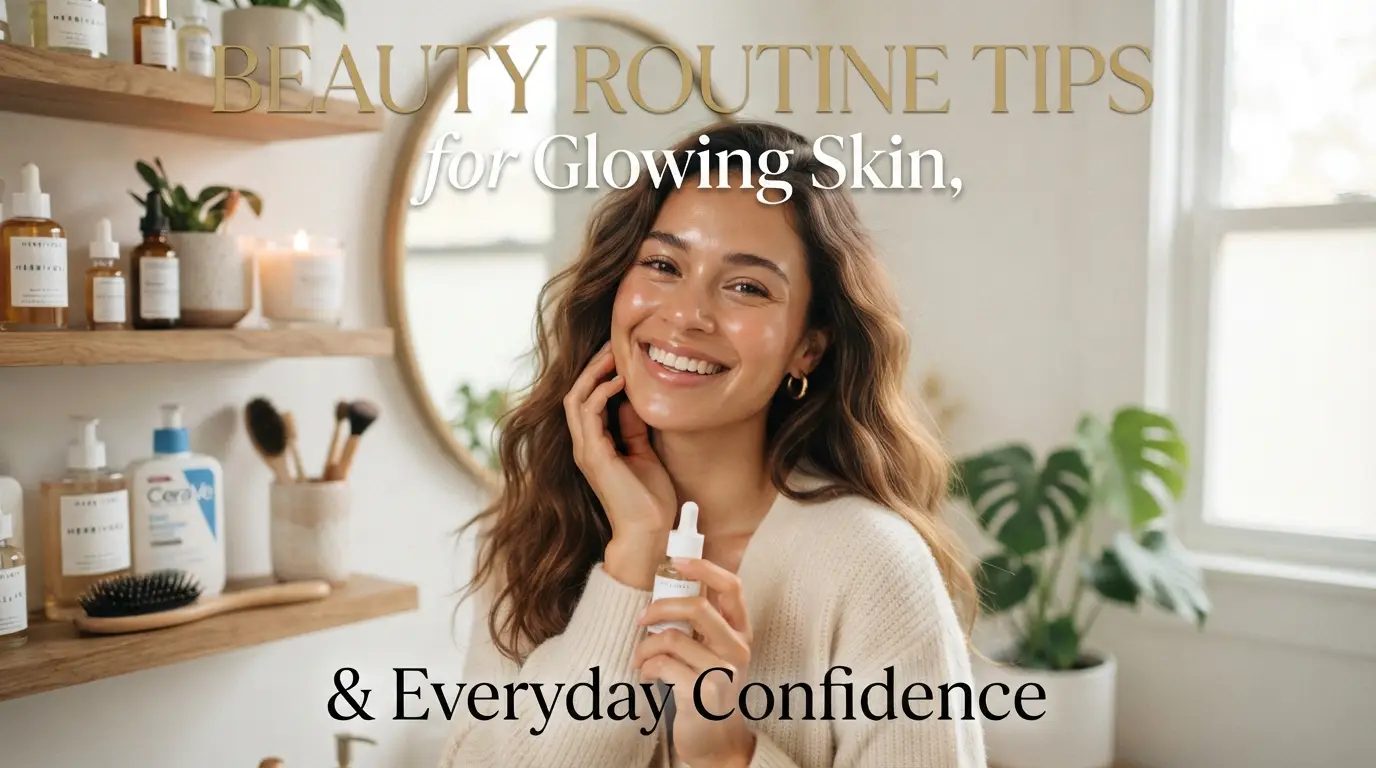
Beauty Routine Tips for Glowing Skin, Healthy Hair & Everyday Confidence
A good beauty routine does not have to be complicated, expensive, or filled with dozens of products. The best beauty routine tips are often simple habits that help your skin, hair, and overall appearance look and feel their best. Whether you are building a morning skincare routine, improving your nighttime habits, or simply looking for easy beauty tips for everyday life, small changes can make a noticeable difference over time.
Your beauty routine should work with your lifestyle rather than make your day more stressful. From cleansing and moisturizing to protecting your skin from the sun, caring for your hair, staying hydrated, and getting enough rest, there are countless ways to create a practical routine that feels enjoyable. The following 149 beauty routine tips can help you create habits that are simple, consistent, and easy to maintain.
Best Beauty Routine Tips for Everyday Care
“Start your beauty routine with consistency rather than complexity.” Using a few products regularly is often more practical than constantly changing your routine. Give your skincare and beauty habits time to become part of your everyday schedule.
“Cleanse your face gently instead of scrubbing aggressively.” A gentle cleanser can remove dirt, sweat, makeup, and excess oil without making your skin feel uncomfortable or overly dry.
“Wash your face according to your skin’s needs.” Oily skin, dry skin, combination skin, and sensitive skin can all require different approaches, so pay attention to how your skin responds after cleansing.
“Moisturize every day.” Moisturizer helps support the skin barrier and can leave your skin feeling softer, smoother, and more comfortable throughout the day.
“Use sunscreen as part of your daily beauty routine.” Sun protection is one of the most useful habits for maintaining healthy-looking skin and reducing unnecessary sun exposure.
“Keep your skincare routine simple.” A complicated routine can become difficult to maintain, while a simple routine with products you regularly use can be easier to follow.
“Give new products time before changing everything.” Constantly switching products makes it difficult to know what works for your skin.
“Pay attention to your skin’s signals.” If a product repeatedly causes burning, significant irritation, or discomfort, consider stopping it and seeking professional advice when appropriate.
“Wash your hands before touching your face.” Clean hands can help reduce the amount of dirt and other unwanted material transferred to your skin.
“Avoid picking at blemishes.” Touching or squeezing spots can irritate the area and may increase the chance of marks or scarring.
“Keep your pillowcase clean.” Your pillowcase comes into contact with your face for hours, so changing it regularly can be a useful part of your beauty routine.
“Clean your phone screen regularly.” Phones can collect oils and debris that come into contact with your face during calls.
“Remove makeup before going to bed.” Leaving makeup on overnight can contribute to clogged pores and irritation, so make makeup removal a regular nighttime habit.
“Use a gentle makeup remover.” Choose a remover that works for your makeup and skin type without requiring excessive rubbing.
“Never share personal makeup products.” Sharing products such as mascara, lip products, or eye makeup can increase the chance of spreading unwanted bacteria.
“Clean your makeup brushes regularly.” Brushes can accumulate product residue, oils, and debris, making regular cleaning an important beauty habit.
“Do not overload your skin with products.” More products do not automatically mean better results. Focus on what your skin actually needs.
“Introduce one major new product at a time.” This makes it easier to identify which product may be responsible if your skin reacts.
“Patch-test products when appropriate.” Testing a product on a small area can be a sensible precaution, especially when you have sensitive skin.
“Keep your routine realistic.” The best beauty routine is one you can comfortably maintain on busy days as well as relaxed days.
Morning Beauty Routine Tips
“Begin your morning with gentle cleansing or a simple rinse, depending on your skin’s needs.” Not everyone needs an aggressive morning cleanse, particularly if their skin feels comfortable after waking.
“Apply skincare from lighter textures to heavier textures.” This general approach can make layering products easier and more comfortable.
“Make sunscreen the final step of your morning skincare routine before makeup.” Consistent sun protection is an important part of daytime skin care.
“Give skincare products a little time to settle before applying makeup.” Allowing layers to absorb can help reduce pilling and make makeup application smoother.
“Keep lip balm nearby.” Lips can become dry throughout the day, especially in dry or windy environments.
“Use a lightweight moisturizer in the morning if your skin prefers it.” A lighter formula can feel comfortable underneath makeup.
“Do not skip skincare simply because you are in a hurry.” A streamlined routine can help you maintain consistency even on busy mornings.
“Prepare your beauty products the night before.” Keeping your everyday products together can make your morning routine quicker.
“Drink water as part of your morning routine.” Staying adequately hydrated supports normal body functions and can help you feel refreshed.
“Give yourself a few minutes before rushing into the day.” Stress can affect how you feel about your appearance, so a calm start can make your beauty routine more enjoyable.
Nighttime Beauty Routine Tips
“Make nighttime your reset period.” A good evening beauty routine gives you an opportunity to remove the day’s buildup and prepare your skin for rest.
“Always remove makeup before sleeping.” Even when you are exhausted, make makeup removal a priority.
“Cleanse gently after removing makeup.” A second gentle cleanse may be useful when you have worn heavy makeup or sunscreen, depending on your skin and products.
“Apply moisturizer before bed.” Nighttime moisturizing can help your skin feel comfortable while you sleep.
“Keep your nighttime routine close to your bed.” Having products within easy reach can make the routine easier to follow.
“Do not turn your nighttime routine into a chore.” Add relaxing elements such as comfortable lighting or calming music if that makes the experience more enjoyable.
“Keep your skincare products organized.” An organized bathroom or vanity makes it easier to remember your routine.
“Wash your face after intense exercise.” Sweat and buildup can be uncomfortable if left on the skin for extended periods.
“Give your skin a break from unnecessary makeup when possible.” Makeup-free days can be a comfortable option when you simply want a more relaxed routine.
“Prioritize quality sleep.” Rest is an important part of looking and feeling refreshed, and no beauty product can replace healthy sleep habits.
Beauty Routine Tips for Glowing Skin
“Focus on skin health rather than chasing perfect skin.” Real skin has texture, pores, lines, and occasional blemishes.
“Keep your skin moisturized.” Comfortable, hydrated-feeling skin often looks smoother and more radiant.
“Protect your skin from excessive sun exposure.” Sunscreen, shade, protective clothing, and other sun-protection habits can all contribute to a thoughtful skincare routine.
“Exfoliate thoughtfully rather than aggressively.” Over-exfoliating can irritate the skin, so choose an approach appropriate for your skin.
“Do not exfoliate simply because your skin looks dull.” Sometimes dullness may be related to dryness, irritation, or other factors rather than a need for stronger exfoliation.
“Choose products based on your skin type and concerns.” What works wonderfully for one person may not work the same way for another.
“Keep an eye on ingredient lists.” Learning about common skincare ingredients can help you make more informed choices.
“Be patient with skincare.” Healthy-looking skin usually comes from consistent habits rather than overnight changes.
“Avoid copying every beauty trend you see online.” Trends can be fun, but your routine should be based on what suits your skin and lifestyle.
“Remember that expensive does not always mean better.” A simple product that suits your skin can be more useful than a luxury product that does not.
Beauty Routine Tips for Hair Care
“Treat your hair gently when it is wet.” Wet hair can be more vulnerable to damage, so avoid aggressive brushing or pulling.
“Choose shampoo according to your scalp and hair needs.” Hair care works better when you consider both your scalp and your hair length.
“Condition your hair regularly.” Conditioner can help improve softness, manageability, and the overall feel of your hair.
“Avoid excessive heat styling.” Frequent high heat can contribute to dryness and damage, so use heat thoughtfully.
“Use heat protection when styling with hot tools.” A suitable heat protectant can be a useful addition to a heat-styling routine.
“Do not brush your hair more aggressively than necessary.” Gentle handling can reduce unnecessary pulling and breakage.
“Keep your scalp clean.” Scalp care is an important part of a complete hair beauty routine.
“Trim your hair when needed.” Regular trims can help maintain the shape and remove damaged ends, although trimming does not make hair grow faster from the scalp.
“Choose hairstyles that do not constantly pull on your hair.” Excessive tension can be uncomfortable and may contribute to hair breakage.
“Give your hair occasional breaks from styling.” Wearing your natural texture can reduce the need for frequent heat or chemical styling.
“Sleep with your hair comfortably secured.” Avoid overly tight hairstyles while sleeping.
“Use hair products according to your hair type.” Fine, thick, curly, straight, dry, and oily hair can have very different needs.
“Do not wash your hair simply because someone else does.” Hair-washing frequency depends on individual scalp and hair characteristics.
“Keep your hair tools clean.” Brushes, combs, and styling tools can accumulate product residue and oils.
“Be gentle with chemically treated hair.” Hair that has been colored, relaxed, or otherwise chemically processed may require additional conditioning and careful handling.
Beauty Routine Tips for Makeup
“Start makeup on clean, moisturized skin.” A comfortable base can make makeup application easier.
“Use makeup that suits your personal style.” Beauty does not require following every trend.
“Blend foundation carefully.” A well-blended base can create a more natural appearance.
“Do not use excessive foundation to hide every imperfection.” Heavy layers can sometimes emphasize texture instead of hiding it.
“Clean your makeup brushes regularly.” This is one of the easiest hygiene habits to include in your beauty routine.
“Replace old eye makeup when appropriate.” Eye products can accumulate bacteria over time, so follow product-specific replacement guidance.
“Keep your makeup storage dry and clean.” Proper storage helps keep your products organized and easier to use.
“Use a light hand with blush.” You can always build more product gradually.
“Choose lip colors that make you feel comfortable.” The best shade is often the one you enjoy wearing.
“Remove makeup gently around your eyes.” Avoid excessive rubbing around the delicate eye area.
“Keep emergency beauty essentials in your bag.” A small kit with lip balm, tissues, hair ties, and other basics can be useful during busy days.
“Do not sleep in waterproof mascara.” Removing eye makeup before bed is an important habit for comfort and hygiene.
“Clean reusable makeup sponges regularly.” Wash them according to the manufacturer’s recommendations and replace them when necessary.
Beauty Routine Tips for a Fresh Appearance
“Keep your eyebrows neat in a way that suits your face.” You do not need to follow a particular eyebrow trend to look polished.
“Take care of your lips.” Gentle care and regular moisturizing can help prevent uncomfortable dryness.
“Keep your nails clean.” Neat nails can make your overall appearance feel more polished.
“Moisturize your hands.” Hands are frequently exposed to washing, weather, and household products, so hand cream can be useful.
“Apply moisturizer after washing your hands when needed.” This can help maintain a comfortable skin barrier.
“Use cuticle care gently.” Avoid cutting or damaging the surrounding skin unnecessarily.
“Keep your personal grooming tools clean.” Clean tools are an important part of good beauty hygiene.
“Choose fragrance according to your preference.” A subtle scent can become a pleasant part of your personal routine.
“Do not feel pressured to wear fragrance every day.” Beauty routines should remain personal and optional.
“Keep your teeth and mouth care routine consistent.” Oral hygiene contributes significantly to an overall fresh appearance.
“Do not overlook your neck.” When applying suitable skincare, consider areas beyond just the center of your face.
“Take care of your hands and feet.” They can easily be forgotten even though they are part of your overall appearance.
Natural Beauty Routine Tips
“Let your natural features be part of your beauty routine.” You do not need to cover everything to look polished.
“Choose gentle habits over extreme beauty treatments.” Sustainable routines are easier to maintain.
“Focus on healthy lifestyle habits alongside skincare.” Sleep, hydration, nutrition, movement, and stress management all contribute to overall well-being.
“Do not believe every viral beauty hack.” Some internet trends lack strong evidence or may not be suitable for everyone.
“Research unusual DIY treatments before trying them.” Natural does not automatically mean safe or appropriate for your skin.
“Avoid putting harsh household ingredients on your face.” The skin is sensitive, and kitchen ingredients are not automatically formulated for skincare.
“Listen to your skin.” If something causes repeated irritation, reconsider whether it belongs in your routine.
“Embrace your natural skin texture.” Pores, fine lines, and small imperfections are normal parts of human skin.
“Use beauty products to enhance your confidence rather than define it.” Your appearance is only one part of who you are.
“Build habits you genuinely enjoy.” Enjoyable routines are easier to maintain for the long term.
Beauty Routine Tips for Different Skin Types
“Dry skin usually benefits from gentle cleansing and regular moisturization.” Avoiding unnecessarily harsh products can help maintain comfort.
“Oily skin still needs moisturizer.” Removing every trace of oil can leave skin feeling uncomfortable and does not eliminate the need for hydration.
“Combination skin may need different approaches in different areas.” You can adjust product textures according to how your skin behaves.
“Sensitive skin often benefits from simpler routines.” Fragrance-free or gentle options may be preferable for some people.
“Do not assume acne-prone skin should be stripped of moisture.” Overly aggressive routines can cause irritation.
“Introduce active skincare ingredients gradually.” Starting slowly can make it easier to understand how your skin responds.
“Read product directions carefully.” More product or more frequent use does not necessarily produce better results.
“Seek professional skincare advice for persistent concerns.” A dermatologist or qualified healthcare professional can help with concerns that do not improve through basic skincare.
Beauty Routine Tips for Busy People
“Create a five-minute beauty routine for rushed mornings.” Having a simplified backup routine prevents busy days from completely disrupting your habits.
“Keep your most-used products together.” This saves time and reduces unnecessary searching.
“Choose multipurpose products when they genuinely work for you.” One useful product can sometimes replace several unnecessary steps.
“Prepare your outfit and beauty essentials the night before.” Planning ahead can make mornings calmer.
“Keep a small beauty kit in your handbag or work bag.” Basic essentials can help you refresh throughout the day.
“Do not compare your routine with someone else’s.” Your schedule, budget, skin, hair, and preferences are different.
“Make consistency your beauty goal.” A manageable routine followed regularly is more useful than an elaborate routine followed occasionally.
Self-Care Beauty Routine Tips
“Turn your beauty routine into self-care.” Washing your face, moisturizing, doing your hair, or applying a face mask can become relaxing rituals.
“Give yourself permission to have low-maintenance days.” Not every day needs a full beauty routine.
“Take breaks from social media beauty content.” Constant exposure to polished images can create unrealistic expectations.
“Celebrate progress instead of perfection.” Your goal can be feeling comfortable and confident rather than looking flawless.
“Create a relaxing nighttime skincare ritual.” A calm routine can help signal that your busy day is coming to an end.
“Keep your beauty space pleasant.” A clean and organized space can make routine tasks feel more enjoyable.
“Choose products that fit your budget.” A beauty routine should not create unnecessary financial pressure.
“Do not buy something simply because it is trending.” Consider whether it actually solves a problem you have.
“Learn what your products do.” Understanding your routine makes it easier to eliminate unnecessary steps.
“Make your beauty routine your own.” There is no universal routine that works perfectly for everyone.
Final Beauty Routine Tips to Remember
“Consistency matters more than perfection.” Missing a day does not mean your entire routine has failed. Simply return to your normal habits.
“Protect your skin every day.” Sun protection remains one of the most valuable long-term beauty habits.
“Keep your routine comfortable.” Beauty products should generally support your skin and lifestyle rather than make everyday life difficult.
“Choose quality habits over endless products.” Good cleansing, moisturizing, sun protection, grooming, sleep, and general self-care can form a strong foundation.
“Do not chase unrealistic beauty standards.” Healthy-looking skin and personal confidence can look different for everyone.
“Pay attention to what makes you feel your best.” Your beauty routine should support your confidence rather than become a source of pressure.
“Remember that beauty is personal.” What looks and feels beautiful to one person may be completely different for another.
“Take care of your whole self.” Skincare and makeup are only pieces of a much bigger picture that includes sleep, nutrition, movement, relaxation, and emotional well-being.
“Keep learning about your skin and hair.” As your lifestyle and environment change, your beauty routine may need to change with them.
“Give your routine time to work.” Consistent, sensible habits are generally more valuable than constantly searching for instant results.
“Use beauty as a form of self-expression.” Makeup, hairstyles, skincare, nails, and personal style can all be creative ways to express yourself.
“Do not let beauty routines become overwhelming.” If your routine has become complicated, simplify it and return to the basics.
“Remember that confidence does not come from perfection.” Feeling comfortable in your own appearance can be more meaningful than meeting an unrealistic standard.
“Make your beauty routine sustainable.” Choose habits and products you can realistically continue rather than creating a routine that becomes exhausting.
“Enjoy the process.” A beauty routine can be practical, creative, relaxing, and personal all at once. The goal is not to follow every beauty rule, but to discover the habits that help you feel clean, comfortable, confident, and cared for.
Conclusion
The best beauty routine tips are not necessarily the most complicated ones. A thoughtful routine can begin with simple habits such as cleansing gently, moisturizing regularly, protecting your skin from the sun, caring for your hair, keeping makeup tools clean, staying hydrated, getting enough rest, and paying attention to what your skin needs.
There is no single beauty routine that works for everyone. Your ideal routine depends on your skin type, hair type, lifestyle, preferences, budget, and personal goals. Instead of copying someone else’s entire routine, use these beauty routine tips as inspiration and build a system that feels realistic for you.
Most importantly, remember that beauty care should support your confidence, not control it. Whether your routine takes five minutes or thirty minutes, consistency and self-care can make it something you genuinely look forward to every day.