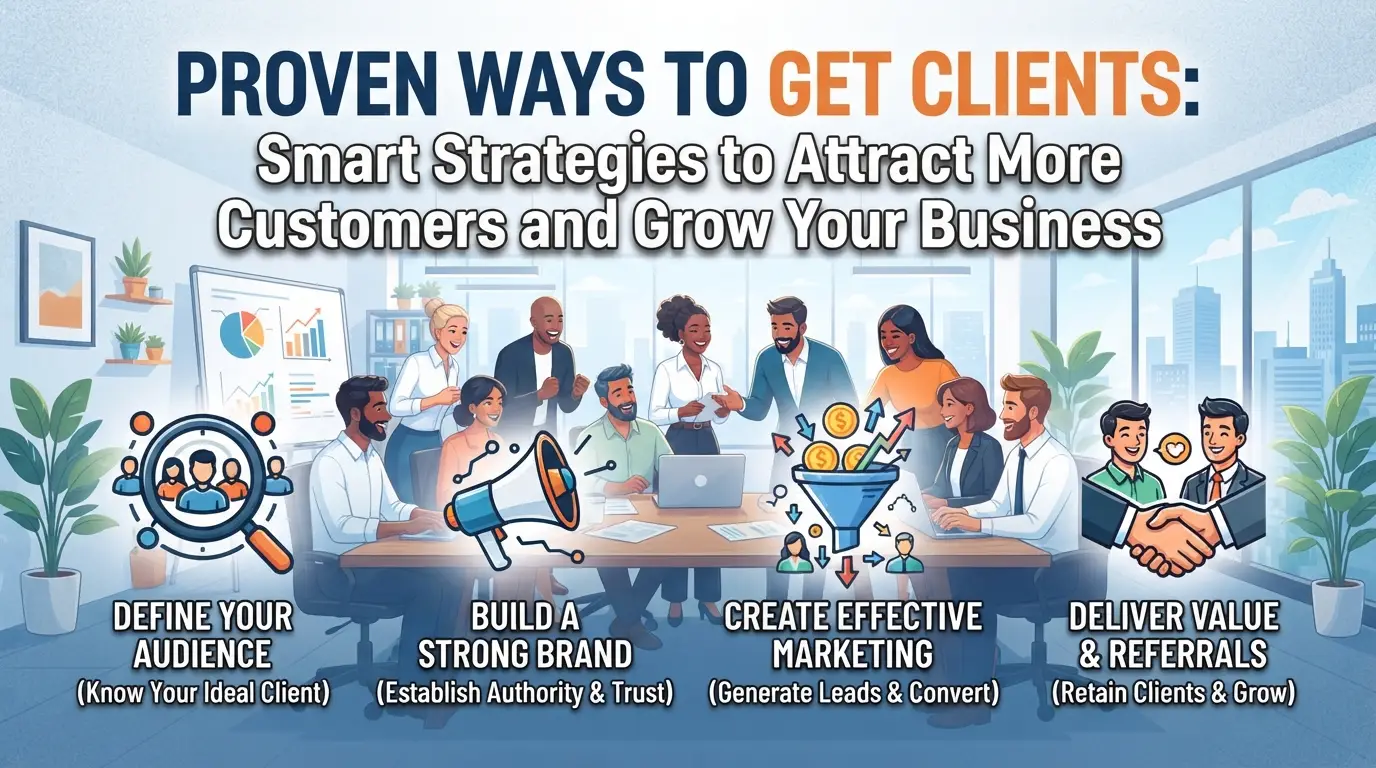
Proven Ways to Get Clients: Smart Strategies to Attract More Customers and Grow Your Business
Getting clients is one of the most important parts of building a successful business. Whether you are a freelancer, small business owner, entrepreneur, consultant, or service provider, knowing how to get clients can help you increase your income, build strong relationships, and grow your brand. Finding new customers takes consistency, patience, and the right marketing strategies.
The good news is that you do not need a huge budget to attract clients. With the right approach, you can connect with potential customers, demonstrate your value, and turn interested people into loyal clients. Here are 159 practical ways to get clients and create more opportunities for your business.
How to Get Clients Through Online Marketing
Create a Professional Website
A professional website makes it easier for potential clients to understand what you offer. Include information about your services, experience, pricing approach, and contact details. Make your website easy to navigate so visitors can quickly find what they need.
Optimize Your Website for SEO
Search engine optimization helps your website appear when people search for services related to your business. Use relevant keywords in your website content, headings, page titles, and descriptions. Publishing helpful articles can also attract visitors who may eventually become paying clients.
Start a Business Blog
Blogging is a useful way to demonstrate your knowledge and attract potential customers. Write about common problems your audience experiences and explain how your services can help. Helpful blog posts can build trust and encourage readers to contact you.
Use Social Media Marketing
Social media platforms allow businesses to connect with potential clients without spending a lot of money. Share helpful content, introduce your services, answer questions, and communicate with followers. Choose platforms where your target audience spends the most time.
Create Valuable Instagram Content
Instagram can help service providers showcase their work and connect with potential customers. Share behind-the-scenes photos, client results, educational posts, and short videos. Use relevant hashtags and engage with people who interact with your content.
Promote Your Services on Facebook
Facebook offers opportunities to reach local customers and business communities. Create a professional business page, share regular updates, and participate in relevant groups. Focus on answering questions and providing useful information instead of constantly promoting your services.
Use LinkedIn to Find Professional Clients
LinkedIn is especially useful for freelancers, consultants, agencies, and business-to-business service providers. Optimize your profile, explain your expertise, and connect with decision-makers. Share professional insights that demonstrate how you solve business problems.
Publish Short Educational Videos
Short videos can help potential clients understand your services quickly. Explain common problems, share useful tips, demonstrate your process, or answer frequently asked questions. Educational videos can make your business more approachable and memorable.
Build an Email List
An email list gives you a direct way to communicate with people interested in your services. Offer a useful resource, checklist, or guide in exchange for email subscriptions. Send helpful information regularly and introduce your services when they are relevant.
Create a Google Business Profile
If you serve customers in a particular location, a Google Business Profile can help people discover your business through local searches. Add accurate contact information, business hours, service descriptions, and photos. Encourage satisfied clients to leave honest reviews.
How to Get Clients Without Spending Money
Ask Friends and Family for Referrals
Your personal network can be a valuable starting point when looking for new clients. Tell friends and family what services you provide and explain the type of customers you want to reach. They may know someone who needs your help.
Reach Out to Previous Clients
Previous customers may need additional services or know someone who could benefit from your work. Send a friendly message asking how things are going and whether they need further assistance. Maintain the relationship even when they are not ready to purchase.
Use Word-of-Mouth Marketing
Word-of-mouth marketing happens when satisfied customers recommend your business to others. Deliver excellent service, communicate clearly, and create positive experiences. Happy clients are more likely to talk about your business and recommend your services.
Join Online Business Communities
Online communities bring together people who share professional interests and business challenges. Join relevant Facebook groups, LinkedIn communities, and industry forums. Participate in discussions, answer questions, and build relationships before offering your services.
Offer Free Consultations
A free consultation allows potential clients to understand how you can help them. Use the conversation to learn about their challenges, explain possible solutions, and establish whether your service is a good fit. Keep the discussion helpful and professional.
Share Your Knowledge Publicly
Sharing your knowledge can help people recognize your expertise. Publish useful advice, answer industry questions, and explain practical solutions. When people repeatedly find your information helpful, they may consider hiring you.
Reconnect With Old Contacts
Former colleagues, classmates, business partners, and professional connections may become valuable sources of new opportunities. Reach out with a friendly message and explain what you are currently offering. Avoid making every conversation feel like a sales pitch.
Create a Referral Network
Build relationships with professionals who serve similar customers but offer different services. For example, a web designer might connect with a marketing consultant. You can recommend each other’s businesses when suitable opportunities arise.
Participate in Local Events
Community events, business meetings, workshops, and networking gatherings provide opportunities to meet potential customers. Introduce yourself, explain what you do, and listen to what others need. Genuine conversations can lead to valuable business relationships.
Use Your Personal Social Media Accounts
You do not always need a separate marketing budget to find clients. Your personal social media accounts can help spread awareness about your services. Share professional updates, examples of your work, and useful information with your existing network.
How to Get Clients as a Freelancer
Create a Strong Freelance Portfolio
A portfolio demonstrates your abilities and gives potential clients a reason to trust you. Include your best projects, explain your role, and highlight the results you achieved. If you are new, create sample projects that demonstrate your skills.
Join Freelance Marketplaces
Freelance marketplaces connect service providers with customers searching for specific skills. Create a complete profile, write a clear description, and upload relevant samples. Focus on projects that match your experience rather than applying to every available opportunity.
Write Personalized Proposals
A personalized proposal shows that you understand the client’s needs. Mention the problem they want to solve, explain your approach, and describe how your skills can help. Avoid sending generic messages that could apply to any business.
Choose a Specific Freelance Niche
Specializing in a particular service or industry can make it easier to attract clients. Instead of offering every possible service, focus on a specific audience and explain the problems you solve. Clear positioning helps customers understand why they should choose you.
Contact Small Businesses Directly
Many small businesses need help with writing, graphic design, website development, social media, and administrative work. Research businesses that could benefit from your skills and send thoughtful messages explaining how you can help.
Show Examples of Your Work
Potential clients want to see what you can deliver before hiring you. Share relevant samples, case studies, screenshots, or demonstrations. Make sure your examples are easy to understand and directly connected to the services you offer.
Build Relationships With Other Freelancers
Other freelancers can become valuable professional connections. They may have more projects than they can handle or receive requests outside their areas of expertise. Building relationships can create opportunities for referrals and collaborations.
Offer a Starter Package
A starter package gives new clients an affordable way to experience your service. Clearly explain what is included, how long the work takes, and what results they can expect. A positive first experience may lead to larger projects.
How to Get Clients for a Small Business
Identify Your Ideal Customer
Understanding your ideal customer makes marketing more effective. Consider their age range, interests, location, budget, needs, and buying habits. When you know who you want to reach, you can create messages that speak directly to their problems.
Understand Your Customers’ Problems
People usually purchase services because they want something improved, fixed, or completed. Research the challenges your audience experiences and explain how your business can solve them. Marketing becomes more effective when it focuses on customer needs rather than only describing products.
Build a Recognizable Brand
A recognizable brand helps customers remember your business. Choose consistent colors, messaging, and visual elements. Develop a clear brand personality that reflects your values and makes your services easy to recognize.
Create Attractive Service Packages
Service packages help potential customers understand what they can purchase. Group related services into simple options and explain the benefits of each package. Make the differences clear so customers can choose what suits their needs.
Offer Limited-Time Promotions
Special promotions can encourage interested people to take action. You might offer a seasonal discount, introductory package, or bonus service. Make sure the promotion has clear terms and still allows your business to earn a reasonable profit.
Partner With Local Businesses
Partnerships can help small businesses reach customers through trusted local connections. Work with complementary businesses to organize promotions, share resources, or recommend services. Choose partners whose audiences are relevant to your business.
Improve Your Customer Experience
Excellent customer service can turn a first-time buyer into a long-term client. Respond to questions promptly, communicate honestly, meet deadlines, and make the purchasing process simple. Customers often remember how a business treats them.
Display Customer Testimonials
Testimonials provide social proof by showing that other people have had positive experiences with your business. Ask satisfied clients for honest feedback and request permission to publish their comments. Place relevant testimonials on your website and social media pages.
Create Before-and-After Content
Before-and-after examples help demonstrate the value of your services. They work particularly well for cleaning businesses, designers, home improvement professionals, beauty services, and consultants. Present the transformation honestly and explain the work involved.
How to Get More Clients Through Networking
Attend Industry Networking Events
Industry events allow you to meet people who understand your services and may need professional assistance. Prepare a short introduction that explains what you do and the customers you help. Follow up with meaningful conversations after the event.
Build Genuine Professional Relationships
Networking should not be limited to asking people for business. Take time to understand their work, share useful information, and offer support when possible. Strong professional relationships often create opportunities naturally.
Join Professional Associations
Professional associations provide access to industry communities, educational resources, and networking opportunities. Membership can help you meet experienced professionals and connect with businesses that need specialized services.
Attend Business Workshops
Workshops provide opportunities to learn new skills while meeting potential customers and business partners. Participate actively, ask thoughtful questions, and introduce yourself to people working in relevant industries.
Speak at Local Events
Speaking at events can position you as someone with useful knowledge and experience. Offer practical advice on a topic related to your business. When attendees find your presentation valuable, they may want to learn more about your services.
Exchange Business Referrals
Develop referral relationships with professionals who regularly interact with your target audience. Recommend reliable service providers when appropriate and let them know when you are available for new projects. Trust and professionalism are essential for long-term referral partnerships.
How to Get Clients Using Content Marketing
Publish Helpful How-To Guides
How-to guides attract people searching for solutions to specific problems. Create detailed articles that explain useful processes related to your services. Include examples and practical advice so readers can apply what they learn.
Share Client Success Stories
Success stories demonstrate how your services have helped real customers. Explain the original challenge, the solution you provided, and the results achieved. Always obtain permission before sharing identifiable client information.
Create Downloadable Resources
Free resources such as templates, checklists, planners, and guides can attract people interested in your expertise. Offer these resources through your website in exchange for voluntary email subscriptions.
Answer Frequently Asked Questions
Potential customers often have questions about pricing, timelines, services, and results. Create content that answers these questions clearly. This can reduce uncertainty and help people feel more comfortable contacting your business.
Start a YouTube Channel
YouTube allows you to demonstrate your expertise through educational videos, tutorials, and customer success stories. Focus on topics your ideal clients are already searching for. Include a clear explanation of how viewers can contact you.
Repurpose Your Content
You do not need to create completely new content for every platform. Turn a blog post into short videos, social media graphics, email tips, and LinkedIn updates. Repurposing content helps you reach different audiences while saving time.
Publish Industry Insights
Share your opinions about relevant industry developments, common mistakes, and emerging opportunities. Thoughtful insights can help establish your business as a knowledgeable resource and attract people who value your expertise.
How to Get Clients Through Direct Outreach
Send Personalized Cold Emails
Cold emailing can introduce your services to businesses that may benefit from your expertise. Research the recipient, identify a relevant challenge, and explain how you can help. Keep your email short, respectful, and focused on starting a conversation.
Use LinkedIn Direct Messages
LinkedIn messages can help you connect with business owners, managers, and potential partners. Start with a genuine introduction and mention something relevant about their business. Avoid immediately sending aggressive sales messages.
Make Follow-Up Calls
Some potential customers prefer speaking directly rather than exchanging messages. A polite phone call can help you understand their requirements and explain your services. Respect their time and accept it when someone is not interested.
Send a Personalized Video Introduction
A short personalized video can make your outreach more memorable. Introduce yourself, mention something specific about the business, and explain one way you could help. Keep the video professional and focused on the recipient.
Offer a Free Business Audit
If you provide marketing, website design, SEO, or consulting services, a short business audit can demonstrate your expertise. Identify a few genuine improvement opportunities and explain how your service could address them.
Follow Up With Interested Prospects
Not every potential client makes an immediate decision. Send a friendly follow-up after your first conversation or proposal. Provide additional information if useful, but avoid repeatedly contacting people who have declined or requested no further messages.
How to Convert Potential Clients Into Paying Customers
Explain Your Services Clearly
Potential clients should understand exactly what you offer. Use simple language to explain the services, benefits, deliverables, and expected process. Avoid complicated industry terminology that makes purchasing decisions confusing.
Focus on Benefits Instead of Features
Customers want to know how your service improves their situation. Instead of only describing what you do, explain the practical benefits. For example, a website designer can emphasize how a professional website helps businesses present their services and generate inquiries.
Provide Transparent Pricing
Clear pricing helps potential customers decide whether your services fit their budgets. Explain what is included and mention any additional costs. If every project requires a different quote, describe the factors that influence your pricing.
Make Booking Easy
Remove unnecessary steps from your customer journey. Provide clear contact information, an easy booking process, and straightforward instructions for requesting a quote. The easier it is to reach you, the fewer opportunities you may lose.
Respond to Inquiries Quickly
A timely response shows that you take potential clients seriously. Check your business email, website inquiries, and social media messages regularly. Even if you need more time to prepare an answer, acknowledge the inquiry and explain when you will respond.
Build Trust Before Asking for a Sale
People are more comfortable purchasing from businesses they trust. Share relevant examples, answer questions honestly, and explain your working process. Trust grows through consistent communication and realistic promises.
Present a Professional Proposal
A professional proposal explains the customer’s requirements, your recommended solution, deliverables, timeline, and pricing. Make it specific to the project instead of sending the same document to every prospect.
Offer Flexible Payment Options
Flexible payment arrangements can make your services more accessible to suitable customers. Depending on your business, you might offer deposits, milestone payments, or installment arrangements. Always establish clear payment terms before beginning work.
How to Retain Clients and Get Repeat Business
Maintain Regular Communication
Staying in touch after completing a project helps maintain professional relationships. Share relevant updates, check whether previous clients need additional assistance, and remain available for reasonable questions.
Deliver Consistent Quality
Consistent service quality gives clients a reason to continue working with you. Establish clear processes, check your work carefully, and communicate when unexpected challenges arise. Reliability is one of the strongest foundations of customer loyalty.
Ask for Customer Feedback
Feedback helps you understand what customers appreciate and where improvements are needed. Ask simple questions about their experience and take their suggestions seriously. Making improvements can strengthen your reputation and encourage repeat business.
Create Loyalty Offers
Loyalty offers can encourage existing customers to continue purchasing from your business. Consider repeat-customer discounts, exclusive packages, or additional services for long-term clients. Make sure the benefits are financially sustainable.
Stay Connected Through Email Newsletters
Email newsletters help you maintain relationships with previous customers. Share useful advice, company updates, new services, and relevant offers. Keep the content valuable rather than sending promotional messages too frequently.
How to Get Clients in Competitive Industries
Study Your Competitors
Researching competitors can help you understand how other businesses attract customers. Examine their services, positioning, content, customer reviews, and marketing strategies. Look for opportunities to offer something more useful or distinctive.
Develop a Unique Selling Proposition
A unique selling proposition explains why customers should choose your business instead of another provider. Your advantage might be specialized knowledge, faster delivery, personalized service, flexible packages, or a particular industry focus.
Specialize in an Underserved Market
Some industries have specific customer groups that larger businesses overlook. Identify a smaller audience with clear needs and develop services designed for them. Specialization can help your business stand out without competing with everyone.
Improve Your Online Reputation
Online reviews and customer feedback influence how people perceive your business. Provide excellent service, encourage genuine reviews, and respond professionally to feedback. Address complaints constructively instead of ignoring customer concerns.
Test Different Marketing Channels
Not every marketing strategy produces the same results. Experiment with SEO, email marketing, social media, networking, referrals, and direct outreach. Track which channels generate relevant inquiries and focus more resources on the most effective ones.
How to Get Clients Consistently Every Month
Set Weekly Client Acquisition Goals
Consistent client acquisition requires regular action. Set realistic weekly goals for contacting prospects, publishing content, following up, and attending networking events. Small activities performed consistently can create valuable results over time.
Create a Daily Marketing Routine
A simple marketing routine helps you avoid spending all your time completing existing projects while neglecting future opportunities. Dedicate time each day to finding prospects, building relationships, publishing content, and responding to inquiries.
Track Your Potential Clients
Use a spreadsheet or customer relationship management system to record potential customers, contact details, conversations, and follow-up dates. Keeping everything organized helps you avoid missed opportunities and understand your sales progress.
Measure Your Marketing Results
Track website visits, inquiries, consultation bookings, proposals, conversions, and customer retention. These measurements help you identify which strategies are producing actual business rather than simply generating attention.
Build a Repeatable Sales Process
A repeatable sales process makes client acquisition easier to manage. Establish clear steps for finding prospects, starting conversations, understanding requirements, sending proposals, following up, and welcoming new customers.
Improve Your Skills Continuously
Better skills can help you offer more value and attract higher-quality clients. Learn about your industry, improve communication, understand marketing trends, and develop expertise in areas your customers care about.