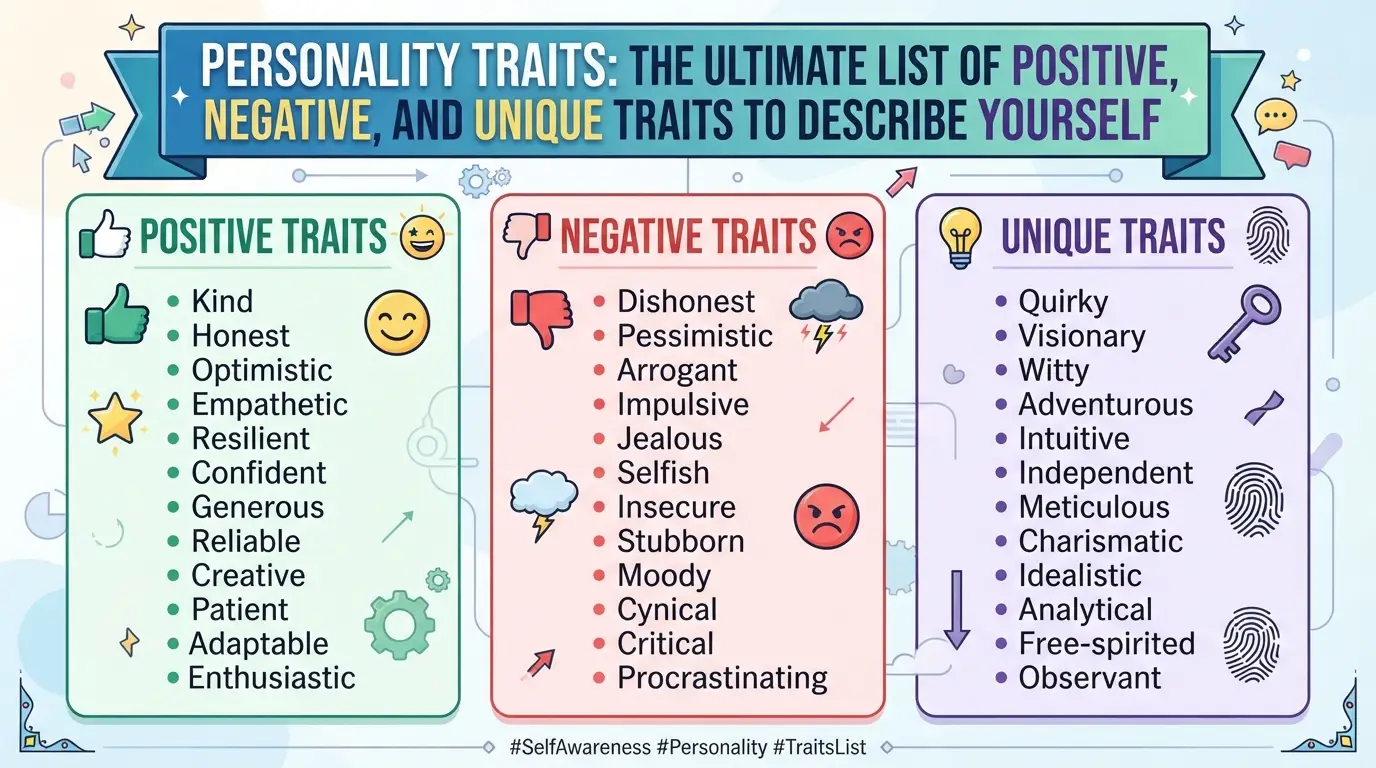
Personality Traits: The Ultimate List of Positive, Negative, and Unique Traits to Describe Yourself
Personality traits are the qualities, characteristics, and behaviors that help define who we are as individuals. They influence how we think, feel, communicate, make decisions, and interact with the people around us. Understanding different personality traits can help you discover your strengths, recognize areas for improvement, build stronger relationships, and develop a deeper understanding of yourself. Whether you are exploring your personality, creating a character for a story, or learning more about human behavior, knowing a wide range of these 119 personality traits can be incredibly useful.
The best thing about exploring personality traits is that everyone has a unique combination of characteristics. Some people are naturally outgoing, confident, and adventurous, while others are quiet, thoughtful, and observant. Neither personality type is automatically better than the other. Our personalities are shaped by a combination of genetics, experiences, environment, relationships, and personal choices. From positive personality traits like kindness and honesty to challenging traits like impatience and stubbornness, every characteristic can influence the way we experience life.
Positive Personality Traits That Make You a Better Person
Positive personality traits are qualities that help people build healthy relationships, overcome challenges, and contribute positively to their communities. These characteristics can strengthen personal development, improve communication, and encourage emotional well-being.
Kindness
Kindness is the ability to treat others with care, compassion, and consideration. Kind people often look for small ways to make someone’s day better, whether through offering help, sharing encouraging words, or simply listening when someone needs support. Kindness can strengthen friendships and create a more welcoming environment wherever you go.
Honesty
Honesty means telling the truth, being sincere, and acting with integrity. Honest individuals understand the importance of trust and try to make their words match their actions. This personality trait is valuable in friendships, romantic relationships, professional environments, and everyday interactions.
Empathy
Empathy is the ability to understand or relate to another person’s feelings and experiences. Empathetic people try to see situations from different perspectives rather than immediately judging others. This trait can help resolve disagreements, improve relationships, and make communication more meaningful.
Generosity
Generosity involves willingly sharing time, knowledge, resources, or emotional support with others. Generous people do not always expect something in return. Their willingness to contribute can create stronger communities and encourage others to show the same consideration.
Gratitude
Gratitude is the ability to appreciate the people, opportunities, and experiences that bring value to life. People who practice gratitude often pay attention to what is going well instead of focusing exclusively on what they lack. This trait can encourage a more balanced and positive outlook.
Loyalty
Loyalty means remaining dependable and supportive toward people, values, or commitments that matter to you. Loyal individuals take their relationships seriously and make an effort to be present during both happy and difficult moments.
Respectfulness
Respectfulness involves recognizing the dignity, boundaries, and opinions of others. Respectful people understand that disagreements do not have to become personal attacks. They can communicate their own beliefs while allowing others to express different perspectives.
Thoughtfulness
Thoughtfulness means considering how your words and actions may affect other people. Thoughtful individuals often remember important details, anticipate needs, and make an effort to show that they care.
Strong Personality Traits That Help You Succeed
Strong personality traits can help individuals remain focused, make difficult decisions, and continue working toward their goals when life becomes challenging. These qualities are especially valuable in personal development, leadership, education, and professional growth.
Determination
Determination is the willingness to keep pursuing a goal despite obstacles. Determined people understand that progress often requires patience, effort, and persistence. Rather than giving up after one setback, they look for another way forward.
Confidence
Confidence means believing in your abilities, decisions, and potential. Confident people are generally more willing to express their ideas, try unfamiliar experiences, and take responsibility for their choices. Healthy confidence does not require believing you are better than everyone else.
Resilience
Resilience is the ability to recover and adapt after difficult experiences. Resilient individuals may experience disappointment, fear, or frustration, but they work toward finding ways to cope and move forward.
Discipline
Discipline involves managing your behavior and following through on commitments, even when motivation is low. This personality trait can help you develop healthy routines, complete important tasks, and maintain progress toward long-term goals.
Courage
Courage means facing fear, uncertainty, or difficulty when something important requires action. Courageous people are not necessarily fearless. They simply recognize that some situations are worth facing despite feeling uncomfortable.
Perseverance
Perseverance is the ability to continue making an effort over time. It is particularly helpful when learning new skills, building a business, completing an education, or working toward personal ambitions that require sustained commitment.
Independence
Independence means being capable of thinking for yourself, making decisions, and taking responsibility for your life. Independent individuals value their freedom while understanding that seeking advice and accepting support can also be signs of strength.
Resourcefulness
Resourcefulness is the ability to find practical solutions using the information, skills, and resources available. Resourceful people often approach problems creatively instead of assuming that a lack of ideal circumstances makes success impossible.
Emotional Personality Traits That Influence Your Feelings
Emotional personality traits describe how people experience, understand, and respond to their emotions. These characteristics can influence relationships, stress management, communication, and personal well-being.
Sensitivity
Sensitivity means being especially aware of emotions, environmental changes, or other people’s reactions. Sensitive individuals may notice subtle changes in tone or behavior that others overlook. Although sensitivity can sometimes make criticism feel more intense, it can also support empathy and emotional awareness.
Patience
Patience is the ability to remain calm while waiting, learning, or dealing with frustrating situations. Patient people understand that some outcomes take time and that reacting immediately is not always helpful.
Optimism
Optimism involves expecting that positive outcomes are possible, even when circumstances are uncertain. Optimistic people tend to look for opportunities and solutions rather than assuming that every difficulty will end badly.
Emotional Stability
Emotional stability describes the tendency to maintain relatively balanced emotional responses when facing everyday stress. Emotionally stable individuals can still experience sadness, anger, or anxiety, but they may find it easier to respond thoughtfully instead of reacting impulsively.
Compassion
Compassion combines awareness of another person’s suffering with a desire to help. Compassionate individuals may offer encouragement, practical assistance, or understanding when someone is going through a difficult time.
Self-Awareness
Self-awareness is the ability to recognize your emotions, habits, motivations, strengths, and weaknesses. People with strong self-awareness are often better positioned to understand their reactions and make intentional changes.
Forgiveness
Forgiveness is the willingness to work through resentment and release some of the emotional burden associated with being hurt. It does not require excusing harmful behavior or allowing someone to continue crossing your boundaries.
Enthusiasm
Enthusiasm is a strong sense of interest, excitement, or energy toward an activity, goal, or experience. Enthusiastic people can inspire others through their willingness to participate and share their excitement.
Social Personality Traits That Shape Relationships
Social personality traits influence how individuals interact with others, develop friendships, and participate in groups. Some people enjoy frequent social interaction, while others prefer smaller gatherings or more time alone.
Friendliness
Friendliness is the tendency to approach others with warmth and openness. Friendly individuals often make people feel comfortable by greeting them, showing interest, and maintaining an approachable attitude.
Outgoingness
Outgoingness describes a tendency to enjoy social interaction and express yourself openly around others. Outgoing people may enjoy meeting new people, attending events, and participating in group activities.
Introversion
Introversion is a personality tendency associated with preferring quieter environments, meaningful conversations, or time alone to recharge. Introverted people can be confident and socially skilled without wanting constant interaction.
Assertiveness
Assertiveness means expressing your opinions, needs, and boundaries clearly while respecting other people. Assertive individuals can disagree without becoming aggressive or allowing others to dismiss their needs.
Cooperation
Cooperation involves working with others toward a shared objective. Cooperative individuals understand the importance of listening, sharing responsibilities, and finding solutions that consider different perspectives.
Diplomacy
Diplomacy is the ability to handle sensitive conversations and disagreements tactfully. Diplomatic people choose their words carefully and look for ways to communicate difficult ideas without creating unnecessary conflict.
Humor
Humor is the ability to recognize or create amusing situations. People with a good sense of humor can bring enjoyment to conversations, ease tension, and help others feel more relaxed.
Charisma
Charisma is the ability to attract attention or inspire interest through your presence, communication, and personality. Charismatic people often make others feel engaged, although charisma can appear in many different forms.
Intellectual Personality Traits That Support Learning
Intellectual personality traits influence curiosity, reasoning, creativity, and the way people approach new information. These qualities can support lifelong learning and help individuals become more adaptable.
Curiosity
Curiosity is the desire to explore, ask questions, and understand how things work. Curious people enjoy discovering new ideas and are often willing to challenge assumptions.
Creativity
Creativity is the ability to develop original ideas, imagine possibilities, or approach problems in unusual ways. Creative individuals may express this trait through art, writing, business, technology, cooking, or everyday problem-solving.
Open-Mindedness
Open-mindedness means being willing to consider unfamiliar ideas and alternative perspectives. Open-minded people can listen to opposing opinions without automatically rejecting them.
Analytical Thinking
Analytical thinking involves breaking complex information into smaller parts to understand patterns, relationships, and possible solutions. This trait is useful when evaluating evidence, solving problems, or making informed decisions.
Observant
Observant people pay attention to details, behaviors, and changes in their surroundings. Their attention to detail can help them notice information that might otherwise be overlooked.
Adaptability
Adaptability is the ability to adjust when circumstances, expectations, or priorities change. Adaptable people are often willing to learn new approaches instead of insisting that everything must remain the same.
Imagination
Imagination allows people to picture possibilities beyond their immediate circumstances. It supports storytelling, innovation, planning, and creative thinking.
Reflectiveness
Reflectiveness means taking time to consider experiences, decisions, and lessons. Reflective individuals often examine what worked, what did not, and how they might approach similar situations differently.
Leadership Personality Traits That Inspire Others
Leadership personality traits help people guide teams, encourage cooperation, and create a sense of direction. These characteristics can be useful even if you do not hold an official leadership position.
Responsibility
Responsibility means accepting ownership of your decisions, obligations, and actions. Responsible people understand that their choices have consequences and make an effort to fulfill their commitments.
Accountability
Accountability involves acknowledging your role in an outcome, including when something goes wrong. Accountable individuals avoid constantly blaming others and focus on what they can learn or improve.
Decisiveness
Decisiveness is the ability to make choices after considering relevant information. Decisive people recognize that waiting for perfect certainty can sometimes prevent progress.
Visionary Thinking
Visionary thinking involves imagining future possibilities and identifying a direction worth pursuing. Visionary individuals can help others understand how present actions contribute to long-term goals.
Fairness
Fairness means treating people impartially and making decisions based on reasonable standards. Fair leaders listen to different viewpoints and avoid allowing personal favoritism to control their decisions.
Initiative
Initiative is the willingness to take action without always waiting for someone else to provide instructions. People with initiative notice opportunities, suggest improvements, and look for useful ways to contribute.
Humility
Humility means recognizing your strengths without exaggerating your importance. Humble individuals can accept feedback, appreciate other people’s contributions, and acknowledge that they still have more to learn.
Reliability
Reliability means being someone others can depend on. Reliable people generally follow through on promises, communicate when plans change, and take their commitments seriously.
Negative Personality Traits That Can Create Challenges
Negative personality traits are characteristics that may interfere with relationships, decision-making, emotional well-being, or personal progress. However, having a challenging trait does not make someone a bad person. Recognizing these tendencies can help people understand their behavior and work toward healthier habits.
Selfishness
Selfishness involves prioritizing your own needs or desires without giving enough consideration to others. Everyone needs to look after themselves, but persistent selfish behavior can damage trust and create unbalanced relationships.
Arrogance
Arrogance is an exaggerated sense of personal importance or superiority. Arrogant individuals may dismiss other people’s contributions or struggle to admit when they are wrong.
Impatience
Impatience is the tendency to become frustrated when things take longer than expected. Although wanting quick results is understandable, excessive impatience can lead to rushed decisions and unnecessary conflict.
Stubbornness
Stubbornness means resisting changes or refusing to reconsider a position. Standing by your principles can be valuable, but refusing to consider reasonable evidence may prevent growth.
Jealousy
Jealousy can arise when someone feels threatened by another person’s relationships, achievements, or attention. When left unmanaged, it may encourage suspicion, insecurity, and controlling behavior.
Pessimism
Pessimism involves expecting unfavorable outcomes or focusing heavily on possible problems. A realistic awareness of risks can be helpful, but persistent pessimism may make opportunities seem less achievable than they are.
Insecurity
Insecurity involves uncertainty about your value, abilities, or place in a relationship or social setting. It may lead to frequent reassurance-seeking, comparison, or difficulty accepting compliments.
Defensiveness
Defensiveness is the tendency to respond to criticism as though it were an attack. This reaction can make it harder to learn from feedback or have productive conversations.
Procrastination
Procrastination means delaying tasks despite knowing that the delay may create difficulties later. It can be connected to stress, fear of failure, perfectionism, or trouble managing time.
Irritability
Irritability is a tendency to become annoyed or frustrated easily. It may affect communication and relationships, particularly when small inconveniences lead to disproportionate reactions.
Unique Personality Traits That Make People Different
Unique personality traits describe characteristics that give individuals their own style of thinking, communicating, and experiencing the world. These traits can make personalities interesting and help people recognize what distinguishes them from others.
Adventurousness
Adventurous people enjoy exploring unfamiliar places, trying new activities, and experiencing situations outside their usual routines. Their willingness to experiment can create opportunities for learning and discovery.
Spontaneity
Spontaneity means being comfortable acting without planning every detail in advance. Spontaneous individuals may enjoy unexpected outings, last-minute ideas, and opportunities that arise naturally.
Quirkiness
Quirkiness refers to unusual habits, preferences, or ways of expressing yourself. Quirky people may have distinctive interests or unconventional approaches that make their personalities memorable.
Playfulness
Playfulness is the tendency to approach situations with humor, imagination, and a sense of fun. Playful individuals can bring energy to everyday activities and help others enjoy ordinary moments.
Introspection
Introspection involves examining your own thoughts, feelings, and motivations. Introspective individuals often enjoy reflecting on personal experiences and exploring what gives their lives meaning.
Competitiveness
Competitiveness is the desire to perform well in comparison with others or to achieve a personal best. Healthy competitiveness can encourage improvement, while excessive competitiveness may turn cooperation into a constant struggle.
Sentimentality
Sentimentality is the tendency to attach emotional significance to memories, objects, traditions, and relationships. Sentimental individuals may treasure photographs, handwritten notes, and meaningful experiences.
Individualism
Individualism involves valuing personal identity, independent thought, and the freedom to make your own choices. Individualistic people often prefer developing a path that reflects their own values rather than automatically following expectations.
Idealism
Idealism is the tendency to imagine how things could be better and work toward meaningful principles. Idealistic individuals may care deeply about fairness, creativity, social improvement, or personal purpose.
Spontaneous Curiosity
Spontaneous curiosity describes the habit of becoming interested in unexpected topics or asking questions that arise in the moment. This quality can make ordinary experiences feel like opportunities for discovery.
Personality Traits That Improve Communication
Communication-related personality traits influence how people express themselves, listen to others, and handle misunderstandings. Developing these qualities can make personal and professional relationships more effective.
Active Listening
Active listening means paying attention to what another person is saying instead of focusing only on your response. Good listeners ask relevant questions, notice important details, and try to understand the speaker’s meaning.
Tactfulness
Tactfulness is the ability to communicate honestly while considering another person’s feelings and circumstances. Tactful individuals know that timing, tone, and word choice can influence how a message is received.
Expressiveness
Expressiveness is the ability to communicate thoughts and emotions clearly. Expressive people may use words, facial expressions, gestures, or creative outlets to help others understand what they mean.
Clarity
Clarity involves explaining information in a straightforward and understandable way. Clear communicators reduce confusion by organizing their thoughts and choosing language that suits their audience.
Negotiation
Negotiation is the ability to discuss differences and work toward an acceptable agreement. People with this trait look for common ground while recognizing that each person may have different priorities.
Openness
Openness in communication means being willing to discuss ideas, feelings, concerns, and expectations honestly. Open communication can help prevent misunderstandings and build stronger connections.
Personality Traits That Support Personal Growth
Personal growth personality traits help people learn from experience, develop healthier habits, and become more intentional about their choices. These qualities are not fixed abilities; they can be strengthened through practice and self-reflection.
Self-Discipline
Self-discipline helps you act according to your priorities instead of allowing every distraction or impulse to determine your behavior. It supports consistency in studying, exercising, working, and developing new skills.
Flexibility
Flexibility is the willingness to change your approach when a situation requires it. Flexible individuals can adapt their plans without treating every unexpected development as a personal failure.
Teachability
Teachability means being willing to learn from other people, accept guidance, and reconsider your assumptions. Teachable individuals recognize that improvement often begins with admitting what they do not know.
Self-Motivation
Self-motivation is the ability to encourage yourself to take action toward a goal. Motivated individuals often create routines, establish meaningful objectives, and find reasons to continue when progress feels slow.
Persistence
Persistence means continuing to work toward something despite delays, frustration, or temporary disappointment. It helps people build skills and complete projects that require repeated effort.
Mindfulness
Mindfulness involves paying attention to the present moment with greater awareness. Practicing mindfulness can help people notice their emotions, recognize distractions, and respond more intentionally to everyday situations.
Authenticity
Authenticity means behaving in ways that reflect your genuine values and personality rather than constantly trying to satisfy other people’s expectations. Authentic people aim to communicate honestly while remaining considerate of others.
Growth Mindset
A growth mindset is the belief that abilities can develop through learning, practice, feedback, and effort. People who adopt this perspective tend to view mistakes as opportunities to improve rather than permanent evidence of failure.
How to Identify Your Own Personality Traits
Understanding your own personality traits begins with observing your behavior across different situations. Think about how you react to pressure, communicate during disagreements, approach unfamiliar experiences, and respond when someone needs help. These everyday patterns can reveal characteristics that may not be obvious when you simply describe yourself.
You can also ask trusted friends, family members, or colleagues how they would describe you. Other people may notice strengths you overlook or habits you have difficulty recognizing. Their feedback can be useful, but it is important to remember that one person’s opinion does not define your entire personality.
Personality quizzes and self-assessment exercises can provide another starting point. They may help you reflect on whether you prefer social interaction, enjoy trying new experiences, or feel comfortable making decisions independently. However, informal quizzes should not be treated as definitive psychological diagnoses. Your results may change depending on your experiences, mood, and interpretation of the questions.
Most importantly, look for patterns rather than judging yourself based on one isolated moment. Feeling impatient on a stressful day does not necessarily mean impatience defines your personality. Similarly, making one courageous decision does not mean you will always feel confident. Personality is complex, and people often display different characteristics in different environments.
Can You Change Your Personality Traits Over Time?
Yes, many aspects of personality and behavior can change over time. Although some tendencies may feel natural or deeply established, people can develop new habits, improve emotional regulation, and learn more effective ways to interact with others.
For example, someone who struggles with shyness can practice starting conversations in comfortable settings. A person who frequently procrastinates can break large tasks into smaller steps and establish realistic deadlines. Someone who becomes defensive during disagreements can practice pausing, listening carefully, and asking questions before responding.
Changing a personality-related habit usually requires patience and repetition. Instead of trying to transform every aspect of yourself at once, choose one specific quality to develop. If you want to become more organized, create a simple daily routine. If you want to become more empathetic, practice listening without interrupting or immediately offering advice.
It is equally important to recognize that not every difference needs fixing. Being introverted, sensitive, reserved, or unconventional is not automatically a weakness. Personal growth is about understanding yourself and making choices that support your goals, relationships, and well-being.
Why Understanding Personality Traits Matters
Understanding personality traits can improve self-awareness and help you appreciate the differences between people. When you recognize that individuals have different communication styles, emotional tendencies, and priorities, you may become more patient and less likely to interpret every disagreement as a personal attack.
Personality awareness can also help you identify the environments in which you thrive. An independent person may enjoy work that allows considerable autonomy, while a highly social person may prefer collaborative projects. A detail-oriented individual might excel at tasks requiring accuracy, while a creative thinker may enjoy brainstorming and developing new ideas.
In relationships, recognizing personality differences can encourage more honest conversations about expectations and boundaries. Rather than assuming that everyone expresses affection, handles conflict, or makes decisions in the same way, you can learn to communicate more thoughtfully.
Ultimately, the goal is not to develop a perfect personality or eliminate every challenging characteristic. It is to understand your natural tendencies, strengthen helpful qualities, and manage behaviors that create unnecessary difficulties.


