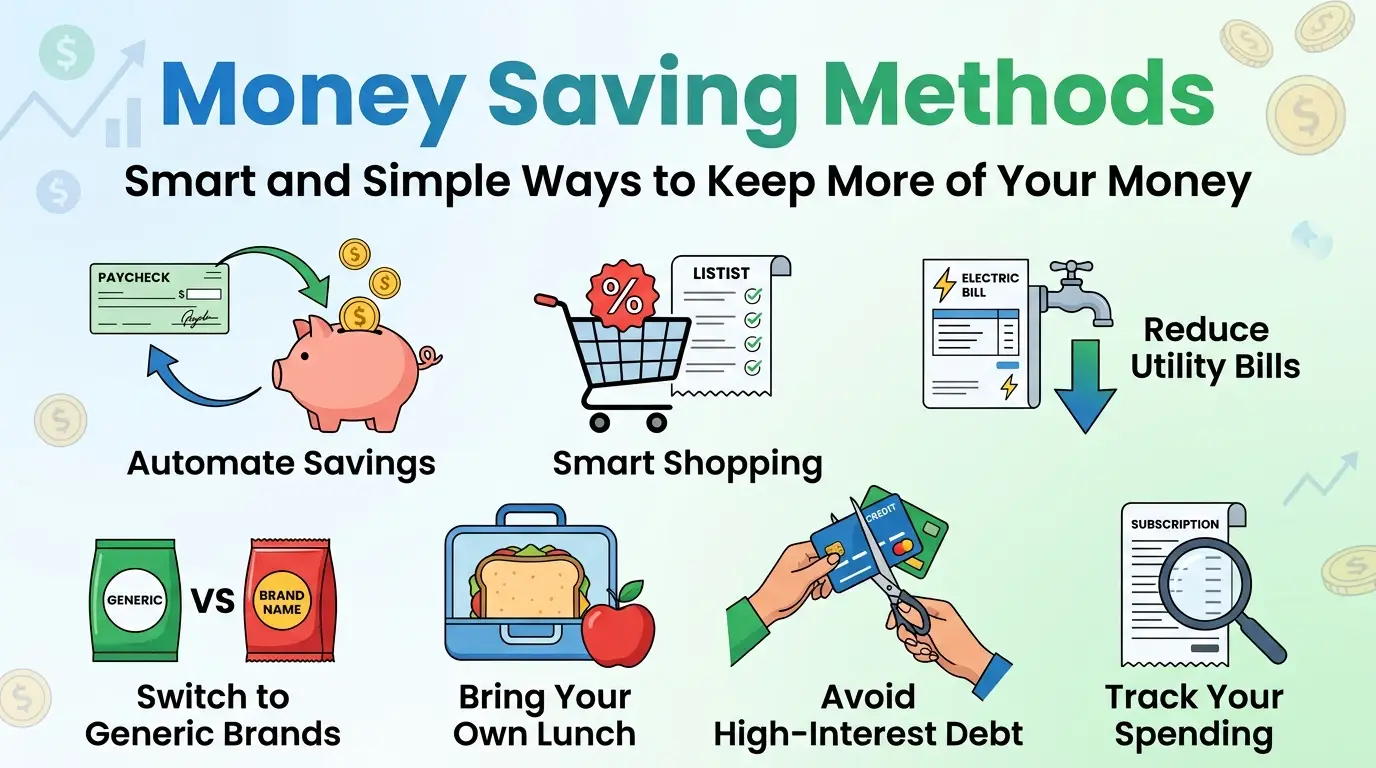
Money Saving Methods: Smart and Simple Ways to Keep More of Your Money
Saving money doesn’t always require making huge sacrifices or completely changing your lifestyle. In many cases, the most effective money saving methods are small habits that quietly reduce unnecessary spending and help you become more intentional with every dollar. Whether you’re trying to build an emergency fund, pay off debt, save for a major purchase, or simply feel more financially secure, the right money saving methods can make a noticeable difference.
The good news is that saving money isn’t about never spending. It’s about spending with purpose. A few simple changes to your daily routine can create extra room in your budget without making life feel miserable. From reducing grocery expenses to controlling impulse purchases, these practical 129 money saving ideas can help you keep more money in your bank account.
Best Money Saving Methods for Everyday Life
One of the easiest money saving methods is to create a realistic spending plan before the month begins. Instead of wondering where your money went at the end of the month, decide where you want it to go in advance. Give every major expense a purpose, including bills, groceries, transportation, entertainment, savings, and personal spending.
Another effective method is to track every purchase for a month. Small expenses can be surprisingly expensive when they happen repeatedly. A daily coffee, delivery fee, convenience-store snack, or unused subscription may seem insignificant individually, but several small purchases can add up quickly.
Try using a waiting period before buying nonessential items. For inexpensive purchases, wait 24 hours. For larger purchases, consider waiting a week. This simple habit can separate genuine needs from temporary wants.
You can also establish a weekly spending limit for flexible expenses. Once the limit is reached, pause unnecessary purchases until the next week. This creates a natural boundary without requiring you to monitor every penny.
Money Saving Methods for Groceries
Groceries are one of the easiest areas to improve when you’re looking for practical money saving methods. Start by planning meals around foods you already have at home. Check your refrigerator, freezer, and pantry before creating your shopping list.
Shopping with a list can prevent impulse purchases. Make the list before entering the store and try to stick to it. If you notice something that isn’t necessary, add it to a future shopping list instead of immediately putting it in your cart.
Compare unit prices rather than simply comparing package prices. A larger package isn’t always cheaper, and a sale isn’t always a bargain. Unit pricing makes it easier to identify the genuinely better deal.
Buying store-brand products can also reduce grocery costs. Many generic products are comparable in quality to name-brand alternatives but cost considerably less.
Another useful money saving method is to cook larger portions and use leftovers for another meal. Batch cooking can reduce food waste, save preparation time, and make takeout less tempting on busy days.
Freezing food before it spoils can save money as well. Bread, meat, vegetables, fruits, and many prepared meals can often be frozen for later use.
Money Saving Methods for Eating Out
Eating at restaurants can quickly become one of the largest flexible expenses in a household budget. You don’t necessarily need to stop eating out completely. Instead, reduce the frequency.
Consider choosing one or two restaurant meals each month as planned treats. This approach makes dining out feel intentional rather than routine.
When ordering food, skip unnecessary extras such as appetizers, premium add-ons, oversized drinks, or delivery fees when they don’t provide enough value.
Preparing a simple meal before leaving home can also prevent expensive convenience purchases. Even something as basic as a sandwich, fruit, or homemade snack can reduce spending during a busy day.
Another helpful method is to make restaurant leftovers part of your meal plan. If one restaurant meal provides enough food for two meals, the effective cost per meal becomes much lower.
Money Saving Methods for Monthly Bills
Monthly bills deserve special attention because recurring expenses can quietly drain your finances. Review your internet, phone, insurance, streaming, software, and other recurring charges.
Cancel subscriptions you haven’t used recently. If you haven’t opened a service in several weeks or months, ask yourself whether it deserves a permanent place in your budget.
Call service providers and ask whether a cheaper plan is available. Sometimes companies have newer plans, promotional rates, or alternatives that can lower your monthly cost.
Review your insurance policies periodically as well. Your circumstances may have changed, and comparing available options can sometimes reveal potential savings.
Reducing energy consumption is another practical money saving method. Turn off lights when they’re unnecessary, use energy-efficient bulbs, adjust your thermostat sensibly, and unplug devices that consume power when not in use.
Money Saving Methods for Transportation
Transportation costs can consume a large portion of a monthly budget. If possible, combine errands into one trip rather than making multiple separate journeys.
Carpooling can reduce fuel, parking, and maintenance costs. Public transportation, cycling, or walking may also be worthwhile alternatives for shorter trips.
Keep your vehicle properly maintained. Regular maintenance can help prevent expensive repairs and improve fuel efficiency.
Driving smoothly and avoiding unnecessary acceleration can also reduce fuel consumption. Keeping tires properly inflated may improve efficiency as well.
If you regularly use ride-sharing services, compare the cost against public transportation or other alternatives before booking. A small difference per trip can become significant over an entire year.
Money Saving Methods for Shopping
One of the most powerful money saving methods is simply buying less. Before purchasing something, ask whether you need it, whether you already own something similar, and whether you’ll still value it several months from now.
Unsubscribe from promotional emails that encourage unnecessary spending. Constant exposure to discounts can make products feel like opportunities rather than expenses.
Avoid shopping when you’re bored, stressed, or emotional. Shopping can become a form of entertainment, and emotional purchases often provide only temporary satisfaction.
Use a wish list instead of buying immediately. Adding an item to a list gives you time to determine whether you genuinely want it.
Consider buying used items when appropriate. Furniture, books, clothing, electronics, tools, and many other products can often be purchased secondhand at significantly lower prices.
Money Saving Methods for Clothing
Clothing expenses can be reduced by focusing on versatility rather than quantity. Choose pieces that work with multiple outfits instead of buying something simply because it’s trendy.
Take care of the clothes you already own. Washing garments correctly, repairing small problems, and storing clothing properly can extend their useful life.
Try a no-new-clothes challenge for a month or longer. This can reveal how much clothing you actually need.
Before buying something new, check your existing wardrobe. You may already have a similar item that you rarely wear.
Shopping during clearance periods can help when you genuinely need something, but remember that a discount doesn’t create savings if you wouldn’t have purchased the item otherwise.
Money Saving Methods for Entertainment
Entertainment doesn’t have to be expensive. Libraries, parks, free community events, museums with free days, public spaces, and outdoor activities can provide enjoyable experiences without large expenses.
Instead of meeting friends at expensive venues every time, invite them over for a homemade meal, movie night, game night, or casual gathering.
Look for free local events and activities. Many communities offer concerts, festivals, workshops, exhibitions, and outdoor events at little or no cost.
Another effective method is to rotate entertainment subscriptions rather than paying for several services simultaneously. Subscribe to one service for a month, enjoy the content you want, and then switch when necessary.
Money Saving Methods for Technology
Technology purchases can be expensive, especially when new models are released constantly. Don’t upgrade simply because a newer version exists.
Keep your devices protected and maintained so they last longer. A quality case, screen protector, proper storage, and software updates can help extend the useful life of electronics.
Before purchasing a new device, determine whether repairing your current one is cheaper. A battery replacement or minor repair may cost far less than buying a replacement.
Avoid buying accessories simply because they’re marketed as essential. Purchase only what genuinely improves your experience.
Money Saving Methods for Personal Finance
Automating savings is one of the simplest ways to build wealth consistently. Set up an automatic transfer from your checking account to your savings account after receiving income.
Even a small automatic transfer can become meaningful over time. The key is consistency rather than starting with an impressive amount.
Create separate savings categories for different goals. You might have an emergency fund, travel fund, home fund, education fund, or general savings account.
Use windfalls carefully. When you receive unexpected money, consider putting a portion toward savings or debt rather than immediately spending the entire amount.
Another useful strategy is to increase your savings whenever your income increases. If you receive a raise, direct part of the additional income toward your financial goals before lifestyle inflation absorbs it.
Money Saving Methods for Avoiding Impulse Spending
Impulse spending is often less about the product and more about the emotion behind the purchase. Recognizing your spending triggers can help you make better decisions.
Delete shopping apps if they encourage frequent purchases. Making shopping slightly less convenient can create a useful pause between wanting something and buying it.
Remove saved payment information from websites where you frequently overspend. Entering payment details manually adds friction and gives you another opportunity to reconsider.
Use cash for categories where you tend to overspend. Physically seeing money leave your wallet can make spending feel more tangible.
Another method is to calculate how many hours of work are required to pay for an item. Thinking about purchases in terms of working time can change your perspective.
Money Saving Methods for Saving at Home
Make your home work for your budget. Simple maintenance can prevent expensive problems later.
Clean appliances regularly and follow maintenance recommendations. Replace filters when necessary and address small issues before they become major repairs.
Use what you already have before buying replacements. Many households accumulate cleaning supplies, kitchen equipment, tools, and household products that remain unused.
Organize storage areas so you can actually see what you own. Better organization reduces duplicate purchases and prevents perfectly good products from being forgotten.
Repurpose items whenever possible. Containers, jars, furniture, clothing, and household materials can sometimes serve new purposes instead of being thrown away.
Money Saving Methods for Debt and Savings
Reducing high-interest debt can be one of the most valuable financial moves you make. Interest can prevent your money from working toward your own goals.
Create a debt repayment strategy that fits your situation. You can prioritize the highest-interest debt first or use a smaller-balance approach for motivational wins.
Avoid adding new debt while you’re trying to eliminate existing balances. Otherwise, progress can become frustratingly slow.
Build an emergency fund alongside debt repayment when possible. Even a modest financial cushion can reduce the likelihood of relying on credit when an unexpected expense appears.
Set specific savings goals rather than simply saying, “I need to save more.” A clear target gives your money a purpose and makes progress easier to measure.
More Smart Money Saving Methods
Use price comparison tools before major purchases.
Borrow items that you only need occasionally.
Share rarely used equipment with trusted friends or family.
Repair household items instead of automatically replacing them.
Buy durable products when their long-term value justifies the higher upfront cost.
Avoid paying for convenience when you have a free alternative.
Bring reusable shopping bags and water bottles when appropriate.
Prepare snacks at home instead of purchasing them individually.
Drink more water instead of regularly buying expensive beverages.
Reduce food waste by planning meals around ingredients that need to be used first.
Shop your pantry before grocery shopping.
Use leftovers creatively rather than letting them become forgotten food.
Make coffee at home when it fits your routine.
Pack lunch for work or school.
Choose free workout options such as walking, running, hiking, or home workouts.
Borrow books instead of buying every title you want to read.
Use free educational resources before paying for courses.
Learn basic household repairs.
Learn basic cooking skills.
Learn simple sewing and clothing-repair skills.
Compare prices before booking travel.
Travel during less expensive periods when your schedule allows.
Use rewards and loyalty programs strategically rather than buying extra products just to earn points.
Avoid late fees by setting reminders or automatic payments.
Pay bills on time.
Review bank fees and account charges.
Choose financial accounts with reasonable fees.
Avoid unnecessary ATM fees.
Review credit card benefits and costs regularly.
Don’t carry a balance simply to chase rewards.
Use coupons only for products you actually need.
Compare sale prices with regular prices.
Buy seasonal products when prices are lower.
Purchase nonperishable essentials in sensible quantities when the unit price is genuinely better.
Avoid bulk buying products that may expire.
Create a sinking fund for predictable annual expenses.
Save for gifts throughout the year instead of waiting until the last minute.
Set a holiday spending limit.
Make homemade gifts when they are appropriate and meaningful.
Use digital invitations when possible.
Plan birthdays and celebrations around experiences rather than expensive purchases.
Set spending rules with your family.
Teach children the difference between wants and needs.
Give yourself a reasonable personal spending allowance.
Don’t eliminate every enjoyable expense. Instead, choose the ones that matter most.
Review your budget every month.
Calculate your net worth periodically.
Celebrate financial milestones without creating a new financial problem.
Keep a record of your financial goals somewhere visible.
Use a separate account for short-term savings.
Keep emergency savings accessible but separate from everyday spending.
Build a small buffer in your checking account.
Avoid lifestyle inflation after receiving additional income.
Save part of every bonus or unexpected payment.
Use tax refunds thoughtfully instead of treating them as free money.
Sell items you no longer use.
Declutter before buying more storage.
Use community swap groups where appropriate.
Consider renting equipment for occasional projects.
Compare renting versus buying before making expensive purchases.
Avoid purchasing something solely because it is on sale.
Set a monthly “no-spend” challenge.
Have a weekly money check-in.
Review your three largest spending categories each month.
Identify one expense to reduce rather than trying to change everything at once.
Use cash envelopes for categories where they help control spending.
Separate needs from wants before major purchases.
Ask yourself whether a purchase supports one of your current goals.
Avoid comparing your lifestyle with other people’s lifestyles.
Remember that convenience has a price.
Practice delayed gratification.
Focus on total cost rather than monthly payment when evaluating purchases.
Read cancellation terms before signing up for services.
Avoid unnecessary extended warranties when the numbers don’t make sense.
Keep receipts for major purchases.
Compare repair costs with replacement costs.
Buy quality when durability matters.
Avoid buying cheap products repeatedly when a durable alternative would cost less over time.
Use public resources whenever they meet your needs.
Take advantage of employer benefits when available.
Review your financial goals after major life changes.
Keep your savings strategy simple enough to maintain.
How to Make Money Saving Methods Actually Work
Having a long list of money saving methods is useful, but trying to implement all of them at once can become overwhelming. Start with the areas where you have the most control.
Look at your recent spending and identify your three biggest opportunities. Perhaps groceries are too expensive, subscriptions are piling up, or frequent takeout is affecting your budget. Start there.
Choose a few money saving methods that feel realistic. Once they become habits, add another one.
The goal isn’t perfection. A financial habit that you follow consistently is more valuable than an ambitious strategy you abandon after two weeks.