Money Management Plan Ideas to Build a Stronger Financial Future
Money can be one of the most empowering tools in life when you know how to manage it wisely. A thoughtful money management plan can help you control spending, build savings, reduce debt, prepare for emergencies, and work toward financial freedom. You do not need to earn a huge salary to improve your financial situation. What matters most is having a clear strategy and consistently making better financial decisions.
A good 99 money management plan gives every dollar a purpose. Instead of wondering where your paycheck disappeared, you begin to understand exactly how much you earn, what you spend, what you save, and what you can invest. The following money management ideas can inspire you to create a practical financial system that fits your lifestyle and goals.
Money Management Plan Quotes for Better Financial Habits
“Create a money management plan that tells your money where to go before you start spending it.”
“Your financial future is built by the small money decisions you make consistently, not by one perfect financial decision.”
“A successful money management plan begins with knowing exactly how much money comes in and where every dollar goes.”
“Spend less than you earn, save the difference, and give your future self a financial advantage.”
“Money becomes easier to manage when you stop treating your paycheck as spending money and start treating it as a financial resource.”
“Build your budget around your priorities rather than allowing your expenses to determine your priorities.”
“A simple money management plan followed consistently can be more powerful than a complicated financial strategy you never use.”
“Before buying something you want, ask whether it supports the financial future you are trying to create.”
“Saving money is not about depriving yourself; it is about giving yourself more choices later.”
“Your budget should not make your life smaller; it should help you spend confidently on what matters most.”
“Track your expenses because awareness is the first step toward changing your financial habits.”
“Financial progress often begins when you become completely honest with yourself about your spending.”
“Do not wait for a higher income to manage your money better; learn to manage what you have today.”
“An emergency fund turns unexpected expenses from financial disasters into manageable inconveniences.”
“Every dollar saved today can become part of the financial freedom you enjoy tomorrow.”
“Debt can limit your choices, so make debt reduction an important part of your money management plan.”
“Pay yourself first by automatically moving part of your income into savings before you begin spending.”
“A financial goal without a plan is simply a wish, so turn your goals into specific savings and spending targets.”
“Your money management plan should change as your income, responsibilities, family, and financial goals change.”
“Small financial leaks can sink a budget, so pay attention to subscriptions, impulse purchases, and unnecessary fees.”
“Do not compare your financial life with someone else’s highlight reel; build a money plan around your own circumstances.”
“The purpose of budgeting is not to control every penny but to control the direction of your financial life.”
“Financial discipline means choosing long-term benefits over short-term impulses.”
“Give yourself permission to enjoy your money while still protecting your future with responsible financial planning.”
“One of the smartest money management habits is learning to distinguish between something you need and something you simply want.”
“Before taking on new debt, consider whether the purchase will improve your life enough to justify the future payments.”
“Your credit score matters, but your overall financial health matters even more.”
“Automating your savings removes temptation and makes financial progress part of your normal routine.”
“A good money management plan should include savings, spending, debt repayment, investing, and financial protection.”
“When your financial goals are clear, unnecessary purchases become easier to recognize and resist.”
“Do not let a temporary desire create a long-term financial burden.”
“Financial freedom starts when your money begins working for your goals instead of disappearing into unplanned expenses.”
“Review your budget regularly because a financial plan that is never reviewed can quickly become outdated.”
“Saving for an emergency is one of the simplest ways to protect your financial stability.”
“Your future deserves a place in today’s budget.”
“Money management is not about being perfect; it is about making better decisions more often.”
“Learn to enjoy affordable experiences because happiness does not always require expensive purchases.”
“Use your financial plan to create flexibility, not fear.”
“The earlier you develop good money habits, the more time those habits have to improve your financial future.”
“Financial confidence grows when you know your numbers instead of avoiding them.”
“Make saving automatic, spending intentional, and financial goals visible.”
“Every unnecessary expense you eliminate creates another opportunity to save, invest, or reduce debt.”
“Your paycheck is not a measure of your wealth; how you manage and grow what you earn matters just as much.”
“Do not increase your lifestyle every time your income increases; give your savings and investments a chance to grow first.”
“A strong money management plan protects you from making financial decisions based entirely on emotion.”
“Before making a major purchase, give yourself time to think instead of allowing urgency to make the decision for you.”
“Financial planning becomes easier when you break large goals into small monthly actions.”
“Do not underestimate the power of saving a modest amount consistently for years.”
“Your budget is a financial map that can help you avoid getting lost in unnecessary spending.”
“Learn from your financial mistakes instead of allowing them to define your financial future.”
“Money should support your values, goals, relationships, and freedom rather than control your entire life.”
“Keep your financial goals simple enough that you can remember them and specific enough that you can measure them.”
“An effective money management plan starts with realistic numbers rather than unrealistic expectations.”
“Use separate savings accounts for important goals when doing so helps you stay organized and motivated.”
“Do not spend tomorrow’s income today.”
“Financial stability is created through preparation, patience, consistency, and thoughtful decision-making.”
“One of the best financial habits is checking your bank accounts regularly instead of avoiding them.”
“Build your emergency savings before unexpected expenses force you to rely on expensive debt.”
“Your financial plan should include room for both responsibilities and reasonable enjoyment.”
“Learning basic personal finance can save you money for years because knowledge improves everyday decisions.”
“When you know exactly what you are saving for, saying no to unnecessary spending becomes easier.”
“Do not let social pressure convince you to spend money simply to appear successful.”
“Real wealth is not always visible because financial security often looks like savings, investments, low debt, and peace of mind.”
“Review recurring expenses regularly and cancel services you no longer use.”
“Use cash flow awareness to understand whether your current lifestyle is actually affordable.”
“Financial goals become more achievable when you attach deadlines and specific amounts to them.”
“Keep your financial records organized so you can make decisions using facts instead of guesses.”
“Do not ignore small debts because small balances can become significant problems when combined with high interest.”
“Prioritize high-interest debt because interest can quietly consume money that could otherwise support your goals.”
“Saving money becomes easier when you make it a habit instead of waiting until the end of the month.”
“Give every paycheck a purpose before spending it.”
“Your money management plan should help you prepare for expenses you know are coming instead of constantly reacting to them.”
“Financial success is often less about earning more and more about keeping, managing, and growing what you already earn.”
“Use financial milestones to celebrate progress without turning every celebration into another expensive purchase.”
“Do not confuse a higher credit limit with permission to spend more.”
“Protect your financial future by maintaining appropriate insurance and keeping important financial documents organized.”
“Investing can become more approachable when you focus on long-term goals rather than short-term market emotions.”
“Never make an investment decision simply because everyone else seems to be making it.”
“Understand the fees associated with your financial products because small costs can add up over time.”
“Build financial habits that are sustainable enough to continue during both good months and difficult months.”
“Your money management plan should include a strategy for irregular expenses such as repairs, holidays, gifts, and annual bills.”
“Use windfalls wisely by considering savings, debt reduction, investments, and meaningful goals before increasing your lifestyle.”
“Do not allow one bad financial month to convince you that your entire plan has failed.”
“Financial resilience comes from having savings, manageable debt, reliable income, and a flexible spending plan.”
“Teach children about money early because financial habits are easier to build before harmful habits become deeply established.”
“Talk openly about household finances when appropriate because shared financial goals require shared understanding.”
“Create a personal spending limit for categories where you are most likely to overspend.”
“Use a waiting period before expensive purchases to separate genuine needs from temporary excitement.”
“Your financial plan should be realistic enough to survive birthdays, vacations, emergencies, and unexpected bills.”
“Focus on progress rather than perfection because sustainable financial improvement happens one decision at a time.”
“Do not allow fear of making mistakes to stop you from learning how money works.”
“Build multiple layers of financial protection through savings, responsible debt management, insurance, and long-term investing.”
“Your financial future becomes clearer when you regularly measure your progress against your goals.”
“Money management is a lifelong skill, so continue learning as your financial situation becomes more complex.”
“Make financial reviews a regular habit so you can adjust your plan before small problems become major ones.”
“Your income gives you resources, but your financial habits determine how effectively you use them.”
“A strong money management plan gives you the confidence to make financial decisions with intention rather than impulse.”
“Financial freedom is not about having unlimited money; it is about having enough financial control to make meaningful choices.”
“Start your money management plan with what you can do today instead of waiting for the perfect financial moment.”
How to Create a Simple Money Management Plan
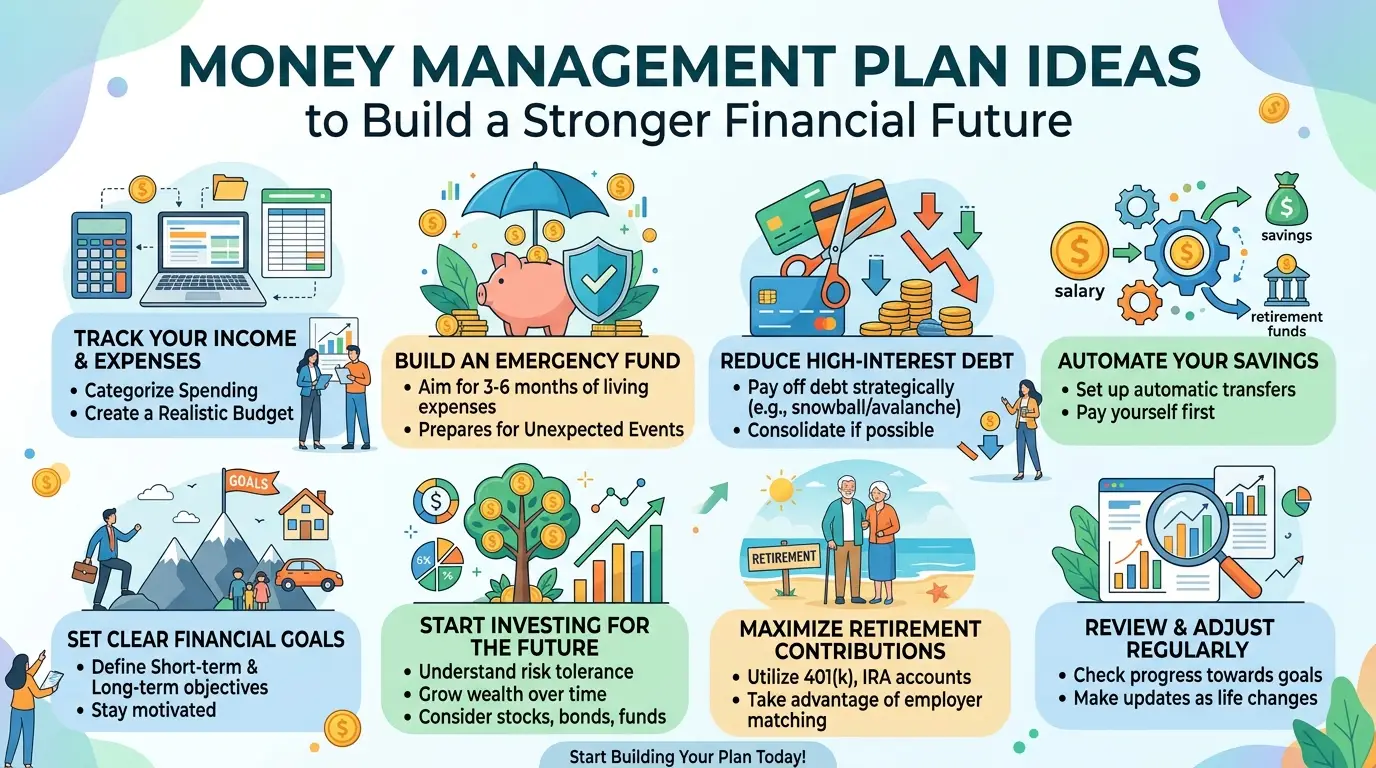
Creating a money management plan does not have to be complicated. Start by calculating your monthly take-home income. Include your regular salary or other reliable sources of income, but avoid depending on uncertain money when creating your essential budget.
Next, list your fixed expenses. These may include housing, utilities, transportation, insurance, loan payments, and other recurring obligations. Then identify flexible expenses such as groceries, entertainment, shopping, dining out, and hobbies.
Once you understand your cash flow, decide how much you want to allocate toward savings and debt repayment. Even a small amount can become meaningful when saved consistently. The key is to create a plan that is realistic enough to follow every month.
Build an Emergency Fund
An emergency fund should be an important part of your financial plan. Unexpected medical expenses, vehicle repairs, job changes, household problems, or urgent travel can quickly disrupt an otherwise healthy budget.
Start with a manageable target rather than becoming overwhelmed by a large number. You can gradually increase your emergency savings as your income grows. Keeping these funds separate from everyday spending can also reduce the temptation to use them unnecessarily.
Control Unnecessary Spending
One of the biggest benefits of a money management plan is that it makes unnecessary spending easier to identify. You may discover that several small expenses are consuming more money than expected.
Look carefully at recurring subscriptions, frequent restaurant meals, impulse shopping, convenience purchases, delivery fees, and unused memberships. You do not have to eliminate everything enjoyable. Instead, focus on expenses that provide little value compared with their cost.
Make Debt Reduction a Priority
Debt can make financial progress feel frustrating because part of your income is already committed to previous purchases. A smart money management strategy should therefore include a clear debt repayment plan.
Start by understanding the balances, interest rates, minimum payments, and repayment terms of your debts. High-interest debt deserves particular attention because interest can significantly increase the total amount you pay.
As you reduce debt, avoid replacing old balances with new unnecessary borrowing. The goal is not simply to pay off one account but to develop habits that prevent the same cycle from returning.
Save Before You Spend
A common mistake is waiting until the end of the month to see what remains available for savings. Unfortunately, there may be nothing left.
Instead, consider making savings one of the first destinations for your income. Automatic transfers can make this process easier because the money moves before you have an opportunity to spend it.
Whether you are saving for an emergency fund, a home, education, travel, retirement, or another major goal, consistency matters.
Create Short-Term and Long-Term Goals
A complete money management plan should include both short-term and long-term financial goals.
Short-term goals might include paying a bill, building an emergency fund, purchasing a necessary item, or paying down a credit card. Long-term goals could include buying a home, investing for retirement, starting a business, or reaching financial independence.
Breaking large goals into smaller milestones makes them feel more achievable. Instead of saying you want to save a large amount someday, determine how much you need to save each month and track your progress.
Use a Budget That Fits Your Life
There is no single budgeting method that works perfectly for everyone. Some people prefer detailed category-based budgets, while others prefer simple spending limits.
The best budget is the one you can actually maintain.
Your money management plan should account for real life. If your budget leaves no room for entertainment, occasional treats, or social activities, you may eventually abandon it. A sustainable financial plan balances responsibility with enjoyment.
Review Your Money Management Plan Regularly
Your financial circumstances will change. Your income may increase, expenses may change, debt may decrease, or new goals may appear.
That is why your money management plan should not be something you create once and forget. Review it regularly and make adjustments when necessary.
A monthly financial review can help you identify spending patterns, check savings progress, monitor debt, and determine whether your current strategy still matches your priorities..