Job Interview Tips To Help You Get Hired Faster
A job interview can feel like one of the most stressful moments in your career journey. Whether you are applying for your first position, changing careers, or aiming for a higher-level role, knowing the right job interview tips can make a huge difference. A successful interview is not only about answering questions correctly; it is about showing confidence, preparation, professionalism, and genuine interest in the opportunity.
Many candidates have strong skills and impressive resumes but struggle during interviews because they do not know how to communicate their value effectively. The best job interview tips help you prepare mentally, understand employer expectations, improve your body language, and create memorable conversations with hiring managers.
This complete guide shares practical 199 job interview tips that can help you feel more confident, avoid common mistakes, and increase your chances of receiving a job offer.
Best Job Interview Tips For Successful Preparation
Preparation is the foundation of every successful job interview. Walking into an interview without research can make you appear uninterested or unprepared. The more effort you put into preparation, the easier it becomes to answer questions naturally and confidently.
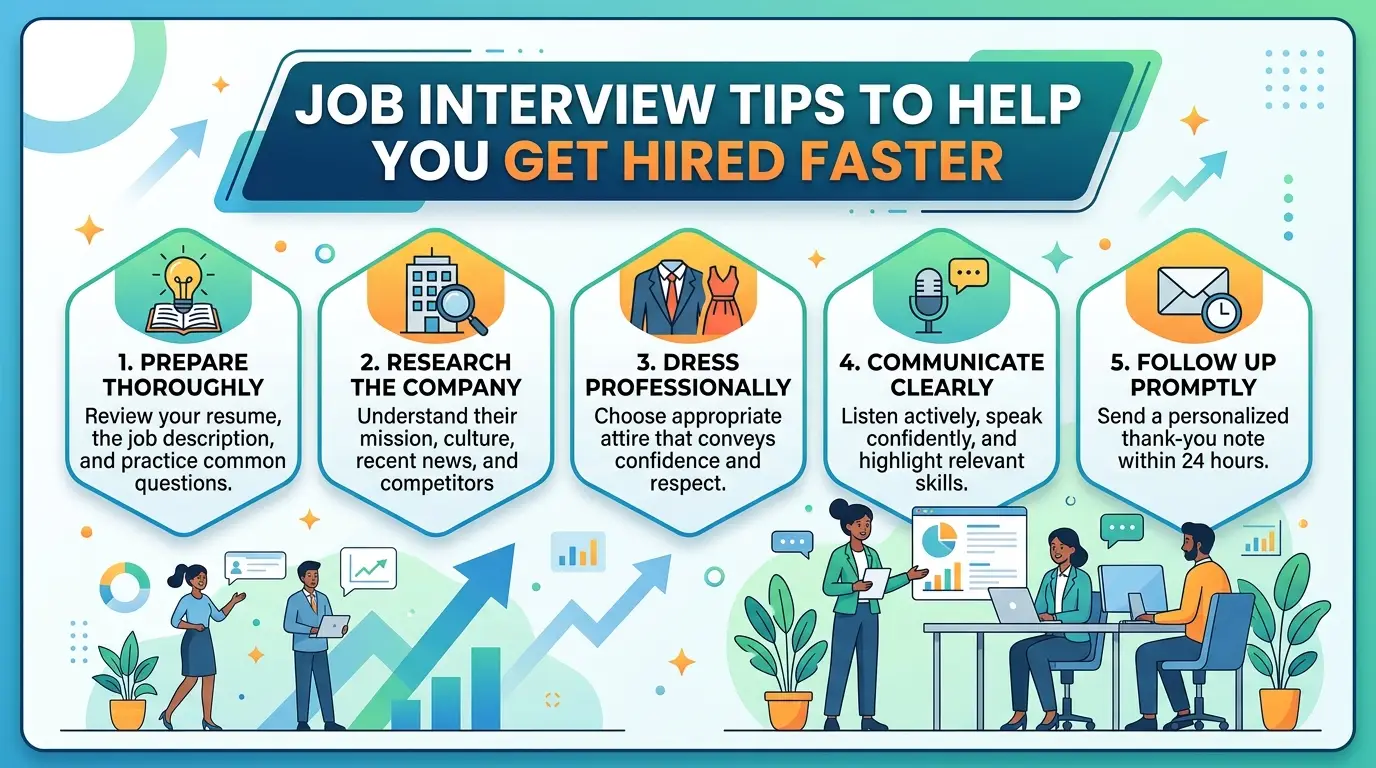
Research the company before your interview
Understanding the company’s mission, values, products, services, and recent achievements helps you create better answers and shows employers that you are genuinely interested.
Study the job description carefully
Read the job description multiple times and identify the skills, responsibilities, and qualifications the employer wants. Connect your experience directly to those requirements.
Learn about the company culture
Knowing the workplace environment helps you explain why you would be a good fit for the organization.
Prepare answers for common interview questions
Practice responses for questions like “Tell me about yourself,” “Why should we hire you?” and “What are your strengths and weaknesses?”
Create a strong personal introduction
Your introduction should quickly explain who you are, your experience, and what value you can bring to the company.
Practice speaking clearly
Practicing your answers aloud helps you organize your thoughts and reduce nervousness.
Prepare examples from your experience
Use real examples that show your skills, problem-solving ability, teamwork, and achievements.
Review your resume before the interview
Be ready to discuss every important detail on your resume because interviewers may ask about your previous roles.
Prepare questions for the interviewer
Asking thoughtful questions shows curiosity and enthusiasm for the position.
Practice with a friend or mentor
A practice interview can help you identify areas where you need improvement.
Job Interview Tips For Making A Great First Impression
First impressions often influence how interviewers view candidates. Your appearance, communication style, and attitude can shape the entire conversation.
Dress professionally for the position
Choose clothing that matches the company environment while maintaining a polished and professional appearance.
Arrive early
Arriving 10 to 15 minutes early shows reliability and respect for the interviewer’s time.
Bring extra copies of your resume
Even if you submitted your resume online, carrying printed copies demonstrates preparation.
Maintain good posture
Sitting upright communicates confidence and professionalism.
Smile naturally
A genuine smile helps create a positive connection with the interviewer.
Offer a confident greeting
A friendly greeting and professional introduction can set a positive tone.
Make eye contact
Maintaining appropriate eye contact shows confidence and engagement.
Avoid appearing distracted
Keep your phone away and give the interviewer your full attention.
Show enthusiasm
Employers want candidates who are excited about the opportunity.
Be polite to everyone
Treat receptionists, assistants, and other employees respectfully because professionalism matters at every level.
Job Interview Tips For Answering Questions Effectively
Strong answers are not just about what you say. They are about how clearly and confidently you communicate your ideas.
Listen carefully before answering
Take a moment to understand the question before responding.
Avoid memorized answers
Prepared responses are helpful, but your answers should sound natural and authentic.
Use the STAR method
Structure your answers using Situation, Task, Action, and Result to explain your experiences clearly.
Keep answers focused
Avoid unnecessary details and stay connected to the question.
Highlight your achievements
Explain specific results you created instead of only listing responsibilities.
Show problem-solving skills
Employers value candidates who can handle challenges effectively.
Explain your decision-making process
Share how you analyze situations and choose solutions.
Connect your skills to the role
Always explain how your abilities benefit the company.
Stay positive when discussing previous jobs
Avoid criticizing former employers or coworkers.
Be honest
Authenticity builds trust during interviews.
Job Interview Tips For Handling Difficult Questions
Some interview questions are designed to test your confidence, honesty, and ability to think under pressure.
Prepare for unexpected questions
Practice staying calm when facing unfamiliar questions.
Do not panic if you need time
Taking a few seconds to think shows thoughtfulness.
Admit when you do not know something
Honesty is often valued more than pretending to know everything.
Turn weaknesses into opportunities
Discuss weaknesses while explaining how you are improving.
Avoid negative explanations
Focus on lessons learned rather than past problems.
Handle salary questions professionally
Research market rates and communicate your expectations confidently.
Prepare for career gap questions
Explain gaps honestly while focusing on productive activities.
Be ready to explain job changes
Share positive reasons for moving forward in your career.
Stay calm during challenging interviews
Your emotional control can demonstrate professionalism.
Show confidence in your abilities
Believe in your experience and communicate your value.
Job Interview Tips For Improving Body Language
Nonverbal communication plays a major role in interviews. Your body language can reinforce your words or create uncertainty.
Sit confidently
A relaxed but professional sitting position creates a positive impression.
Avoid excessive movements
Too much movement can make you appear nervous.
Keep your hands visible
Open gestures can make you appear approachable.
Nod when listening
Small signs of engagement show that you are paying attention.
Avoid crossing your arms
Closed body language may appear defensive.
Control nervous habits
Avoid tapping, shaking your leg, or playing with objects.
Match the interviewer’s energy
Remain professional while adapting naturally to the conversation.
Use confident facial expressions
Your expressions should support your enthusiasm.
Maintain a calm voice
Speaking clearly and steadily improves communication.
Show active listening
Respond naturally to demonstrate interest.
Job Interview Tips For Virtual Interviews
Online interviews have become common, and they require additional preparation.
Test your technology beforehand
Check your camera, microphone, internet connection, and interview platform.
Choose a quiet location
A distraction-free environment helps you stay focused.
Improve your background
Use a clean and professional background.
Position your camera correctly
Place the camera at eye level for better communication.
Dress professionally online
Treat virtual interviews like in-person meetings.
Look at the camera
Looking into the camera creates better eye contact.
Avoid multitasking
Give the interview your complete attention.
Keep notes nearby
Use small reminders without reading full answers.
Charge your device
Avoid technical problems during important conversations.
Practice online communication
Virtual conversations require different skills than face-to-face meetings.
Job Interview Tips For Showing Your Value
Employers want to understand how you can contribute to their success.
Explain your unique strengths
Share what makes you different from other candidates.
Discuss measurable results
Numbers and achievements make your experience more convincing.
Show willingness to learn
Employers appreciate candidates who continue improving.
Demonstrate teamwork skills
Most jobs require collaboration.
Share leadership experiences
Leadership can include taking responsibility and helping others succeed.
Show adaptability
Companies value people who handle change effectively.
Explain your motivation
Share why the position matters to you.
Connect your goals with the company
Show how your career plans align with the organization.
Communicate your passion
Enthusiasm can separate you from other applicants.
Be memorable
A strong interview leaves a lasting positive impression.
Job Interview Tips For Avoiding Common Mistakes
Many candidates lose opportunities because of avoidable mistakes.
Do not arrive late
Poor timing can damage your first impression.
Do not speak negatively about past employers
Professionalism matters throughout your career.
Do not exaggerate your abilities
Honesty creates long-term credibility.
Do not interrupt the interviewer
Allow questions to be completed before answering.
Do not appear uninterested
Show curiosity and engagement.
Do not forget company research
Preparation demonstrates commitment.
Do not ask questions too early
Allow the interviewer to guide the conversation.
Do not focus only on salary
Show interest in the role itself.
Do not use overly casual language
Maintain professional communication.
Do not underestimate preparation
Confidence comes from practice and knowledge.
Job Interview Tips For Following Up After The Interview
The interview process does not end when you leave the room. A professional follow-up can strengthen your chances.
Send a thank-you message
Express appreciation for the interviewer’s time.
Mention something specific from the conversation
Personalized follow-ups feel more genuine.
Reinforce your interest
Let the employer know you remain excited about the opportunity.
Highlight your qualifications again
Briefly remind them why you are a strong candidate.
Stay professional while waiting
Patience and professionalism matter during hiring decisions.
Follow up at the appropriate time
Avoid contacting employers too frequently.
Continue your job search
Do not depend on one opportunity.
Reflect on your performance
Identify what went well and what you can improve.
Improve after every interview
Each experience helps you become better.
Stay confident
The right opportunity often comes with persistence and preparation.
More Job Interview Tips To Improve Your Chances Of Getting Hired
Prepare your mindset before the interview
A positive mindset helps you approach the interview with confidence instead of fear.
Visualize a successful interview
Imagine yourself answering questions clearly and building a strong connection with the interviewer.
Review your career story
Understand your professional journey so you can explain your experiences naturally.
Identify your strongest accomplishments
Prepare examples of moments when you created meaningful results.
Understand the employer’s challenges
Learn what problems the company may be trying to solve through this position.
Explain how you solve problems
Show employers that you can contribute solutions instead of only completing tasks.
Prepare a powerful closing statement
End the interview by reinforcing your excitement and qualifications.
Research the interviewer when possible
Learning about the person interviewing you can help create a better conversation.
Understand industry trends
Knowing current developments shows that you are engaged with your field.
Practice professional communication
Strong communication skills can influence how employers view your abilities.
Avoid using filler words
Reduce words like “um,” “like,” and “you know” to sound more confident.
Speak with energy
A lively communication style helps demonstrate enthusiasm.
Keep your answers conversational
A natural conversation feels more authentic than a scripted speech.
Prepare your professional goals
Be ready to explain where you want your career to go.
Show long-term interest
Employers appreciate candidates who are interested in growing with the company.
Understand the role expectations
Know what success in the position would look like.
Prepare examples of teamwork
Share situations where you collaborated effectively with others.
Explain your leadership style
Even without a management title, you can demonstrate leadership qualities.
Highlight your learning ability
Employers value people who quickly develop new skills.
Mention relevant certifications
Professional certifications can strengthen your qualifications.
Update your LinkedIn profile
Ensure your online professional presence matches your resume.
Review your online reputation
Check what employers may find when searching your name.
Practice answering behavioral questions
Many employers use past experiences to predict future performance.
Prepare questions about company growth
Thoughtful questions can show strategic thinking.
Ask about team structure
Understanding the team shows interest in collaboration.
Ask about workplace expectations
This helps you understand how you can succeed in the role.
Avoid asking questions already answered online
Research first to create more meaningful questions.
Bring a portfolio when appropriate
Examples of your work can strengthen your credibility.
Organize your documents
Keep your resume, references, and notes easy to access.
Confirm interview details
Double-check the time, location, format, and interviewer information.
Plan your travel route
Knowing how to reach the interview location prevents unnecessary stress.
Prepare professional references
Choose people who can positively discuss your skills and experience.
Understand your compensation value
Research your market worth before discussing salary.
Practice negotiating professionally
Confidence during salary discussions can benefit your career.
Be aware of company competitors
Industry knowledge can help you have stronger conversations.
Show appreciation for the opportunity
Gratitude creates a positive impression.
Be yourself professionally
Authenticity helps employers understand who you are.
Avoid trying to impress too much
Focus on honest communication rather than exaggeration.
Stay calm during silence
Short pauses are normal and do not mean failure.
Answer with confidence
Your delivery can be as important as your answer.
Focus on solutions instead of problems
Employers prefer candidates with a constructive approach.
Show emotional intelligence
Understanding people and situations is valuable in any workplace.
Demonstrate reliability
Explain examples where others depended on you.
Show attention to detail
Careful communication suggests strong work habits.
Explain your work process
Employers want to understand how you approach tasks.
Mention successful projects
Projects demonstrate practical experience.
Discuss challenges you overcame
Difficult situations can highlight your growth.
Avoid giving one-word answers
Provide enough detail to create meaningful conversations.
Use positive language
Your words influence how employers perceive your attitude.
Show respect for different opinions
Team environments require flexibility and understanding.
Explain your motivation beyond money
Employers want people who care about the work.
Demonstrate curiosity
Curious candidates often show stronger learning potential.
Prepare for panel interviews
Practice communicating with multiple interviewers.
Address each interviewer
Make everyone feel included in the conversation.
Remember interviewer names
Using names appropriately can create stronger connections.
Take notes during the interview
Writing important details shows engagement.
Stay professional during casual conversations
Informal moments are still part of the evaluation.
Avoid oversharing personal information
Keep answers focused on professional topics.
Understand workplace technology
Basic technical knowledge can increase confidence.
Prepare examples of adaptability
Show how you handle changing situations.
Explain how you prioritize tasks
Time management skills are valuable to employers.
Share examples of independence
Demonstrate that you can work without constant supervision.
Show accountability
Take responsibility for your actions and decisions.
Prepare for remote work questions
Explain how you stay productive outside traditional offices.
Demonstrate organizational skills
Share methods you use to stay efficient.
Explain your approach to feedback
Employers value people who accept and use feedback.
Show commitment to improvement
Continuous growth is attractive to hiring managers.
Be respectful of interview time
Keep answers focused and avoid unnecessary stories.
Show confidence without arrogance
Balance self-belief with humility.
Practice your handshake
A professional handshake can create a positive first impression.
Avoid speaking too quickly
A steady pace improves clarity.
Control nervous energy
Channel nervousness into enthusiasm.
Prepare your elevator pitch
A short professional summary helps you introduce yourself effectively.
Know your resume achievements
Be prepared to explain the impact of your work.
Avoid generic statements
Use specific examples instead of common phrases.
Show genuine interest in the company
Employers notice when candidates are truly engaged.
Prepare for technical questions
Review important concepts related to the position.
Explain complex ideas simply
Clear communication demonstrates expertise.
Practice active listening skills
Good listeners often create stronger professional relationships.
Be flexible during scheduling
Cooperation during the hiring process creates a good impression.
Maintain professionalism in emails
Written communication is part of your interview experience.
Respond quickly to interview invitations
Prompt replies show organization and interest.
Review your mistakes after interviews
Learning from experiences improves future performance.
Stay patient during the hiring process
Hiring decisions often take time.
Continue developing your skills
Career growth increases your future opportunities.
Keep building your professional network
Connections can create new career possibilities.
Remain confident after rejection
One rejection does not define your abilities.
Celebrate your progress
Every interview improves your professional skills.
Keep practicing interview techniques
Preparation creates stronger confidence over time.
Believe in your experience
Your skills and journey have value.
Focus on finding the right fit
The best opportunity should benefit both you and the employer.
Keep improving your personal brand
A strong professional identity attracts opportunities.
Stay motivated during your job search
Consistency often leads to success.
Remember that interviews are conversations
The goal is to create a meaningful professional connection.
Use every interview as practice
Each experience prepares you for future success.
Stay optimistic throughout the process
A positive attitude can influence your performance.
Continue learning about your industry
Knowledge helps you stand out from competitors.
Show appreciation after every interaction
Professional courtesy leaves lasting impressions.
Maintain confidence in your abilities
Self-belief helps you communicate your value.
Prepare thoroughly but remain flexible
Good preparation allows you to adapt naturally.
Focus on your strengths
Highlight the qualities that make you valuable.
Be ready to explain your career choices
Clear explanations show self-awareness.
Demonstrate professionalism at every stage
Every interaction represents your personal brand.
Remember your purpose
Your goal is to show why you are the right person for the role.