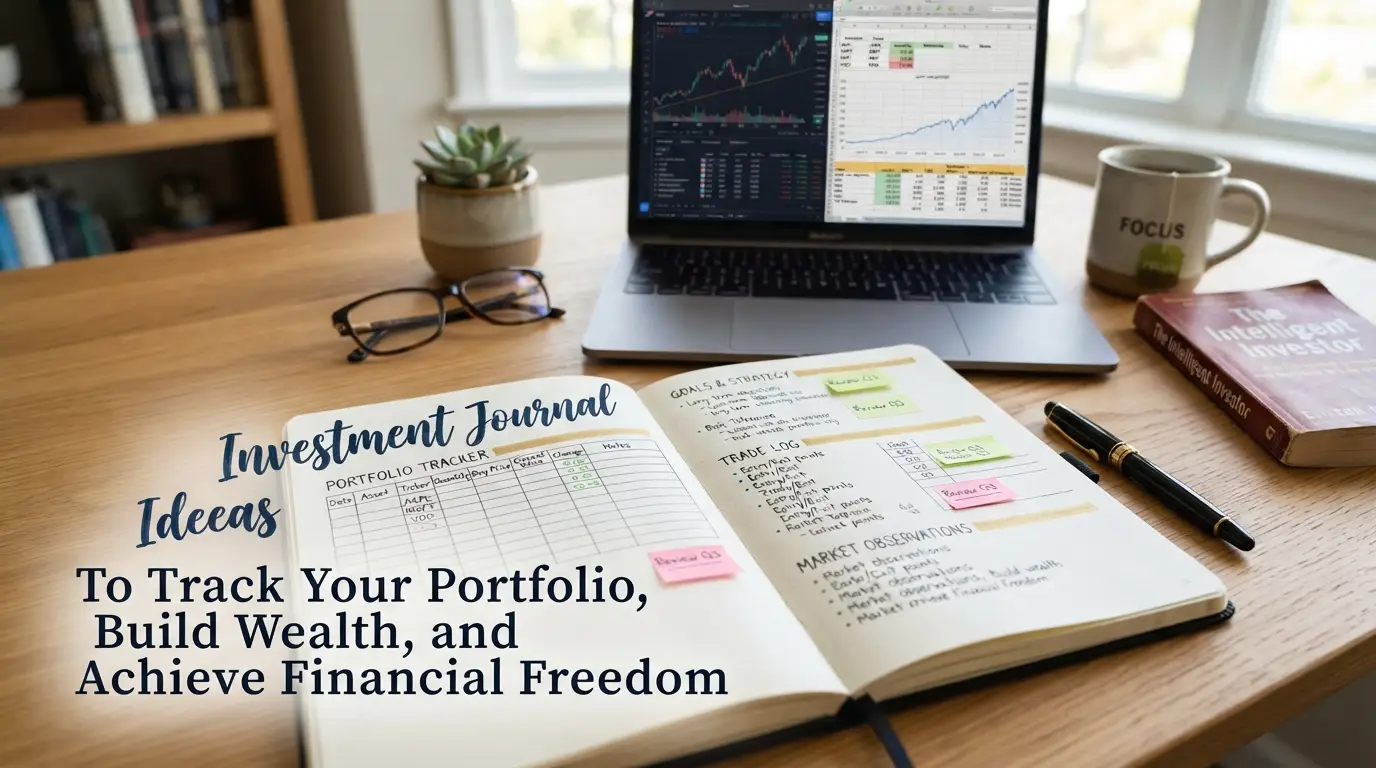
Investment Journal Ideas to Track Your Portfolio, Build Wealth, and Achieve Financial Freedom
Investing is more than buying stocks, purchasing assets, or watching the market move up and down. It is about developing good financial habits, understanding your decisions, learning from mistakes, and creating a long-term strategy that supports your financial goals. One of the easiest ways to become a more thoughtful investor is by keeping an investment journal. Whether you are a beginner or an experienced investor, writing down your thoughts and experiences can help you make better financial decisions.
If you are looking for 129 investment journal ideas, you have come to the right place. An investment journal gives you a dedicated space to record your investment goals, track portfolio performance, explore financial opportunities, and reflect on your progress. It can also help you understand your emotions when markets rise or fall, recognize patterns in your decisions, and avoid repeating costly mistakes.
You do not need an expensive planner or complicated spreadsheet to get started. A simple notebook, digital document, or journaling application can become a valuable investment companion. The most important thing is to stay consistent and write honestly about your financial journey.
From investment goals and stock market observations to budgeting, passive income, and financial lessons, these investment journal ideas will inspire you to organize your thoughts and become more intentional with your money.
Investment Goals Journal Ideas
Setting clear investment goals gives your financial journey direction. Instead of investing without a plan, use your journal to understand what you want to accomplish and why those goals matter. Writing down your intentions can help you stay focused when the market becomes unpredictable.
My biggest financial goal is a meaningful investment journal prompt that encourages you to describe what financial success looks like. Think about whether you want to build retirement savings, purchase a home, become financially independent, or create additional income.
My short-term investment goals can help you identify what you want to achieve within the next few months or years. Write about realistic milestones and the financial habits that could help you reach them.
My long-term wealth-building vision gives you an opportunity to imagine your financial future. Describe the lifestyle you hope to enjoy and how consistent investing might support that vision.
Why I started investing is a personal reflection that reminds you of your original motivation. Revisit this entry whenever you feel discouraged or uncertain about your financial decisions.
My definition of financial freedom encourages you to explain what having control over your money means to you. Consider the lifestyle, opportunities, and responsibilities associated with financial independence.
The investment milestones I want to reach allows you to document important financial achievements. You might include your first investment, reaching a savings target, or building a diversified portfolio.
My ideal retirement lifestyle helps you connect today’s financial decisions with your future needs. Describe where you would like to live, what you would enjoy doing, and how much financial flexibility you hope to have.
Three financial habits I want to develop encourages you to identify behaviors that support long-term investing. These might include regular contributions, researching opportunities, and reviewing your portfolio.
Stock Market Investment Journal Ideas
The stock market offers many learning opportunities, especially when you pay attention to how companies, industries, and economic conditions change over time. Your investment journal can become a place to record observations and understand the reasons behind your decisions.
Stocks I am currently researching is a useful prompt for listing companies that have caught your attention. Write down what interests you about each business and what additional information you need before making an investment decision.
My favorite publicly traded companies allows you to explore businesses whose products, services, or financial performance you find interesting. Explain what makes each company worth studying.
A company I believe has long-term potential encourages you to research businesses beyond their current stock prices. Consider their competitive advantages, leadership, financial health, and growth opportunities.
Today’s stock market observations gives you space to record general market movements. Write about major gains, declines, industry trends, and news that may have influenced investor sentiment.
What I learned from today’s market movements helps you turn market observations into useful knowledge. Rather than reacting emotionally, consider what happened and what it taught you.
Stocks I want to understand better is ideal for recording unfamiliar companies or industries. Researching businesses outside your usual interests can broaden your investment knowledge.
My thoughts about dividend-paying stocks encourages you to explore how dividend investments work. Write about dividend consistency, company earnings, payout ratios, and potential risks.
A stock I decided not to buy is just as valuable as an entry about an investment you purchased. Explain why you passed on the opportunity and what influenced your decision.
Investment Strategy Journal Ideas
A successful investment strategy should reflect your financial goals, risk tolerance, and investment timeline. Journaling about your approach helps you understand whether your decisions follow a consistent plan or are driven by temporary emotions.
My personal investment strategy gives you space to explain how you approach investing. Include your preferred asset classes, research methods, time horizon, and financial priorities.
Why I prefer long-term investing encourages you to explore the benefits and challenges of holding investments over extended periods. Write about patience, compounding, and your expectations.
My approach to diversification helps you examine how your money is distributed across different investments. Consider whether your portfolio depends too heavily on one company, industry, or asset class.
Investment strategies I want to research allows you to explore different approaches, such as value investing, growth investing, and index investing. Compare their principles and potential limitations.
My investment decision-making process helps you document the steps you follow before purchasing an asset. This can include research, valuation, risk assessment, and portfolio considerations.
How I handle market uncertainty encourages you to develop a thoughtful response to unpredictable market conditions. Describe the actions you want to avoid and the principles you want to follow.
My rules for buying investments gives you an opportunity to establish personal guidelines. These might include researching a company’s financial statements or understanding its business model before investing.
When I should review my investment strategy helps you create a consistent portfolio review routine without feeling pressured to react to every market movement.
Financial Planning Journal Ideas
Investment success is closely connected to everyday financial decisions. Budgeting, saving, debt management, and financial planning all influence how much money you can comfortably invest.
My monthly financial overview provides a snapshot of your income, expenses, savings, debts, and investments. Reviewing these details can help you understand your overall financial position.
How much money can I invest each month? encourages you to examine your budget and identify an affordable contribution amount without neglecting essential expenses.
My emergency fund progress allows you to track money reserved for unexpected expenses. Maintaining an appropriate emergency fund can reduce the pressure to sell investments during difficult situations.
Expenses I can reduce to invest more helps you identify unnecessary spending. Consider subscriptions, impulse purchases, and other expenses that could be adjusted.
My monthly savings achievements gives you a place to celebrate progress, even when the amounts seem small. Consistency often matters more than making occasional large contributions.
My debt repayment strategy encourages you to organize outstanding balances, interest rates, and repayment priorities. Consider how debt payments fit into your broader financial plan.
My financial priorities this year helps you decide which goals deserve the most attention. You might prioritize building savings, reducing debt, or increasing retirement contributions.
Investment Portfolio Tracking Ideas
Tracking your portfolio helps you understand how your investments are performing and whether your asset allocation continues to match your goals. Instead of checking prices constantly, use your journal to record meaningful updates at regular intervals.
My current investment portfolio is a helpful entry for listing your holdings and their general purpose. Record relevant information such as asset type, purchase date, and investment amount.
My portfolio diversification review encourages you to examine the balance between stocks, bonds, funds, cash, and other assets.
My biggest portfolio gain allows you to document an investment that performed particularly well. Explain what you learned about the company, market conditions, and your original research.
My biggest portfolio loss helps you reflect on investments that declined in value. Focus on understanding the reasons behind the loss rather than simply blaming yourself.
My portfolio performance this month gives you an opportunity to compare your progress with your financial objectives. Remember that short-term performance does not necessarily determine long-term success.
My asset allocation strategy helps you understand how your portfolio is divided among different investment categories and whether that allocation reflects your risk tolerance.
Investments I want to review is a practical place to list holdings that deserve additional research because of changing circumstances or new financial information.
How my portfolio has changed over time encourages you to compare earlier investment records with your current situation. This can reveal progress and changing priorities.
Personal Finance Reflection Journal Ideas
Sometimes the most important investment lessons come from understanding your relationship with money. Personal finance journaling encourages you to examine your habits, beliefs, and emotional reactions.
My earliest memory about money helps you explore how your childhood experiences influenced your financial habits.
What financial success means to me encourages you to look beyond account balances and consider security, freedom, relationships, and opportunities.
My biggest money-related fear gives you a safe place to acknowledge concerns about losing money, market uncertainty, or financial instability.
How my spending habits affect my investments helps you understand the connection between everyday purchases and long-term wealth building.
The best financial decision I have made allows you to recognize a choice that positively influenced your financial situation.
A financial mistake that taught me something valuable encourages you to turn an uncomfortable experience into a practical lesson.
What I wish I had learned about investing earlier helps you recognize knowledge gaps and identify subjects worth studying.
How my financial mindset is changing gives you an opportunity to reflect on your growing understanding of money and investing.
Passive Income and Wealth-Building Journal Ideas
Building wealth does not always mean relying on one source of income. Exploring different income opportunities can help you understand how investments might contribute to your financial future.
Passive income ideas I want to explore allows you to research opportunities such as dividend investments, bonds, rental properties, and certain income-producing funds.
My passive income goals encourages you to establish realistic expectations about the additional income you hope to generate.
How compound growth can support my goals gives you space to explore how reinvested earnings and consistent contributions can influence long-term investment growth.
My favorite wealth-building habits helps you identify routines that support financial stability, such as saving regularly and avoiding unnecessary debt.
Income sources I want to develop encourages you to explore employment income, business income, investment income, and other opportunities.
My progress toward financial independence allows you to document milestones and evaluate whether your financial decisions support greater independence.
What building generational wealth means to me helps you think about the financial knowledge, resources, and opportunities you would like to pass on to future generations.
Investment Research Journal Ideas
Research is an important part of responsible investing. Keeping your research organized helps you compare opportunities, identify unanswered questions, and avoid making decisions based on headlines alone.
A company I researched this week provides a place to summarize a business’s products, services, financial position, and competitive environment.
Financial statements I want to understand encourages you to study income statements, balance sheets, and cash flow statements.
Investment terms I learned today is useful for recording unfamiliar financial vocabulary and explaining each term in your own words.
An industry worth researching allows you to explore sectors such as technology, healthcare, energy, consumer goods, and financial services.
Questions I have about a potential investment helps you identify important information you still need before making a decision.
My favorite financial education resources provides a list of books, educational websites, podcasts, and courses that support your learning.
How economic news influences my investment research encourages you to understand how inflation, interest rates, employment, and economic growth may affect different assets.
An investment opportunity I want to investigate further allows you to record promising ideas without feeling pressured to act immediately.
Risk Management Journal Ideas
Understanding risk is essential because every investment involves some degree of uncertainty. Your journal can help you identify potential problems and think carefully about how much risk you are comfortable taking.
My personal risk tolerance encourages you to examine how comfortable you feel when investments fluctuate in value.
The risks associated with my current investments gives you space to research business risks, market risks, liquidity concerns, and other potential challenges.
How I would respond to a major market decline helps you prepare a thoughtful plan instead of making emotional decisions during stressful periods.
My investment diversification checklist encourages you to review whether your portfolio has appropriate exposure across different assets and industries.
Financial mistakes I want to avoid allows you to identify behaviors such as investing without research, borrowing excessively to invest, or following unreliable financial advice.
My investment exit strategy encourages you to think about the circumstances under which you might sell an investment. Consider how your financial goals and original investment assumptions influence that decision.
How much investment risk can I afford? helps you consider your income, emergency savings, debt obligations, investment timeline, and financial responsibilities.
Daily Investment Journal Ideas
Daily journaling does not need to involve lengthy financial reports. A few thoughtful sentences can help you develop consistency and become more aware of your investment decisions.
One thing I learned about investing today gives you an easy way to record a new financial concept or useful observation.
My financial win of the day encourages you to recognize positive financial behaviors, including avoiding impulse purchases or completing investment research.
One investment question on my mind helps you identify something you want to understand better.
Today’s financial news and my thoughts provides an opportunity to summarize an important development and consider why it matters.
An investment habit I practiced today helps you recognize small actions that contribute to long-term financial discipline.
My biggest financial distraction today encourages you to identify habits that make it difficult to stay focused on your goals.
One thing I can improve tomorrow gives you a practical way to turn daily reflection into positive action.
Weekly Investment Review Journal Ideas
A weekly investment review can help you recognize patterns without becoming overly focused on daily market fluctuations. Use these prompts to examine your progress and identify areas that deserve attention.
My biggest investment lesson this week encourages you to summarize the most valuable thing you learned.
The financial decisions I made this week provides a record of important actions and the reasons behind them.
My investment research progress helps you track the companies, industries, and financial topics you explored.
How I responded to market changes encourages you to examine whether your reactions reflected your investment strategy.
My financial goals for next week gives you a clear direction for the coming days.
One investment mistake I want to avoid repeating helps you identify behaviors that could negatively affect your financial decisions.
What went well with my finances this week encourages you to recognize positive progress and maintain healthy financial habits.
Monthly Investment Journal Ideas
Monthly reviews provide a broader perspective on your financial journey. They help you understand how your habits, goals, and portfolio have developed over time.
My monthly investment summary allows you to document contributions, portfolio changes, research activities, and important financial decisions.
My biggest financial achievement this month gives you space to recognize progress, whether it involves saving more money or improving your investment knowledge.
Investment lessons from this month encourages you to reflect on market movements, financial decisions, and personal experiences.
My portfolio allocation check helps you determine whether your asset distribution remains appropriate for your goals.
My investment goals for next month encourages you to establish realistic priorities and actionable steps.
How my spending changed this month helps you identify financial patterns that may influence your ability to save and invest.
My overall financial progress this month provides a chance to look beyond portfolio returns and evaluate your broader financial health.
Investment Psychology and Emotional Journaling Ideas
Emotions can influence investment decisions more than many people realize. Fear, excitement, impatience, and overconfidence can sometimes lead to choices that do not match a carefully considered financial strategy.
How I feel when my investments lose value encourages you to identify your emotional reactions during market declines.
My reaction to a sudden market rally helps you understand whether excitement makes you more likely to take unnecessary risks.
Am I investing because of fear of missing out? is a valuable prompt for examining whether social media trends or other people’s success stories are influencing your choices.
How I manage investment anxiety gives you an opportunity to identify healthy ways to handle uncertainty.
My relationship with investment patience encourages you to consider whether you can follow a long-term strategy without constantly changing direction.
When I feel tempted to make an impulsive investment helps you recognize emotional triggers and develop healthier decision-making habits.
How social media influences my financial decisions allows you to examine the investment advice, trends, and opinions you encounter online.
Investment Learning and Personal Growth Journal Ideas
Investing is a continuous learning experience. Even experienced investors encounter unfamiliar markets, changing financial conditions, and new opportunities. These prompts can help you stay curious and improve your knowledge.
An investing book I want to read encourages you to build a reading list of educational resources about markets, personal finance, and wealth creation.
My favorite investing lesson so far gives you an opportunity to summarize an idea that has changed the way you think about money.
A financial expert whose ideas I want to study helps you identify educators and investors whose work you would like to understand. Remember to evaluate their advice rather than following anyone blindly.
An investing concept that confused me gives you permission to acknowledge what you do not understand and research it further.
How my investment knowledge has improved allows you to compare your current understanding with what you knew when you first started.
Financial skills I want to develop encourages you to explore budgeting, financial analysis, portfolio management, and economic research.
My investment lessons for beginners helps you turn your experiences into simple advice that could help someone starting their own financial journey.
Creative and Unique Investment Journal Ideas
Your investment journal does not have to be entirely focused on numbers and financial analysis. Adding creative prompts can make the process more enjoyable and encourage you to explore your goals from different perspectives.
My dream financial freedom day invites you to describe what an ordinary day might look like when your finances support the lifestyle you want.
A letter to my future investor self allows you to write about your current goals, financial habits, concerns, and hopes. Revisit the letter after a year to see how much you have learned.
My personal wealth-building vision board encourages you to collect images, words, and reminders that represent your financial goals.
Five financial lessons I want my family to understand gives you an opportunity to think about the money knowledge you want to share with people you care about.
What would I do if I received an unexpected financial windfall? encourages you to think about saving, investing, debt repayment, and responsible spending before an unexpected opportunity arises.
My ideal financial future in ten years helps you imagine your long-term progress and identify the habits that could move you toward that vision.
The financial advice I would give my younger self encourages you to reflect on the lessons you have learned and the decisions you would approach differently.