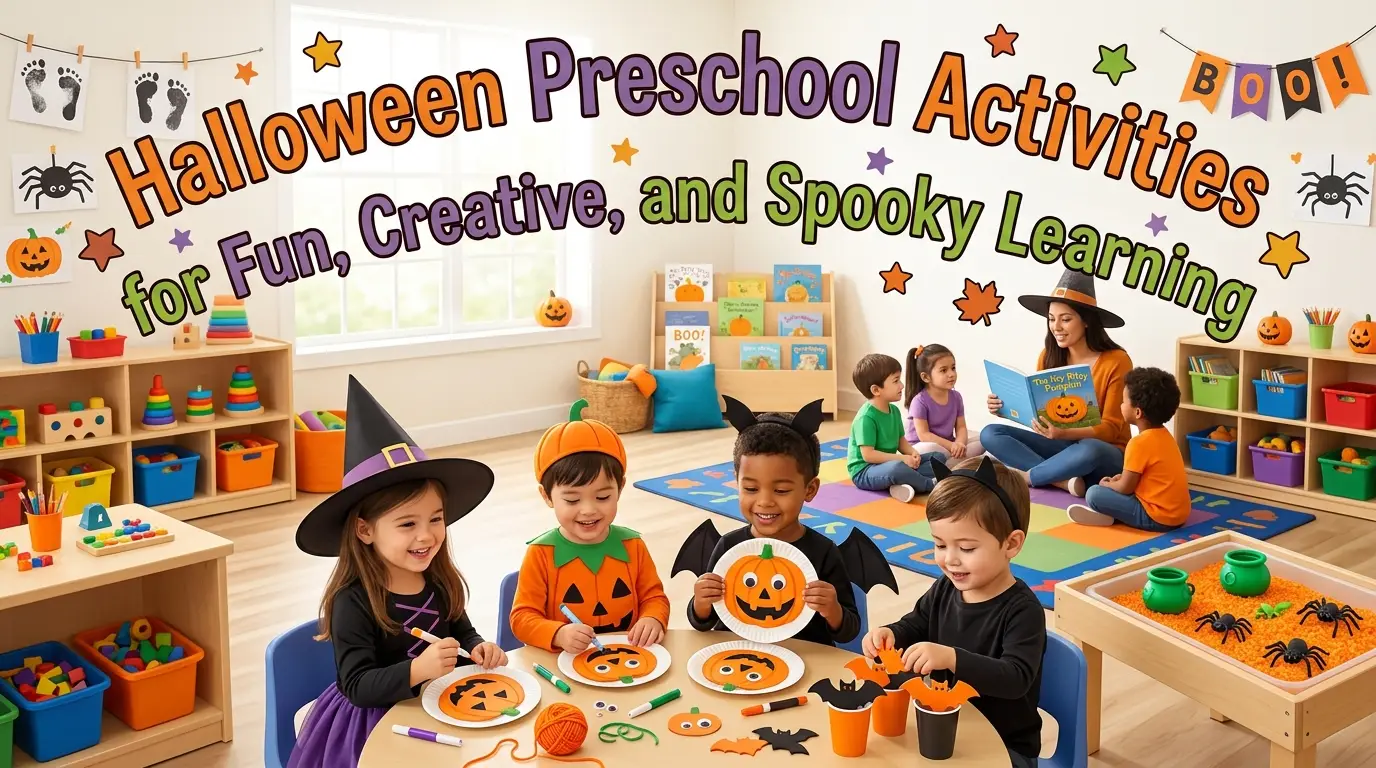
Halloween Preschool Activities for Fun, Creative, and Spooky Learning
Halloween is a magical time for preschoolers because it combines creativity, imagination, stories, colors, music, and playful learning. The best 119 Halloween preschool activities are not just entertaining; they also help young children practice important skills such as counting, matching, cutting, sorting, listening, movement, communication, and problem-solving. Whether you are a preschool teacher, daycare provider, parent, or homeschooler, these Halloween preschool activities can make the season exciting without making preparation overwhelming.
From spooky crafts and sensory play to Halloween games, pumpkin activities, art projects, and simple learning exercises, there are plenty of ways to create a fun Halloween experience for little learners. The ideas below are designed to be easy, age-appropriate, and flexible enough for classrooms, homes, and preschool parties.
Fun Halloween Preschool Activities for Little Learners
“Create a Halloween color-sorting game with orange, black, purple, and green objects.” Children can sort pom-poms, paper shapes, blocks, or classroom items into matching color groups. This simple activity introduces classification while keeping the Halloween theme fun.
“Make a paper-plate pumpkin using orange paint, black paper, and a small green stem.” Preschoolers can paint the plate and add their own facial expressions. Every pumpkin can look different, which makes the activity perfect for encouraging creativity.
“Build a spooky sensory bin filled with dried pasta, plastic spiders, foam pumpkins, and Halloween-themed objects.” Let children explore the materials with their hands while talking about textures, shapes, colors, and sizes.
“Practice counting with pumpkin counters.” Place small pumpkin pictures or orange counters in groups and ask children to count them. You can begin with small numbers and gradually make the groups larger.
“Create a monster collage using construction paper, googly eyes, yarn, and stickers.” Encourage children to choose their own colors and decide whether their monster should look funny, friendly, or silly.
Halloween Pumpkin Activities for Preschool
“Make pumpkin faces with reusable felt pieces.” Provide a felt pumpkin and facial features that children can move around to create different expressions. This activity also gives children an opportunity to talk about emotions.
“Have a pumpkin seed counting activity.” Give each child a small collection of pumpkin seeds and ask them to count, group, or compare them. For younger children, focus more on touching and exploring than accurate counting.
“Paint pumpkins with cotton swabs.” Instead of using traditional paintbrushes, children can make dots, lines, and patterns using cotton swabs. This also gives little hands practice with controlled movements.
“Create a pumpkin patch classroom display.” Let every child decorate a paper pumpkin with their name, favorite color, or a simple drawing. Place the finished pumpkins together to create a colorful class display.
“Compare small, medium, and large pumpkins.” If real pumpkins are available, let children examine them and discuss which is heavier, taller, wider, smoother, or rougher.
Easy Halloween Crafts for Preschoolers
“Make a friendly ghost from a paper cup and white tissue paper.” Add eyes and a mouth with black paper. Children can wave their ghosts around while pretending they are floating through the classroom.
“Create a handprint spider using washable black paint.” After making a handprint, add googly eyes and draw a simple web around it. This makes a memorable Halloween keepsake.
“Make a witch hat collage from black construction paper.” Children can decorate their hats with stars, circles, glitter, stickers, or colorful paper shapes.
“Create a paper-bag Halloween puppet.” Turn a simple paper bag into a pumpkin, ghost, witch, cat, or monster. Once finished, children can use the puppets to act out short stories.
“Make Halloween sun catchers using transparent paper and tissue paper.” Children can arrange different colors to create a bright window decoration.
Halloween Sensory Activities for Preschool
“Fill a sensory tray with orange rice and plastic Halloween figures.” Children can scoop, pour, hide, and discover objects while developing hand coordination.
“Create spooky slime for supervised sensory play.” Use a child-safe recipe and let children stretch, squeeze, and manipulate the material while discussing how it feels.
“Make a Halloween discovery bottle.” Fill a sealed bottle with water, glitter, plastic shapes, and small Halloween-themed objects. Children can shake it and watch the objects move.
“Create a pumpkin-scented sensory station.” Use pumpkin spice aroma in a safe classroom setup and invite children to describe what they smell. Avoid direct skin contact with concentrated fragrance products.
“Hide Halloween objects in a container of dry beans.” Children can search for spiders, bats, pumpkins, or other large age-appropriate objects and name each one they find.
Halloween Math Activities for Preschoolers
“Match pumpkin cards with numbers.” Put numbers on some cards and matching quantities of pumpkins on others. Children can pair the correct cards.
“Make a Halloween shape hunt.” Look for circles, triangles, squares, rectangles, and other shapes in Halloween decorations and classroom materials.
“Create a monster pattern activity.” Make simple patterns such as orange-black-orange-black and invite children to continue them.
“Sort Halloween objects by size.” Give children large and small pumpkins, bats, or spiders and ask them to organize the objects from smallest to largest.
“Play a Halloween counting song.” Count pumpkins, ghosts, bats, or candy pictures as they appear. Songs make early math practice feel like play rather than a lesson.
Halloween Literacy Activities for Preschool
“Make a Halloween alphabet wall.” Add a Halloween picture beside each letter when possible. For example, B can be connected with bat, P with pumpkin, and C with cat.
“Read a Halloween picture book and ask children what they notice.” Pause occasionally and ask simple questions about the characters, setting, colors, and events.
“Create a spooky story basket.” Put several safe Halloween-themed objects into a basket and let children choose objects to build a simple story.
“Practice writing letters in pumpkin-shaped trays filled with dry rice.” Children can trace letters with their fingers before attempting them with crayons or pencils.
“Make name pumpkins.” Write each child’s name on a paper pumpkin and let them decorate it. This creates an enjoyable connection between Halloween and name recognition.
Halloween Art Activities for Preschoolers
“Paint a night sky with black, blue, and purple paper and add a bright moon.” Children can then add bats, stars, clouds, or friendly ghosts.
“Create spiderweb paintings with white crayons and watercolor paint.” Draw simple web lines with a white crayon and brush watercolor over the paper to reveal the design.
“Make potato-stamp pumpkins.” Use a safe, child-friendly stamping method to create pumpkin shapes, then let children add stems and faces.
“Create a Halloween monster painting.” Give children different brushes and encourage them to invent a monster using shapes, lines, and colors.
“Make a fingerprint bat picture.” Children can use fingerprints to create small shapes and add wings with a marker once the paint dries.
Halloween Music and Movement Activities
“Have a monster dance party.” Play upbeat, age-appropriate music and invite children to move like different monsters.
“Walk like a spider.” Children can crawl or carefully imitate spider movements while practicing balance and coordination.
“Freeze like a statue when the Halloween music stops.” This game encourages listening skills, self-control, and body awareness.
“Pretend to fly like a bat.” Give children plenty of open space and ask them to flap their arms, move slowly, and change direction safely.
“March like a Halloween parade.” Children can carry homemade decorations or instruments and march around the classroom while following simple directions.
Halloween Games for Preschoolers
“Play Halloween treasure hunt.” Hide large, safe Halloween objects around the room and give children simple clues to find them.
“Play pin the face on the pumpkin.” Create a large paper pumpkin and provide removable eyes, noses, and mouths.
“Have a pumpkin toss.” Children can toss soft balls or beanbags toward a pumpkin-shaped target.
“Play Halloween memory matching.” Use pairs of simple picture cards featuring pumpkins, ghosts, bats, cats, and other familiar images.
“Create a ghost obstacle course.” Use soft classroom equipment to make a simple path where children can walk, crawl, step, and balance.
Halloween Science Activities for Preschoolers
“Explore what happens when a pumpkin floats or sinks.” Fill a container with water and test different safe objects while making predictions first.
“Make a simple bubbling Halloween experiment.” With appropriate adult supervision, combine safe household materials to create a foamy reaction and talk about what children observe.
“Investigate pumpkin textures.” Let children safely examine the outside and inside of a pumpkin, describing the differences.
“Watch ice melt in Halloween colors.” Freeze colored water into large, safe ice pieces and let children observe how temperature changes them.
“Make shadow shapes with Halloween figures.” Shine a light toward large, safe objects and explore how moving the objects changes their shadows.
Halloween Fine Motor Activities
“Use tongs to move plastic pumpkins between containers.” This strengthens hand muscles and supports skills needed for writing.
“Thread Halloween-colored beads onto thick string.” Choose large, age-appropriate materials and supervise closely.
“Use stickers to decorate pumpkins.” Children can place stickers around a pumpkin outline to create patterns and designs.
“Practice cutting along simple Halloween lines.” Draw straight, curved, and zigzag lines on paper for children to cut with preschool-safe scissors.
“Make a spiderweb with yarn.” Children can weave yarn around large cardboard shapes or through safe holes to create a web.
Halloween Activities for Preschool Parties
“Set up a decorate-your-own pumpkin station using paper pumpkins.” This is less messy than carving and allows every child to participate.
“Create a Halloween photo booth with handmade props.” Use paper hats, masks, pumpkins, and other decorations rather than complicated costumes.
“Have a spooky story circle.” Read a gentle Halloween story and invite children to make sound effects at appropriate moments.
“Organize a Halloween color parade.” Give each child a colored decoration and let them walk around the classroom while music plays.
“Create a Halloween snack-design station.” With allergy awareness and adult supervision, children can decorate simple snacks using child-safe ingredients.
Halloween Classroom Activities
“Create a Halloween calendar countdown.” Use pumpkins or ghosts to represent the days leading up to Halloween.
“Make a classroom Halloween tree.” Hang paper bats, pumpkins, leaves, and ghosts on branches to create a seasonal display.
“Set up a Halloween dramatic-play corner.” Add safe props such as hats, fabric, paper food, and pretend household objects.
“Create a pumpkin-themed attendance board.” Children can move their pumpkin name card onto the board when they arrive.
“Have a Halloween kindness activity.” Children can make friendly Halloween cards for family members, teachers, or classmates.
Halloween Activities for Learning Colors
“Mix red and yellow paint to discover orange.” Talk about how two colors can combine to create a new color.
“Find everything orange in the classroom.” Children can search for objects and bring attention to different shades.
“Make a Halloween rainbow collage.” Use Halloween-themed colors while discussing which colors are warm, cool, bright, or dark.
“Sort colored paper into Halloween baskets.” Each basket can represent a different color.
“Create colorful monster faces.” Let children choose unusual color combinations and explain their choices.
Halloween Activities for Social Skills
“Create a sharing pumpkin.” Children can pass around a decorated pumpkin and practice taking turns speaking.
“Play a Halloween feelings game.” Show different facial expressions and ask children to identify feelings such as happy, surprised, excited, or nervous.
“Build a monster together.” Each child can add one part to a large classroom monster.
“Practice saying friendly Halloween greetings.” Children can role-play saying hello, thank you, please, and goodbye.
“Have a partner pumpkin activity.” Two children work together to decorate one large pumpkin picture, encouraging cooperation and communication.
Halloween Outdoor Activities
“Go on a Halloween color walk.” Look for orange leaves, dark tree trunks, green plants, and other seasonal colors.
“Have a pumpkin relay using soft balls.” Children can carefully carry or roll objects from one point to another.
“Play ghost tag with simple safety rules.” Choose a spacious area and make sure the game remains gentle and age-appropriate.
“Search for Halloween shapes outdoors.” Look for circles, lines, curves, and other shapes in natural surroundings.
“Have a leaf-and-pumpkin collage activity outdoors.” Collect suitable fallen leaves and combine them with paper pumpkins for seasonal artwork.
Halloween Activities for Quiet Time
“Make a Halloween sticker book.” Children can place stickers on themed pages and tell a story about what they create.
“Look through Halloween picture books.” Provide a calm reading corner with soft seating and age-appropriate books.
“Color simple Halloween pictures.” Offer pumpkins, friendly monsters, cats, leaves, and other uncomplicated designs.
“Make Halloween puzzles.” Use large-piece puzzles that feature familiar seasonal images.
“Listen to a gentle Halloween story.” Choose stories that are playful rather than frightening so children can relax comfortably.
Halloween Pretend Play Activities
“Open a pretend pumpkin shop.” Children can take turns being customers and shopkeepers while practicing simple conversations.
“Create a pretend Halloween bakery.” Use play food and paper decorations to let children imagine making spooky treats.
“Set up a friendly monster hospital.” Children can pretend to care for stuffed animals or dolls while practicing empathy.
“Create a Halloween post office.” Children can make pretend cards and deliver them to different parts of the classroom.
“Open a pretend costume store.” Provide safe dress-up materials and let children choose outfits for imaginary Halloween characters.
More Creative Halloween Preschool Activities
“Make a paper-chain Halloween decoration.” Children can practice connecting paper strips while learning about colors and patterns.
“Create a friendly Frankenstein collage.” Use rectangles and squares to build the face and discuss basic shapes.
“Make a black-cat paper craft.” Add ears, whiskers, eyes, and a tail using simple paper shapes.
“Create a bat mobile.” Hang paper bats from a safe classroom display and let children decorate each one.
“Make a Halloween mailbox.” Decorate a cardboard box and use it for pretend cards and messages.
“Create a ghost parade.” Children can make paper ghosts and move them around the classroom while telling a group story.
“Make Halloween puppets from craft sticks.” Children can create pumpkins, bats, cats, or monsters and use them for storytelling.
“Create a spooky but friendly classroom mural.” Give children large paper and let everyone contribute a small part.
“Make Halloween crowns.” Children can decorate paper crowns with pumpkins, stars, bats, and colorful shapes.
“Create a Halloween matching wall.” Match pictures, colors, shapes, or objects while practicing visual recognition.
Why Halloween Preschool Activities Are Valuable
Halloween preschool activities can support much more than seasonal excitement. When children cut paper, paint pumpkins, sort objects, and build crafts, they are developing fine motor control. When they listen to stories, sing songs, and describe what they see, they are building vocabulary and communication skills.
Many Halloween preschool activities also encourage early mathematics. Counting pumpkins, comparing sizes, creating patterns, and sorting colors are simple ways to introduce mathematical thinking through familiar objects.
Social development is another important benefit. Group Halloween games encourage children to take turns, share materials, listen to classmates, follow directions, and work together. These skills are useful throughout the school year, not just during Halloween.
The biggest advantage is that children are learning while having fun. A preschool activity does not need to feel like formal schoolwork to be educational. Sometimes the most effective learning happens when children are laughing, exploring, pretending, and creating.
How to Make Halloween Preschool Activities Safe
When planning Halloween preschool activities, safety should always come before decoration or entertainment. Choose materials that are appropriate for young children and avoid small objects that could present a choking risk. Adult supervision is especially important during sensory play, cooking-related activities, science experiments, and crafts involving scissors.
Halloween decorations should also be friendly rather than frightening. Some preschoolers love spooky themes, while others may feel uncomfortable around scary faces, loud sounds, or realistic monsters. Friendly pumpkins, smiling ghosts, colorful bats, and silly monsters are usually easy choices for a preschool environment.
It is also helpful to consider allergies, sensory sensitivities, mobility differences, and individual comfort levels. A good Halloween preschool activity should allow children to participate in different ways.