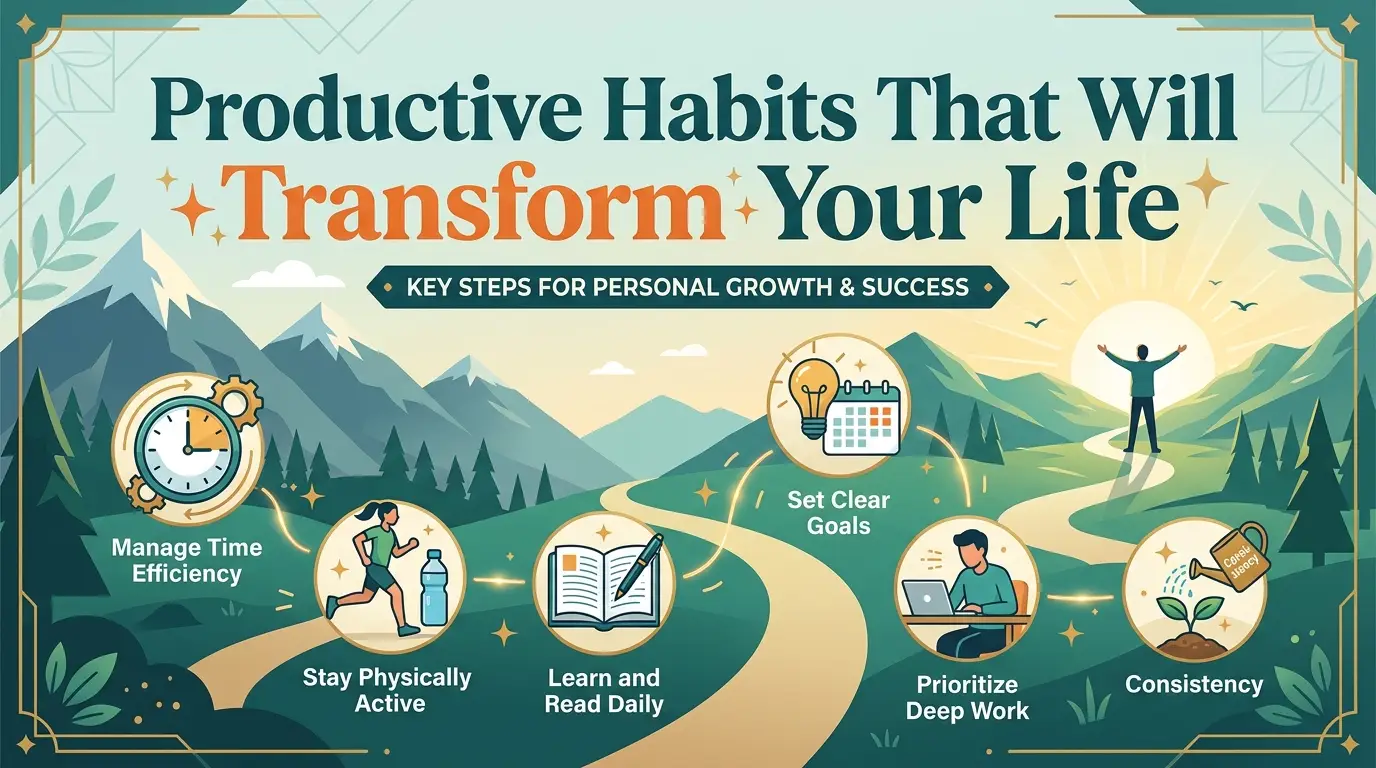
Productive Habits That Will Transform Your Life
Building productive habits is one of the most effective ways to improve your personal and professional life. Small daily actions often create the biggest long-term results. Instead of relying on motivation alone, successful people develop productive habits that become automatic over time.
Whether you want to increase your focus, improve your health, achieve career goals, or simply make better use of your day, these 199 productive habits can help you stay consistent and motivated. Start with a few habits, master them, and gradually add more to create a lifestyle built around productivity and success.
Morning Productive Habits
“Wake Up at the Same Time Every Day”
A consistent wake-up time helps regulate your body clock, increases energy, and makes mornings more productive.
“Make Your Bed”
Completing one small task first thing in the morning creates momentum for the rest of the day.
“Drink a Glass of Water”
Hydrating immediately after waking up helps your body and mind perform better.
“Avoid Checking Your Phone Immediately”
Give yourself time to wake up before diving into notifications and social media.
“Stretch for Five Minutes”
Gentle stretching improves flexibility, circulation, and alertness.
“Practice Deep Breathing”
Deep breathing reduces stress and prepares your mind for the day.
“Meditate Every Morning”
Meditation improves concentration, emotional balance, and mental clarity.
“Write Three Things You’re Grateful For”
Practicing gratitude builds a positive mindset.
“Review Your Daily Goals”
Looking over your priorities keeps you focused on what matters most.
“Eat a Healthy Breakfast”
Nutritious food provides lasting energy for productive work.
“Read for Ten Minutes”
Reading each morning stimulates your brain and encourages continuous learning.
“Visualize Your Success”
Picture yourself completing important tasks confidently.
“Listen to Educational Podcasts”
Turn your commute or morning routine into a learning opportunity.
“Go for a Short Walk”
Morning movement boosts creativity and improves mood.
“Limit Snoozing Your Alarm”
Getting up immediately prevents grogginess and wasted time.
“Write in a Journal”
Journaling helps organize thoughts and reduce mental clutter.
“Plan Your Top Three Priorities”
Focus on the most important tasks instead of creating endless to-do lists.
“Review Your Calendar”
Knowing your schedule reduces surprises and improves planning.
“Smile Intentionally”
Starting your day positively influences your mindset.
“Keep a Clean Morning Routine”
Consistency creates discipline and reduces decision fatigue.
Daily Productive Habits
“Complete the Hardest Task First”
Finish your most challenging task early while your energy is highest.
“Use a Daily To-Do List”
Write down important tasks to stay organized and focused.
“Prioritize Important Work”
Focus on high-impact activities before minor responsibilities.
“Work in Time Blocks”
Dedicate uninterrupted blocks of time to specific tasks.
“Take Regular Breaks”
Short breaks improve concentration and reduce burnout.
“Keep Your Workspace Clean”
A tidy workspace helps eliminate distractions and improves efficiency.
“Silence Unnecessary Notifications”
Reduce interruptions by limiting phone and computer alerts.
“Finish One Task Before Starting Another”
Avoid multitasking to improve quality and speed.
“Set Realistic Deadlines”
Reasonable deadlines encourage consistent progress.
“Review Your Progress Midday”
Check whether you’re staying on track with your priorities.
“Keep a Water Bottle Nearby”
Staying hydrated supports energy and mental performance.
“Stand Up Every Hour”
Frequent movement improves circulation and reduces fatigue.
“Respond to Emails in Scheduled Sessions”
Avoid checking your inbox continuously throughout the day.
“Write Down New Ideas Immediately”
Capture ideas before they are forgotten.
“Limit Social Media During Work”
Reduce distractions by saving social media for designated times.
“Learn One New Thing Every Day”
Continuous learning keeps your skills growing.
“Ask Questions When Unsure”
Clarifying information prevents mistakes and saves time.
“Celebrate Small Wins”
Recognizing progress increases motivation.
“Keep Healthy Snacks Available”
Nutritious snacks help maintain consistent energy levels.
“Review Completed Tasks Before Ending Work”
Reflecting on accomplishments builds confidence and prepares you for tomorrow.
Healthy Productive Habits
“Exercise for at Least 30 Minutes”
Regular physical activity improves energy, focus, and overall health.
“Eat More Fruits and Vegetables”
A balanced diet provides the nutrients your body and brain need.
“Get Seven to Eight Hours of Sleep”
Quality sleep improves memory, productivity, and decision-making.
“Reduce Sugary Drinks”
Choose water or healthier beverages whenever possible.
“Practice Good Posture”
Proper posture reduces fatigue and prevents long-term discomfort.
“Take Walking Breaks”
Short walks refresh your mind and increase creativity.
“Limit Processed Foods”
Whole foods support better health and sustained energy.
“Prepare Healthy Meals in Advance”
Meal planning saves time and encourages better eating habits.
“Practice Mindful Eating”
Eat slowly and pay attention to your meals instead of rushing.
“Protect Your Eyes”
Follow the 20-20-20 rule to reduce eye strain from screens.
“Wash Your Hands Frequently”
Good hygiene helps prevent illness and keeps you productive.
“Spend Time Outdoors”
Fresh air and sunlight improve mood and mental clarity.
“Reduce Caffeine Late in the Day”
Avoid caffeine in the evening to improve sleep quality.
“Practice Stress Management”
Find healthy ways to manage stress through breathing, hobbies, or relaxation.
“Avoid Skipping Meals”
Regular meals help maintain energy throughout the day.
“Stretch Before Bed”
Gentle stretching helps relax your muscles and improve sleep.
“Practice Positive Self-Talk”
Encourage yourself with supportive thoughts instead of negative ones.
“Maintain Good Personal Hygiene”
Daily self-care builds confidence and promotes well-being.
“Avoid Sitting for Long Periods”
Stand, stretch, or walk regularly throughout the day.
“End the Day with Relaxation”
Spend a few minutes unwinding before bedtime to prepare for restful sleep.
Personal Growth Productive Habits
“Read Personal Development Books”
Reading regularly expands your knowledge and inspires continuous improvement.
“Set Weekly Goals”
Clear weekly goals help you stay focused on meaningful progress.
“Learn a New Skill”
Developing new skills keeps your mind active and increases your opportunities.
“Listen More Than You Speak”
Active listening strengthens relationships and helps you learn from others.
“Accept Constructive Feedback”
Use feedback as a tool for growth instead of taking it personally.
“Practice Patience”
Being patient helps you make thoughtful decisions and reduces unnecessary stress.
“Step Outside Your Comfort Zone”
Trying new experiences builds confidence and resilience.
“Reflect on Your Mistakes”
Learn valuable lessons instead of dwelling on failures.
“Keep a Success Journal”
Write down your achievements to stay motivated and recognize your progress.
“Practice Daily Self-Discipline”
Consistent discipline helps turn good intentions into lasting habits.
“Read Inspiring Quotes”
Motivational words can help maintain a positive mindset throughout the day.
“Surround Yourself with Positive People”
Supportive relationships encourage growth and productivity.
“Manage Your Time Wisely”
Use your time intentionally instead of letting distractions control your day.
“Say No to Unnecessary Commitments”
Protect your schedule by focusing on what truly matters.
“Review Your Long-Term Goals”
Regularly revisiting your goals keeps your actions aligned with your vision.
“Take Responsibility for Your Actions”
Owning your decisions builds integrity and personal accountability.
“Practice Kindness Every Day”
Small acts of kindness improve relationships and create a positive environment.
“Stay Curious”
Ask questions and seek knowledge whenever possible.
“Keep Learning from Successful People”
Observe the habits and strategies of those who inspire you.
“Never Stop Improving”
Commit to becoming a little better every single day.
Work and Career Productive Habits
“Arrive Early for Work”
Starting your day a little early helps you prepare without feeling rushed.
“Keep Your Desk Organized”
An organized workspace makes it easier to find what you need.
“Prepare for Meetings in Advance”
Review agendas and gather materials before every meeting.
“Take Notes During Meetings”
Writing important points helps you remember tasks and ideas.
“Follow Up Promptly”
Respond to conversations and commitments without unnecessary delays.
“Set Clear Daily Work Goals”
Knowing exactly what you need to accomplish improves productivity.
“Eliminate Workplace Distractions”
Identify and remove distractions that interrupt your focus.
“Keep Learning Industry Trends”
Stay updated to remain competitive in your career.
“Ask for Feedback Regularly”
Constructive feedback helps improve your performance.
“Finish Small Tasks Immediately”
If a task takes only a few minutes, complete it right away.
“Organize Digital Files”
Maintain well-structured folders so documents are easy to locate.
“Back Up Important Data”
Protect valuable work by creating regular backups.
“Use Keyboard Shortcuts”
Learning shortcuts saves time during repetitive computer tasks.
“Keep a Professional Attitude”
Treat coworkers and clients with respect and professionalism.
“Review Your Work Before Submitting”
Double-check your work to catch mistakes and improve quality.
“Avoid Procrastination”
Start important tasks as soon as possible instead of delaying them.
“Track Your Productivity”
Monitor how you spend your time to identify areas for improvement.
“Keep Learning Through Online Courses”
Expand your knowledge with regular professional development.
“Celebrate Career Milestones”
Recognize your accomplishments to stay motivated.
“Leave Work with Tomorrow’s Plan Ready”
Prepare your priorities before finishing the workday to start tomorrow with clarity.
Financial Productive Habits
“Create a Monthly Budget”
A budget helps you control spending and achieve your financial goals.
“Track Every Expense”
Recording your purchases makes it easier to identify unnecessary spending.
“Pay Bills on Time”
Timely payments help you avoid late fees and maintain a strong financial record.
“Save Money Before Spending”
Treat your savings like a regular monthly expense.
“Build an Emergency Fund”
Set aside money for unexpected expenses and financial emergencies.
“Review Your Bank Accounts Weekly”
Regular reviews help you catch errors and monitor your finances.
“Avoid Impulse Purchases”
Take time to think before buying something you don’t truly need.
“Compare Prices Before Buying”
Shopping around helps you get the best value for your money.
“Set Financial Goals”
Clear savings and investment goals keep you motivated.
“Invest in Your Education”
Learning new skills can increase your earning potential.
“Use a Shopping List”
Stick to a list to avoid unnecessary purchases.
“Cancel Unused Subscriptions”
Regularly review recurring expenses and remove services you no longer use.
“Save Spare Change”
Small amounts saved consistently can grow over time.
“Review Your Credit Report”
Checking your credit regularly helps you spot mistakes early.
“Plan Major Purchases”
Research and prepare before making expensive buying decisions.
“Avoid High-Interest Debt”
Pay off costly debt as quickly as possible whenever possible.
“Automate Your Savings”
Automatic transfers make saving consistent and effortless.
“Keep Financial Records Organized”
Store receipts, statements, and important documents in one place.
“Learn About Investing”
Understanding basic investing principles helps build long-term wealth.
“Review Your Financial Progress Monthly”
Evaluate your goals each month and adjust your plan as needed.
Organization Productive Habits
“Declutter One Small Area Every Day”
Cleaning a small space daily prevents clutter from building up.
“Keep Frequently Used Items in the Same Place”
Consistent organization saves time and reduces frustration.
“Plan Your Week Every Sunday”
Preparing your schedule in advance helps you start the week with confidence.
“Use a Digital Calendar”
Keep appointments, deadlines, and reminders organized in one place.
“Review Your To-Do List Every Evening”
Update your task list so you’re ready for the next day.
“Create Checklists for Repetitive Tasks”
Checklists reduce mistakes and improve consistency.
“Organize Your Email Inbox”
Delete unnecessary messages and sort important emails into folders.
“Label Storage Containers”
Clear labels make it easier to find items quickly.
“Keep Important Documents Together”
Store passports, certificates, and records in a secure location.
“Clean as You Go”
Put items away immediately instead of letting messes pile up.
“Limit Desktop Clutter”
Keep only essential items on your desk to improve focus.
“Organize Computer Files Weekly”
Regular file maintenance prevents digital clutter.
“Delete Unnecessary Files”
Free up storage space by removing documents and downloads you no longer need.
“Prepare Clothes the Night Before”
Choosing your outfit ahead of time saves valuable morning minutes.
“Use Reminders for Important Deadlines”
Set alerts so you never miss important dates.
“Keep a Notebook for Ideas”
Write down thoughts, plans, and reminders in one dedicated place.
“Review Your Goals Weekly”
Check your progress and make adjustments when needed.
“Keep Backup Copies of Important Documents”
Store duplicates digitally or in a secure physical location.
“Follow the One-Minute Rule”
If a task takes less than a minute, complete it immediately.
“End Each Day with a Quick Cleanup”
Spend a few minutes organizing your space so you can start tomorrow fresh.
Mindset Productive Habits
“Start Each Day with a Positive Attitude”
Choose an optimistic mindset before tackling your daily responsibilities.
“Focus on What You Can Control”
Direct your energy toward actions you can influence instead of worrying about the rest.
“Practice Self-Reflection”
Spend a few minutes thinking about what went well and what you can improve.
“Learn from Every Failure”
Treat setbacks as opportunities to gain experience and grow stronger.
“Stay Solution-Oriented”
Look for practical solutions instead of dwelling on problems.
“Believe in Continuous Improvement”
Aim to become a little better every day through consistent effort.
“Be Patient with Your Progress”
Meaningful results take time, so trust the process.
“Avoid Comparing Yourself to Others”
Measure your growth against your own past achievements.
“Embrace Change”
View change as an opportunity to learn and adapt.
“Practice Self-Confidence”
Believe in your abilities while continuing to develop your skills.
“Let Go of Perfectionism”
Focus on making progress instead of waiting for perfection.
“Celebrate Other People’s Success”
Supporting others creates stronger relationships and a healthier mindset.
“Keep an Open Mind”
Be willing to consider new ideas and different perspectives.
“Turn Complaints into Action”
When something bothers you, identify one step you can take to improve it.
“Practice Daily Optimism”
Look for opportunities and positive moments throughout the day.
“Forgive Yourself for Mistakes”
Accept errors, learn from them, and move forward without unnecessary guilt.
“Stay Consistent Even When Motivation Fades”
Discipline produces results when motivation is low.
“Visualize Your Long-Term Success”
Regularly imagine achieving your biggest goals to stay motivated.
“End Every Day with Gratitude”
Reflect on the good moments that happened during the day.
“Commit to Lifelong Growth”
Make personal development a permanent part of your lifestyle.
Relationship and Lifestyle Productive Habits
“Listen Without Interrupting”
Give people your full attention when they are speaking.
“Express Appreciation Daily”
Thank the people who help and support you.
“Spend Quality Time with Family”
Strong relationships improve overall well-being and motivation.
“Check in on Friends Regularly”
Maintaining connections strengthens your support network.
“Resolve Conflicts Calmly”
Address problems with patience and respect.
“Keep Your Promises”
Reliability builds trust in every relationship.
“Practice Empathy”
Try to understand situations from other people’s perspectives.
“Limit Negative Conversations”
Choose discussions that are constructive and uplifting.
“Encourage Others”
Support people in pursuing their goals and dreams.
“Make Time for Meaningful Conversations”
Deep conversations often create stronger relationships.
Learning Productive Habits
“Read a Few Pages Every Day”
Consistent reading expands knowledge over time.
“Take Notes While Learning”
Writing information down improves memory and understanding.
“Review What You Learn”
Repetition helps move knowledge into long-term memory.
“Teach Someone Else”
Explaining concepts strengthens your own understanding.
“Ask Better Questions”
Curiosity leads to deeper learning and better insights.
“Watch Educational Content”
Use videos and courses to continue developing your skills.
“Learn New Vocabulary”
Improving your language skills enhances communication.
“Practice a Skill Daily”
Regular practice leads to steady improvement.
“Stay Curious About the World”
Keep exploring new topics and ideas.
“Reflect on What You Learned Each Day”
Take a moment to review new knowledge before sleeping.
Evening Productive Habits
“Review Your Day”
Think about what went well and what could improve.
“Prepare Tomorrow’s To-Do List”
Planning ahead reduces morning stress.
“Set Out What You Need for Tomorrow”
Prepare clothes, documents, or equipment in advance.
“Avoid Screens Before Bed”
Reducing screen time helps improve sleep quality.
“Read Before Sleeping”
Reading can help you relax and end the day productively.
“Write Down Tomorrow’s Priorities”
Identify the most important tasks for the next day.
“Tidy Your Living Space”
A clean environment creates a calmer mind.
“Reflect on Your Achievements”
Acknowledge even small accomplishments from the day.
“Practice Gratitude Before Bed”
End the day by focusing on positive experiences.
“Go to Bed at a Consistent Time”
A regular sleep schedule improves energy and productivity.
Bonus Productive Habits
“Smile More Often”
A simple smile can improve your mood and interactions.
“Take Responsibility for Your Schedule”
Own your time instead of letting others control it.
“Focus on One Improvement at a Time”
Small consistent changes are easier to maintain.
“Stay Organized While Traveling”
Prepare essentials in advance to reduce stress.
“Keep Learning from Experience”
Every situation offers a lesson if you pay attention.
“Take Action on Good Ideas Quickly”
Don’t let valuable ideas sit unused for too long.
“Protect Your Focus”
Treat focused time as one of your most valuable resources.
“Be Consistent with Small Habits”
Tiny actions repeated daily create major results over time.
“Never Stop Growing”
The most productive habit is committing to continuous improvement for life.