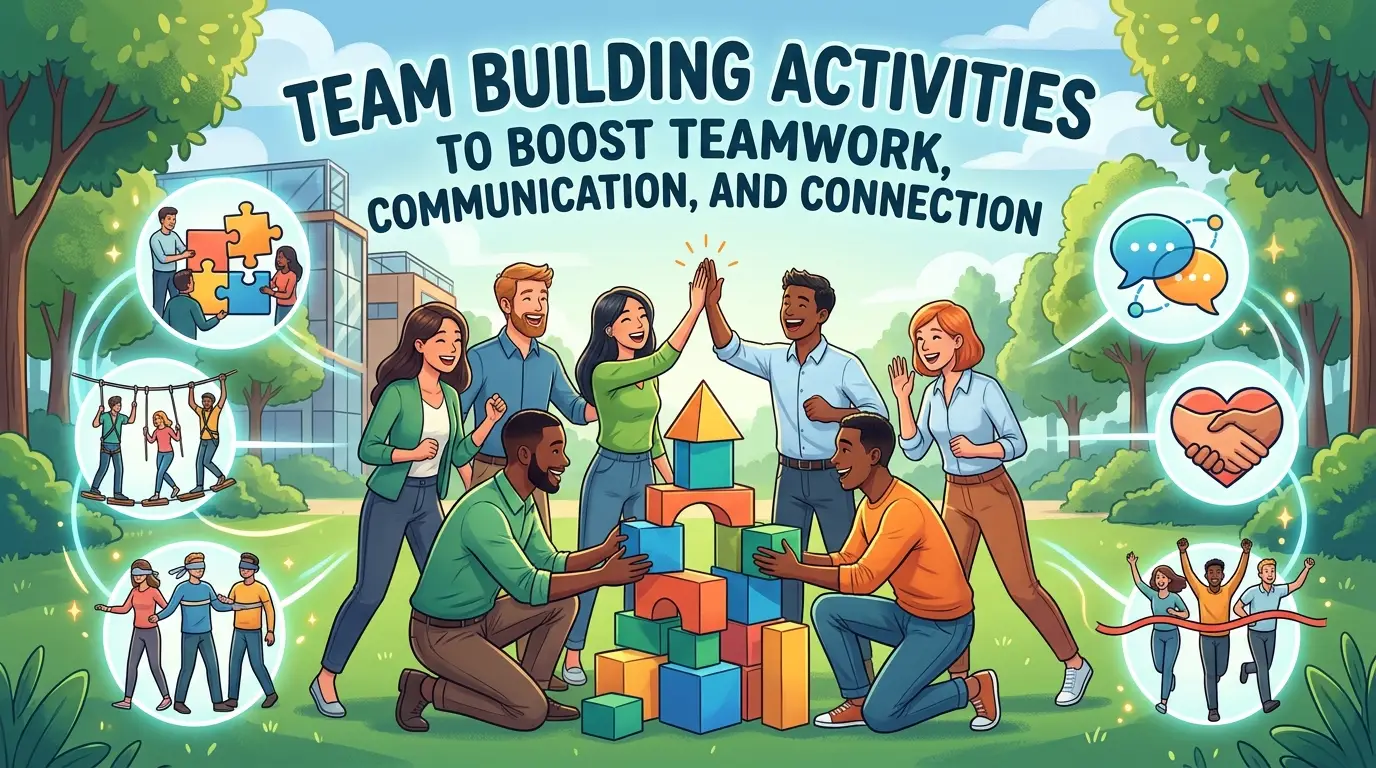
Team Building Activities To Boost Teamwork, Communication, And Connection
Team building activities are a great way to help coworkers communicate, build trust, solve problems, and enjoy working together. Whether you are planning an office event, a school activity, a corporate retreat, or a casual gathering, the right team building activities can bring people closer and create a stronger sense of connection. You do not always need expensive equipment or a large budget. Many effective team building activities can be completed with simple materials, creativity, and a willingness to participate.
From quick indoor games to exciting outdoor challenges, there are countless ways to make teamwork more enjoyable. These team building activities can encourage communication, creativity, leadership, cooperation, and problem-solving while giving everyone an opportunity to contribute.
Team Building Activities For Communication
“Two Truths And A Lie”
Each person shares two true statements and one false statement about themselves. The rest of the team guesses which statement is the lie. This simple team building activity encourages conversation and helps coworkers discover interesting things about one another.
“Back-To-Back Drawing”
Pair teammates and give one person a simple picture. Without showing it, that person describes the image while their partner tries to draw it. The activity highlights how important clear communication and careful listening can be.
“One-Word Story”
The team creates a story by allowing each person to contribute only one word at a time. The unexpected results often create laughter while encouraging participants to pay attention to what others say.
“Telephone Challenge”
One person whispers a sentence to another person, who passes it along until everyone has heard it. Compare the final sentence with the original to demonstrate how easily information can change.
“Question Circle”
Have everyone sit in a circle and take turns answering interesting questions. Choose questions about hobbies, goals, favorite memories, or personal interests to encourage meaningful conversations.
“Describe The Object”
Place an object inside a bag and allow one teammate to describe it without naming it. The rest of the group attempts to identify the object from the description.
“Silent Line Up”
Ask participants to arrange themselves according to birthdays, height, or years of experience without speaking. This activity encourages creative nonverbal communication.
“Story Building”
Give the group a random topic and ask everyone to add a sentence to create one story. The activity encourages listening, imagination, and cooperation.
“Question Swap”
Give each person a question card and ask them to find a teammate to discuss it with. After a short conversation, everyone swaps cards and meets someone new.
“Communication Relay”
Divide the group into teams and create a message that must be passed from one person to another. The team that communicates the message most accurately demonstrates the value of clarity.
Team Building Activities For Trust
“Trust Walk”
Pair participants and blindfold one person. Their partner guides them through a safe area using only verbal instructions. The activity should be conducted carefully and only with willing participants.
“Trust Circle”
Participants stand in a close circle and gently lean backward while teammates provide support. Keep the movement controlled and optional so everyone feels comfortable.
“Partner Interview”
Pair people who do not usually work together. Give them several minutes to interview each other before introducing their partner to the group.
“Common Ground”
Ask teammates to find as many things as possible that they have in common. The activity can reveal unexpected connections between people.
“Team Promise”
Each participant shares one commitment they can make to help the team work better. Collect the promises and turn them into a shared teamwork agreement.
“Support Challenge”
Give each group a difficult but achievable task and encourage teammates to identify ways they can support one another. Focus on cooperation rather than competition.
“Blindfold Partner Puzzle”
One teammate describes puzzle pieces while another arranges them without seeing the complete picture. Success depends on trust, patience, and communication.
“Appreciation Circle”
Ask everyone to share something they appreciate about another teammate. This creates a positive environment and reinforces the value of recognizing contributions.
“Strength Sharing”
Each person identifies one personal strength and explains how it can help the team. Teammates can then discuss how different strengths complement one another.
“Team Confidence Challenge”
Give the group a manageable challenge that requires everyone to participate. Afterward, discuss how trust and confidence influenced the team’s performance.
Creative Team Building Activities
“Team Mural”
Give the group a large sheet of paper and art supplies. Ask everyone to create one mural representing their team’s values, goals, or personality.
“Build A Logo”
Teams design a logo that represents their group. They can explain the meaning behind each color, shape, or symbol.
“Create A Commercial”
Ask participants to invent a short commercial for an ordinary object. The activity encourages creativity, quick thinking, and collaboration.
“Team Slogan”
Give teams several minutes to create a memorable slogan. Have each group present its slogan and explain why it represents them.
“Paper Tower”
Provide paper and tape and ask teams to construct the tallest free-standing tower possible. The activity encourages planning, experimentation, and problem-solving.
“Marshmallow Structure”
Give teams marshmallows and uncooked spaghetti and challenge them to build a structure. Participants quickly learn that testing ideas can be more useful than simply planning.
“New Product Challenge”
Ask each team to invent a new product that solves an everyday problem. They then create a short presentation explaining how it works.
“Team Comic”
Teams create a short comic about a fictional workplace adventure. Each person can contribute characters, dialogue, drawings, or ideas.
“Design A Flag”
Give teams paper and art supplies to create a flag representing their shared identity. The final designs can become conversation starters.
“Photo Story”
Teams take a series of photographs that tell a simple story. This activity works especially well for outdoor events and encourages creative cooperation.
Fun Team Building Activities
“Charades”
Participants act out words or phrases while teammates try to guess them. Charades is easy to organize and can quickly create laughter.
“Team Trivia”
Prepare questions about movies, music, sports, general knowledge, or workplace facts. Teams work together to choose answers.
“Guess The Song”
Play a short section of a song and ask teams to identify it. You can make the activity more challenging by using different genres.
“Emoji Guessing Game”
Use emoji combinations to represent movies, phrases, books, or common expressions. Teams work together to decode them.
“Human Rock Paper Scissors”
Teams compete by choosing rock, paper, or scissors through coordinated movements. The activity combines teamwork with simple physical movement.
“Balloon Keep-Up”
Teams attempt to keep balloons in the air without allowing them to touch the ground. Add rules to increase the challenge.
“Scavenger Hunt”
Create a list of objects, clues, or challenges that teams must complete. A scavenger hunt can be adapted for offices, parks, classrooms, or retreats.
“Mystery Box”
Place unusual objects inside a box and ask teams to identify them by touch. Participants can discuss their guesses before revealing the answers.
“Freeze Dance”
Play music and ask participants to dance. When the music stops, everyone freezes. It is a simple way to add energy to an event.
“Team Bingo”
Create bingo cards containing interesting facts or experiences. Participants talk to teammates to find people who match each square.
Outdoor Team Building Activities
“Nature Scavenger Hunt”
Teams search for natural objects or complete outdoor challenges. Make sure participants respect the environment and leave natural areas undisturbed.
“Relay Race”
Create a simple relay where teammates take turns completing sections of a course. The emphasis should be on encouragement and cooperation.
“Obstacle Course”
Set up a safe obstacle course that requires participants to move, think, and communicate. Teams can help one another through each stage.
“Bucket Brigade”
Teams transfer water from one container to another using cups or small containers. The challenge becomes more entertaining when teams must coordinate their movements.
“Outdoor Puzzle Hunt”
Hide clues around a safe outdoor location. Teams follow the clues until they solve the final puzzle.
“Flag Capture”
Create two teams and establish clearly marked boundaries. Participants work together to retrieve a designated object while following agreed safety rules.
“Nature Photography Challenge”
Give teams a list of photography themes to capture. They can later explain the creative choices behind their pictures.
“Outdoor Sketch Challenge”
Teams choose a location and create a group drawing of what they see. Everyone contributes something to the final picture.
“Team Picnic Planning”
Give teams a fictional budget and ask them to plan a picnic. They must decide on food, activities, supplies, and responsibilities.
“Map Challenge”
Give each team a map and a series of destinations or clues. Participants work together to determine the most practical route.
Problem Solving Team Building Activities
“Escape Room Challenge”
Teams solve puzzles and clues to complete an escape-room-style challenge. The activity encourages logical thinking and communication.
“Mystery Puzzle”
Give teams a mystery scenario containing several clues. They must discuss the evidence and develop a solution together.
“Build A Bridge”
Provide simple materials such as paper, cardboard, or straws. Teams design a bridge capable of supporting a small object.
“Survival Scenario”
Give participants a fictional survival situation and a list of supplies. Teams must agree on which items are most useful and explain their decisions.
“Lost At Sea”
Present a fictional scenario in which a group must survive at sea. Participants rank available supplies and discuss their reasoning.
“Code Breaker”
Create a simple code that teams must decipher. Give them clues that encourage them to look for patterns.
“Puzzle Race”
Give every team the same collection of puzzles. Teams work together to solve them while managing time and responsibilities.
“Impossible Task”
Present a challenging problem with limited resources. The purpose is not necessarily to finish but to observe how teams approach difficult situations.
“Build And Improve”
Teams build a simple structure, test it, identify weaknesses, and redesign it. This activity demonstrates the importance of learning from mistakes.
“Logic Challenge”
Give teams a collection of logic questions or riddles. Encourage participants to explain their reasoning rather than simply provide answers.
Team Building Activities For Small Groups
“Question Jar”
Place conversation questions inside a jar. Each person selects a question and answers it before inviting another teammate to participate.
“Mini Debate”
Give teams a light, non-sensitive topic and ask them to discuss different viewpoints. The focus should be on listening and presenting ideas respectfully.
“Memory Challenge”
Show participants several objects for a short period and then remove them. Teams work together to remember as many details as possible.
“Ranking Challenge”
Give groups a list of fictional items and ask them to rank them according to a specific situation. They must reach one shared decision.
“Team Recipe”
Ask participants to invent a recipe using a limited list of ingredients. They explain how they would prepare and present the dish.
“Personal Timeline”
Each person shares several meaningful moments from their life or career. Teammates can ask respectful questions afterward.
“Favorite Things”
Participants share a few favorite foods, movies, hobbies, or activities. This can help coworkers find common interests.
“Guess Who”
Everyone anonymously submits an interesting fact about themselves. The group guesses who wrote each fact.
“Compliment Cards”
Participants write positive comments about teammates and distribute the cards. Keep the comments respectful and specific.
“Rapid Questions”
One participant answers quick questions for a limited time. The fast pace encourages spontaneous conversation and laughter.
Team Building Activities For Large Groups
“Group Bingo”
Create large bingo cards that encourage participants to meet different people. The goal is to complete the card through conversation.
“Human Knot”
Participants stand together and hold hands with different people before attempting to untangle themselves. Stop if anyone experiences discomfort.
“Team Quiz Show”
Divide a large group into smaller teams and run several rounds of trivia. Include a mix of easy and challenging questions.
“Group Puzzle”
Give every team a large puzzle to complete. Encourage groups to divide responsibilities and communicate progress.
“Station Challenge”
Create several activity stations and rotate teams through them. Each station can focus on creativity, communication, memory, or problem-solving.
“Team Flag Parade”
Groups create flags and briefly present them to everyone. This combines creativity, teamwork, and presentation skills.
“People Search”
Create prompts such as “has traveled abroad” or “plays an instrument.” Participants move around to find teammates who match.
“Group Story”
One person starts a story and different participants continue it. Encourage everyone to build on the ideas that came before them.
“Team Talent Showcase”
Invite volunteers or teams to present a short talent. Keep participation optional and make the atmosphere supportive.
“Mass Photo Challenge”
Give groups creative themes for photographs. Teams collaborate to produce pictures that fit each theme.
Virtual Team Building Activities
“Virtual Trivia”
Host an online trivia session using video conferencing software. Teams can discuss answers privately before submitting them.
“Online Scavenger Hunt”
Give participants a list of household objects to find. Teams earn recognition for completing challenges quickly and creatively.
“Virtual Pictionary”
One participant draws on a shared digital board while teammates guess the word. It works well for remote groups.
“Online Two Truths And A Lie”
Each participant shares three statements during a video call. Everyone votes on which statement is false.
“Virtual Coffee Chat”
Randomly pair teammates for a short informal conversation. This can help remote employees build personal connections.
“Online Escape Challenge”
Use digital puzzles and clues to create a virtual escape-room experience. Teams collaborate through chat or video calls.
“Virtual Show And Tell”
Participants show an object that has personal meaning and briefly explain it. This can create friendly conversations.
“Remote Guessing Game”
Show a small part of an image or object and ask teams to identify it. Reveal more information if nobody can guess.
“Virtual Background Contest”
Ask everyone to choose a creative virtual background. Participants can explain why they selected it.
“Online Movie Quiz”
Create trivia questions about popular movies and characters. Teams discuss answers before submitting them.
Workplace Team Building Activities
“Office Scavenger Hunt”
Create clues based around common office locations or objects. Teams work together to solve each clue.
“Desk Makeover Challenge”
Teams design a fictional workspace that improves comfort and productivity. They present their ideas afterward.
“Workplace Trivia”
Create trivia based on harmless facts about the organization, industry, or workplace traditions. Avoid questions that reveal private information.
“Office Olympics”
Create several simple competitions such as paper-ball basketball, typing challenges, or puzzle solving. Keep the activities accessible to everyone.
“Team Lunch”
Arrange a shared lunch where teammates can talk about topics unrelated to work. Informal conversations can strengthen workplace relationships.
“Skill Swap”
Each participant teaches the group a simple skill they know. Skills can include anything from organizing files to making a craft.
“Office Bingo”
Create squares featuring harmless workplace situations or experiences. Participants mingle to find teammates who match them.
“Desk Mystery”
Place a harmless mystery object somewhere in the workplace and provide clues. Teams cooperate to identify its location.
“Team Goal Workshop”
Ask groups to identify shared goals and discuss practical steps toward achieving them. This connects team building with everyday work.
“Problem Sharing Session”
Give teammates an opportunity to discuss common workplace challenges and brainstorm solutions together. Focus on constructive ideas rather than blame.
Team Building Activities For Students
“Classroom Tower”
Students use paper or craft materials to build the tallest structure they can. Encourage groups to plan before building.
“Group Storytelling”
Students work together to create a story with a beginning, middle, and ending. Assign different responsibilities to encourage participation.
“Class Puzzle”
Give small groups a puzzle to solve together. Ask students to explain how they divided the work.
“Team Art”
Provide shared art supplies and ask groups to create a picture around a common theme. Every student should have an opportunity to contribute.
“Question Partners”
Students pair up and interview one another before introducing their partners to the class. This helps build confidence and communication.
“Classroom Scavenger Hunt”
Create clues around the classroom that require students to cooperate. Make the clues educational when appropriate.
“Vocabulary Relay”
Teams take turns identifying words, definitions, or related terms. This can turn learning into an energetic team activity.
“Math Challenge”
Give groups a set of age-appropriate math problems. Encourage students to explain different approaches to each problem.
“Science Prediction Game”
Present a simple science scenario and ask groups to predict what will happen. Teams then explain their reasoning.
“Build A Storyboard”
Groups create a visual storyboard around a topic. Students divide tasks such as drawing, writing, sequencing, and presenting.
Quick Team Building Activities
“One-Minute Challenge”
Give teams a task that must be completed in one minute. Short challenges can energize a group without taking much time.
“Word Association”
One person says a word and the next person immediately responds with another related word. Continue around the group.
“Category Race”
Choose a category such as animals, foods, or countries. Teams quickly list as many examples as they can.
“Name Game”
Participants say their names along with an interesting fact or adjective. Others repeat the information to improve name recall.
“Quick Sketch”
Give everyone one minute to draw a specific object or concept. Compare the results and discuss creativity.
“Paper Airplane”
Teams design paper airplanes and test how far or accurately they fly. They can modify their designs after testing.
“Cup Stack”
Teams race to create and dismantle a cup structure. The activity requires coordination and focus.
“Memory Chain”
Each person adds an item to a growing list while repeating everything previously mentioned. The challenge tests concentration and memory.
“Alphabet Challenge”
Teams name words connected to a chosen category, working through the alphabet. Cooperation helps participants think of difficult letters.
“Finish The Sentence”
Provide sentence starters such as “Our team works best when…” and ask participants to complete them. Discuss common themes afterward.
Leadership Team Building Activities
“Rotate The Leader”
Give the team a challenge and change the leader at regular intervals. Everyone experiences both leadership and supporting roles.
“Delegation Challenge”
Give teams several tasks that must be completed within a time limit. Participants decide how to divide responsibilities.
“Decision Making Game”
Present a fictional situation requiring a group decision. Ask participants to reach an agreement and explain their process.
“Leaderless Challenge”
Give a team a task without appointing a leader. Observe how naturally leadership roles develop.
“Leadership Interview”
Ask participants to interview someone they consider a positive leader. They can then share lessons learned with the group.
“Vision Board”
Teams create a visual representation of their future goals. The activity encourages discussion about shared direction.
“Responsibility Rotation”
Assign different roles such as timekeeper, organizer, presenter, and recorder. Rotate these roles throughout the activity.
“Team Captain Challenge”
Different participants take turns coordinating a short challenge. The experience helps people practice giving instructions and listening.
“Decision Circle”
Present several possible solutions to a fictional problem. Everyone contributes before the group chooses one approach.
“Leadership Reflection”
After completing a challenge, ask participants what leadership behaviors helped the group. Focus on specific actions rather than personalities.
Team Building Activities For Creativity And Innovation
“Invent A Gadget”
Teams create an imaginary gadget designed to solve a common problem. They present its features and benefits.
“Reverse Brainstorming”
Instead of asking how to solve a problem, ask teams how they could make the problem worse. The unusual approach can inspire creative solutions.
“Alternative Uses”
Give teams an everyday object and ask them to invent as many alternative uses as possible.
“Future Workplace”
Ask teams to imagine what a workplace might look like in the future. They can create drawings, models, or presentations.
“Creative Pitch”
Give each team an ordinary object and ask them to create an imaginative sales pitch for it.
“Build From Waste”
Provide safe recyclable materials and challenge teams to create something useful. The activity combines sustainability with creativity.
“Idea Auction”
Give participants fictional money and let them “bid” on ideas presented by different teams. Discuss which ideas attracted attention and why.
“Problem Invention”
Teams invent a fictional problem and then design a product or service to solve it. This reverses the normal innovation process.
“Story Remix”
Give everyone the same basic story and ask teams to create completely different endings.
“Creative Challenge Jar”
Fill a jar with small creative challenges. Teams randomly select one and complete it together.
Team Building Activities For Bonding
“Favorite Memory Sharing”
Participants share a positive memory from school, travel, family life, or work. Keep the conversation comfortable and voluntary.
“Dream Destination”
Everyone shares a place they would like to visit and explains why. Teammates can discover shared travel interests.
“Hobby Showcase”
Participants talk briefly about a hobby or activity they enjoy. This creates opportunities for conversations beyond work.
“Pet Stories”
Invite participants to share funny or memorable stories about pets if they have them. People without pets can share another light personal story.
“Favorite Food Exchange”
Everyone names a favorite meal or snack and explains what makes it special. The conversation can naturally lead to cultural exchanges.
“Weekend Ideas”
Ask participants what they enjoy doing during their free time. This is an easy way to discover shared interests.
“Music Memories”
Participants share a song that reminds them of a happy memory. Keep the discussion focused on personal stories rather than judging musical preferences.
“Dream Skill”
Everyone identifies one skill they would love to learn. Teammates can suggest resources or people who might help.
“Bucket List Conversation”
Participants share one safe and comfortable item from their bucket list. The activity can inspire interesting conversations.
“Gratitude Sharing”
Ask each person to mention something they are grateful for. A positive closing activity can leave the group feeling connected.
Team Building Activities For Remote Teams
“Virtual Breakfast”
Invite remote teammates to join an informal online breakfast meeting. Keep the conversation casual and avoid making it another work meeting.
“Online Pet Introduction”
Team members can introduce their pets during a video call. Those without pets can introduce a favorite object or hobby instead.
“Remote Desk Tour”
Participants voluntarily show a small part of their workspace. The activity can provide insight into how teammates work from home.
“Virtual Game Night”
Choose simple online games that allow everyone to participate. Keep the focus on fun rather than competition.
“Remote Book Chat”
Select a short article, story, or book and discuss it together. Encourage different interpretations and perspectives.
“Virtual Coffee Roulette”
Randomly pair teammates for short coffee chats. Rotate the pairs so participants meet people they do not normally interact with.
“Online Celebration”
Recognize birthdays, milestones, project completions, or other appropriate occasions through a virtual gathering.
“Remote Recipe Exchange”
Each person shares a favorite simple recipe. Compile the recipes into a shared team collection.
“Virtual Workspace Challenge”
Ask participants to create a small improvement to their workspace and share what they changed.
“Online Gratitude Wall”
Create a shared digital space where teammates can post appreciation messages. Encourage specific, genuine recognition.
Team Building Activities For Corporate Events
“Corporate Quiz”
Create a quiz about the company’s history, industry, products, or harmless workplace facts. Keep questions accessible to everyone.
“Business Simulation”
Give teams a fictional business problem and ask them to develop a solution. Participants practice communication, planning, and decision-making.
“Product Challenge”
Teams invent a fictional product and develop a short presentation. Assign roles such as researcher, designer, presenter, and strategist.
“Customer Challenge”
Give teams a fictional customer situation and ask them to design a helpful response. The activity encourages empathy and problem-solving.
“Innovation Workshop”
Present a broad business challenge and ask teams to generate several possible solutions before selecting one to develop.
“Team Presentation”
Give every group the same topic and ask them to create a short presentation. Different approaches can demonstrate the value of diverse perspectives.
“Corporate Scavenger Hunt”
Create clues related to the event venue, company culture, or harmless workplace themes. Teams work together to solve the clues.
“Business Escape Challenge”
Combine business-themed puzzles with an escape-room format. Teams must communicate and divide tasks to progress.
“Networking Challenge”
Give participants prompts that encourage them to speak with people they do not know well. The goal is to create genuine professional connections.
“Future Goals Session”
Ask teams to discuss where they would like their group or organization to be in the future. They can identify practical steps that support those goals.
Why Team Building Activities Matter
The best team building activities do more than fill time. They can create opportunities for people to communicate in new ways, discover strengths, practice leadership, and build stronger working relationships. A carefully chosen team building activity can also help quieter participants contribute without forcing them into uncomfortable situations.
When planning team building activities, consider the group’s size, age, physical abilities, location, available time, and comfort levels. Not every activity works for every group. Giving people choices and making participation respectful can create a much more positive experience.
Team building is also most effective when activities connect to a clear purpose. A communication game can help teams practice listening, while a problem-solving challenge can encourage creative thinking. A simple bonding activity can help people become more comfortable with one another.
Whether you need quick team building activities for a meeting, outdoor team building activities for a retreat, virtual team building activities for remote employees, or creative team building activities for a school group, there are plenty of options to choose from. The goal is not simply to win a game. The real purpose is to create shared experiences that help people understand, trust, and support one another.
With creativity and thoughtful planning, team building activities can turn an ordinary gathering into an experience people remember. Even a simple conversation game, puzzle, scavenger hunt, or creative challenge can give teammates a reason to laugh together, communicate more openly, and discover new ways to work as a team.